
Queensland adult crime, adult time laws are already showing early signs of impact, with police and court statistics suggesting overall crime is down. Introduced as a targeted reform, the approach aims to respond to adult offending in a way that is tougher while still directing offenders into programs rather than automatically sending them straight to jail.
This article breaks down what the early figures show, which offences have declined most, and why some victims are raising concerns about sentencing outcomes. It also explains the balance authorities are trying to strike—and what the numbers appear to say so far.
Table of Contents
- Queensland’s new framework: what the laws are designed to do
- What the early numbers say: crime down overall
- Which offences dropped—and by how much
- Why some victims are concerned: fewer court appearances
- The “tricky balance”: tougher consequences without default jail
- What this means for Queenslanders right now
- Key takeaways from the early adult crime, adult time data
- Frequently asked questions
- Bottom line
Queensland’s new framework: what the laws are designed to do
Queensland, including the Gold Coast region, has moved to a new model for handling adult offending. The central idea behind adult crime, adult time is straightforward: adults who commit serious crimes should face consequences proportionate to their actions.
However, early reporting indicates that the system is not functioning as a simple “jail-only” pathway. Instead, authorities are directing some offenders away from prison and towards diversion programs, which is a key factor behind both the progress seen in crime outcomes and the concerns raised by victims.
Officials framed the outcome as “positive news” for Queenslanders, arguing that the community is seeing the kind of effectiveness people voted for when the laws were introduced. The emphasis is on proving that tougher approaches can reduce harm without necessarily looking the same at every stage of the justice process.
What the early numbers say: crime down overall
When looking at overall outcomes, Queensland’s adult crime, adult time reforms appear to correlate with a modest drop in crime. Total crime is reported as down 1.2% compared with the previous year.
While a 1.2% change may sound small at first glance, the more detailed offence-by-offence results are where the reform’s early momentum becomes clearer. That is also where the debate about effectiveness tends to focus.
The reported declines include specific categories of harm that affect everyday residents—particularly property and vehicle-related offending. Authorities point to measurable reductions that help explain why supporters argue the laws are working “in some ways”.
Which offences dropped—and by how much
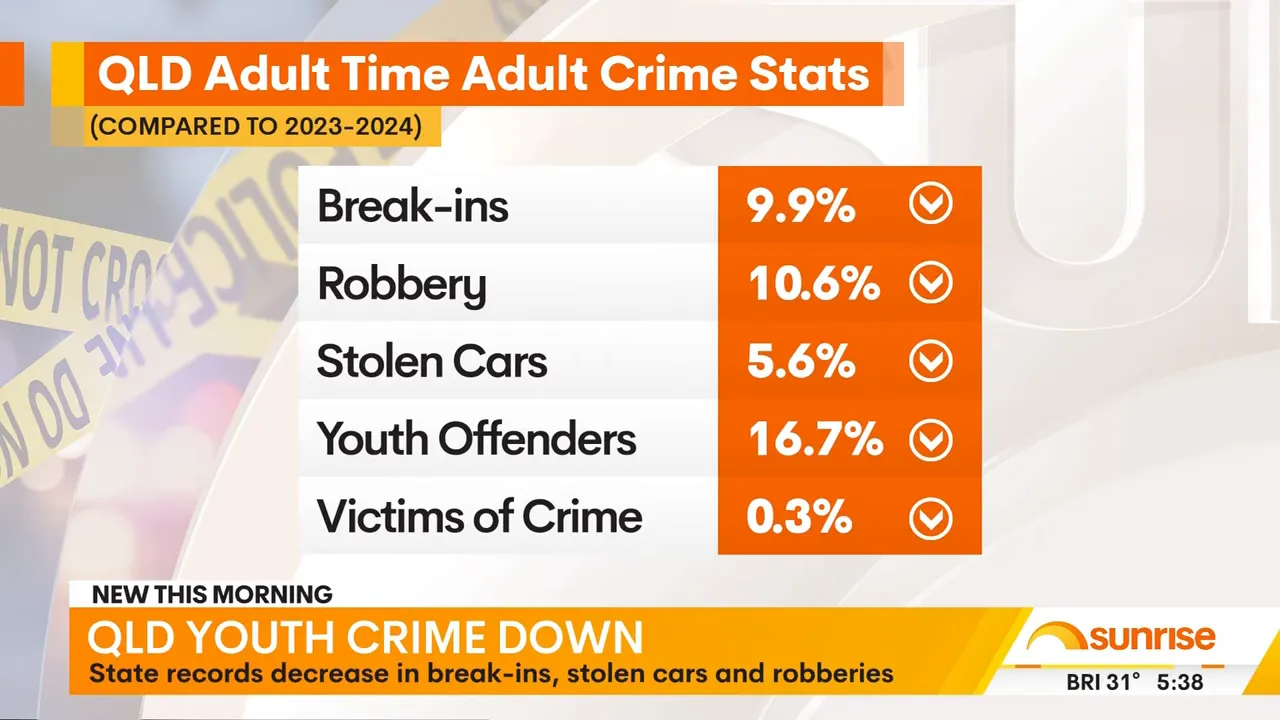
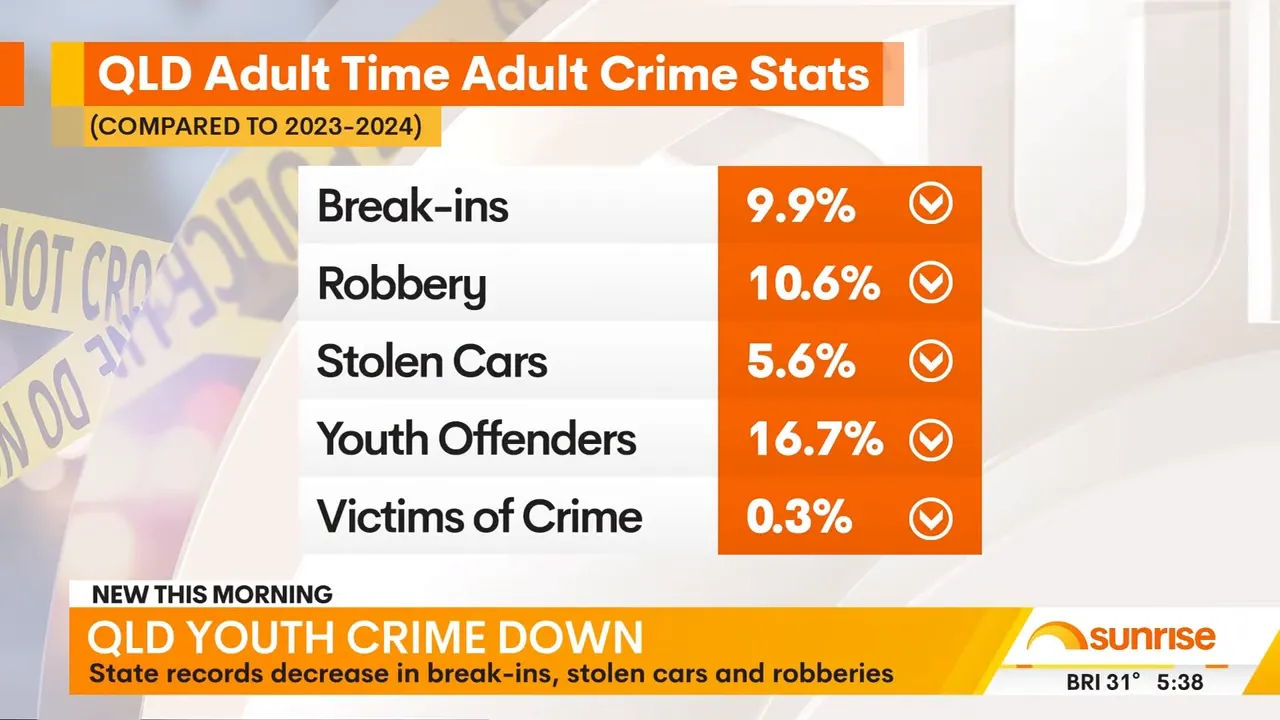
Where the progress stands out is in several individual offences. Early figures suggest that break-ins are down nearly 10%. Robbery is reported as down 10.6%.
Vehicle-related offending also shows improvement. Stolen car offences are down 5.6%, adding to the picture of fewer crimes that often drive fear and financial strain for victims.
- Break-ins: down nearly 10%
- Robbery: down 10.6%
- Stolen cars: down 5.6%
- Overall crime: down 1.2%
Alongside the offence reductions, the overall number of victims has also decreased. That matters because the goal is not only statistical change—it is fewer harms being inflicted across the community.
Why some victims are concerned: fewer court appearances
Despite the improvements, not everyone is satisfied with what the early data implies for justice outcomes. Some victims have raised concerns about how many offenders are actually being sent to jail.
One figure frequently cited in the early reporting is that finalised court appearances have dropped by 13%. The reason given is that offenders are being directed into diversion programs rather than jail.

This is where the reform’s impact becomes nuanced. Supporters argue that the laws are producing real-world reductions in crime, while critics worry that reduced jail time may not align with what some people understood the policy to mean.
The “tricky balance”: tougher consequences without default jail
Commentators describe adult crime, adult time as a “tricky balance” to strike. Many people initially expected that adult crime would automatically lead to jail—and that offenders would be removed from communities as a direct result.
But the early operational reality appears different. Instead of a simple automatic jail pathway, offenders may be placed into programs designed to address offending behaviour.
For now, the reporting suggests the policy is making at least a “small difference.” That wording is important: the reforms are not being presented as an instant solution, but as an approach that is beginning to show measurable effects.
What this means for Queenslanders right now
For residents across Queensland, the early statistics offer reason for cautious optimism. Less reported crime—and fewer victims—align with the intent of reforms voters backed.
At the same time, the drop in finalised court appearances and the role of diversion programs indicate the policy is evolving in how it is implemented. That is likely to keep the conversation active, especially among people directly affected by offending.
Key takeaways from the early adult crime, adult time data
- Overall crime: down 1.2% year on year
- Major offence declines: break-ins nearly 10%, robbery 10.6%, stolen cars 5.6%
- Victims: the overall number has decreased
- Court appearances: finalised court appearances down 13%
- Reason given: more offenders directed to diversion programs instead of jail
Frequently asked questions
What is Queensland’s adult crime, adult time approach?
It is a policy framework aimed at responding to adult offending with tougher consequences while still using pathways such as diversion programs rather than assuming every offender goes straight to jail.
How much did crime drop in the early reporting?
Overall crime is reported as down 1.2% compared with the previous year.
Which offences showed the biggest declines?
Reported early declines include break-ins down nearly 10%, robbery down 10.6%, and stolen car offences down 5.6%.
Why have finalised court appearances dropped?
The early explanation given is that more offenders are being sent to diversion programs rather than being finalised through court in the same way.
How much did finalised court appearances fall?
Finalised court appearances are reported as down 13%.
Does adult crime, adult time mean offenders always go to jail?
The early reporting indicates it does not work as a default “jail-only” pathway. Diversion programs are part of the implementation, which is contributing to public debate.
Bottom line
Queensland adult crime, adult time is being measured early through changes in overall crime, specific offence categories, and court outcomes. The figures reported so far point to declines in several types of offending, alongside a separate—and contested—trend of fewer finalised court appearances as diversion programs take a larger role.
The information in this article has been adapted from mainstream news sources and video reports published on official channels. Watch the full video here Queensland's tough crime laws show early results | 7NEWS


