
VIRGINIA, UNITED STATES — King Charles and Queen Camilla have concluded their US state visit, ending a four-day trip designed to mark a major historical milestone while also giving fresh attention to the state of the modern UK-US relationship. Their final day blended ceremony, community outreach, environmental symbolism and political messaging before the royal couple departed for Bermuda.
The visit carried weight well beyond royal pageantry. Officially, it recognised the 250th anniversary of America’s declaration of independence from British rule. Unofficially, it also served as a high-level diplomatic effort to steady ties after recent strain over the United Kingdom’s refusal to join the United States’ war against Iran.
Final day begins on a solemn note in Virginia
The closing chapter of the trip began at Arlington National Cemetery, where King Charles and Queen Camilla paid their respects to US service members. It was a deliberately sombre opening to the day, underscoring the ceremonial and diplomatic seriousness of the visit.
For any state visit, moments like this matter. Paying tribute at a site of national remembrance signals respect not just for military service, but for national history, sacrifice and shared alliances.

The stop at Arlington also helped frame the broader tone of the tour. Even as the visit commemorated 250 years since America broke from British rule, it emphasised the current partnership between the two countries rather than the conflict that once defined their relationship.
A community stop aimed at everyday Americans
After the formalities of Arlington, the royal couple shifted to a very different kind of engagement in Virginia: time with local residents at a block party. There, they took part in a potluck, a familiar American tradition in which friends and neighbours each bring a dish to share.
The event gave the visit a more personal and accessible dimension. Rather than remaining confined to official buildings and ceremonial venues, the day included a setting centred on ordinary community life.

That contrast appeared intentional. State visits often balance diplomacy at the highest level with opportunities to connect with the public, and the block party served exactly that function. It projected warmth, informality and an effort to engage with American culture on its own terms.
Environmental message remains part of the King’s public identity
King Charles also used the final day to highlight an issue long associated with his public life: the environment. During a visit to a national park, he met Buddy the Bald Eagle, creating one of the day’s most visually symbolic moments.
The stop tied together two themes at once. It reflected the King’s long-standing interest in environmental causes, while also drawing on one of the most recognisable national symbols in the United States.

For Charles, whose advocacy on conservation and sustainability stretches back decades, the national park visit was more than a photo opportunity. It reinforced continuity in his public role, showing that even on a diplomatically sensitive overseas visit, environmental concerns remain central to his agenda.
Readers seeking broader context on the King’s environmental work can refer to the official Royal Family website, which has documented his long involvement in sustainability and conservation issues.
A farewell at the White House
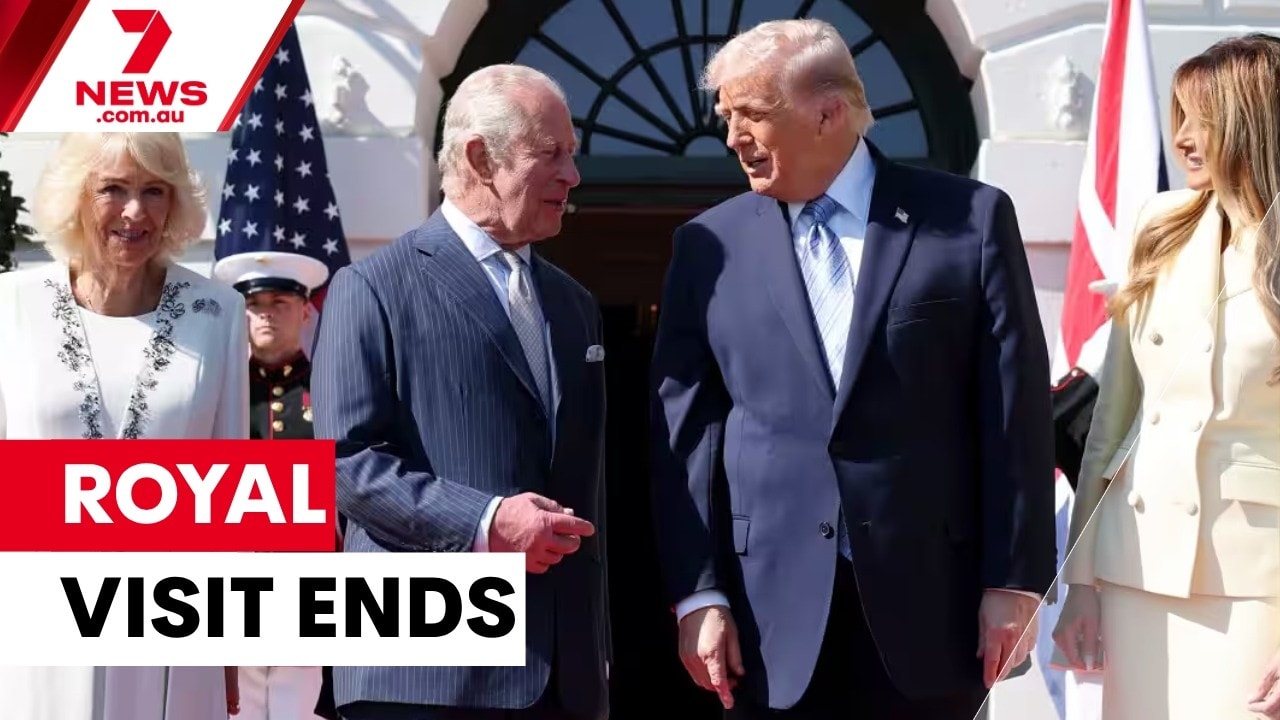
The royal couple later returned to the White House to bid farewell to their hosts. The send-off offered a final chance to publicly signal goodwill at the highest political level.
President Donald Trump’s remarks suggested the trip had made a favourable impression. His response was warm and approving, adding to the sense that the visit had at least temporarily succeeded in improving the tone between London and Washington.

Why the visit mattered beyond ceremony
On paper, the state visit was tied to a major anniversary: 250 years since America declared independence from Britain. That historical marker gave the tour an obvious official purpose and a powerful symbolic backdrop.
But the political significance ran deeper. The visit was also designed to help mend relations after tension caused by Britain’s refusal to join the United States in its war against Iran.
That context matters because state visits are rarely only about celebration. They are often carefully calibrated diplomatic exercises, aimed at shaping atmospherics, restoring confidence and creating space for leaders to reset a relationship without necessarily announcing a formal policy change.
Did the royal charm offensive work?
In immediate terms, the signs were positive for Buckingham Palace and the British government. President Trump appeared impressed by both King Charles and Queen Camilla, suggesting the royals’ soft-power role had delivered some success.
That kind of outcome is often one of the quiet goals of a royal visit. While elected leaders negotiate policy, members of the Royal Family can be deployed to ease tensions, humanise diplomacy and create moments of goodwill that are harder to achieve through politics alone.
In this case, the blend of solemn remembrance, local community engagement, environmental symbolism and White House optics appears to have formed a deliberate strategy. Each stop contributed to a broader image of respect, familiarity and friendship.
Why questions remain about the long-term impact
Even with a positive final review from the White House, uncertainty remains over how durable that goodwill will be. The key reason is the unpredictability surrounding the US President and the broader volatility of international politics.
A successful visit can improve tone, but it cannot erase policy disagreements on its own. If tensions over foreign policy, defence or strategic priorities re-emerge, the warmth generated during the trip could prove temporary.
That leaves the visit in an interesting diplomatic position. It may be remembered as a successful short-term reset, but whether it delivers lasting improvement in UK-US relations will depend on what follows after the ceremonial farewells are over.
What the final day revealed about the monarchy’s diplomatic role
The last day in Virginia offered a compact example of how the modern monarchy operates on the international stage. The King and Queen were not simply attending formal functions; they were deployed across several settings to represent continuity, empathy, culture and national identity.
- At Arlington National Cemetery, they showed respect and gravity.
- At the block party, they engaged with everyday community life.
- At the national park, they reinforced the King’s environmental profile.
- At the White House, they provided a public display of diplomatic warmth.
Taken together, those moments show why royal visits still matter in foreign relations. They create images and atmospheres that can support political objectives, especially when direct government-to-government ties are under pressure.
Key takeaways
- King Charles and Queen Camilla ended their four-day US state visit with a final day in Virginia before departing for Bermuda.
- The day began with a solemn visit to Arlington National Cemetery to honour US service members.
- The royal couple later attended a Virginia block party and potluck, highlighting engagement with local communities.
- King Charles visited a national park and met Buddy the Bald Eagle, reinforcing his long-standing environmental focus.
- The pair returned to the White House for a formal farewell from President Donald Trump.
- The trip officially marked the 250th anniversary of American independence from British rule.
- It also carried a diplomatic purpose, aiming to repair strains in UK-US ties after Britain declined to join America’s war against Iran.
- While the visit appears to have improved the mood between both sides, its long-term impact remains uncertain.
FAQs
Why did King Charles and Queen Camilla visit the United States?
The official purpose was to mark the 250th anniversary of America declaring independence from British rule. The visit also had a diplomatic aim, helping to improve UK-US relations after recent strain over Britain’s refusal to join the United States’ war against Iran.Where did the royal couple spend their final day?
Their final day was spent in Virginia. They visited Arlington National Cemetery, attended a community block party and potluck, toured a national park, and later returned to the White House before departing for Bermuda.What did they do at Arlington National Cemetery?
King Charles and Queen Camilla paid their respects to US service members. The visit gave the day a solemn opening and underscored the ceremonial importance of the wider state trip.Why was the block party significant?
The block party offered a more informal and community-focused part of the visit. By joining a potluck and spending time with local residents, the royal couple connected with everyday American life beyond official diplomatic events.What was the significance of meeting Buddy the Bald Eagle?
The national park visit highlighted King Charles’s long history of environmental activism while also engaging with a strong American national symbol. It combined personal advocacy with diplomatic symbolism.Did the visit improve relations with President Trump?
In the short term, it appeared to. President Trump expressed approval of the visit and seemed impressed by King Charles and Queen Camilla. However, questions remain about how lasting that goodwill will be.Where did the royal couple go after leaving the United States?
After concluding the US visit, King Charles and Queen Camilla departed for Bermuda.The information in this article has been adapted from mainstream news sources and video reports published on official channels. Watch the full video here King Charles and Queen Camilla conclude US state visit | 7NEWS