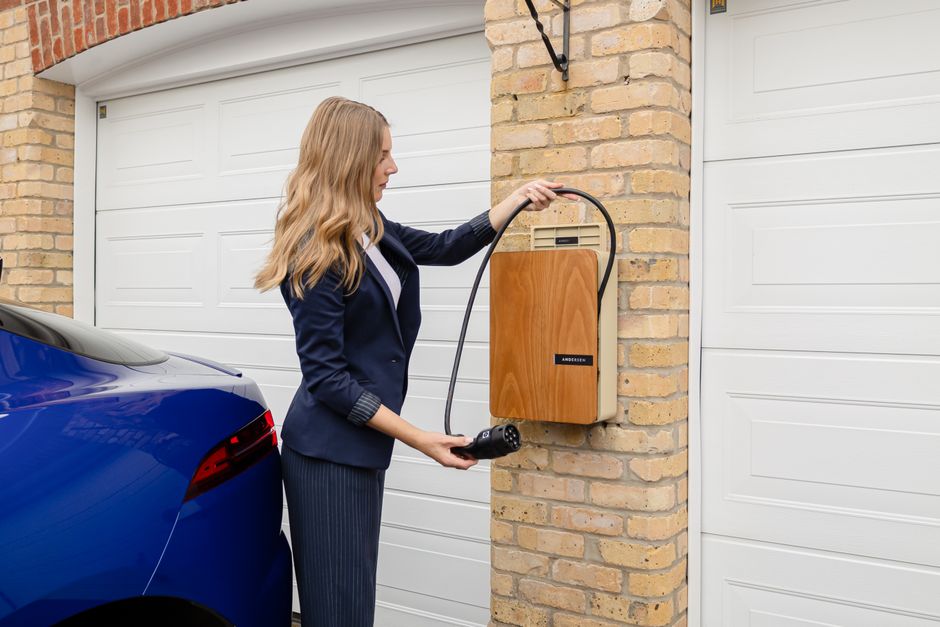
Australia's EV market is growing faster than most households are prepared for. Registrations have surged year on year, government incentives are accelerating uptake, and the humble garage power point is quietly becoming one of the most electrically stressed points in the modern Australian home. What was once a niche technology question is now a mainstream safety issue — and the risks hiding inside walls, behind switchboards, and in cheap imported charging cables are not keeping pace with the marketing.
The Real Fire Risks Behind Home EV Charging
Electric vehicle charging safety is not a fringe concern — it is a growing priority for fire investigators, electricians, and insurers right across Australia. While EVs themselves are statistically no more prone to fire than petrol vehicles, the way they are charged at home introduces a distinct set of hazards that many owners simply are not aware of when they plug in overnight.
Where the Danger Actually Lives
The risk rarely starts with the car. It typically begins in the wiring. Australian homes — particularly those built before the 1990s — often carry ageing switchboards, undersized circuits, and wiring that was never designed to sustain the sustained, high-current draw that EV charging demands. A standard home charging station can pull anywhere from 7 to 22 kilowatts continuously for several hours. That is a fundamentally different load profile to anything most residential circuits were engineered for.
- Overloaded circuits can overheat inside walls, where fires smoulder undetected for hours before breaking out.
- Loose or corroded connections at the switchboard create resistance that generates heat — a common ignition point.
- Non-compliant charging cables, including cheap imported units, have been linked to overheating and melting incidents in Australia.
- Charging in enclosed garages overnight reduces the chance of early detection if something does go wrong.
None of this means home EV charging is inherently dangerous. What it means is that the installation behind the charger matters enormously — and cutting corners on that infrastructure is where Australian households are quietly taking on serious, unnecessary risk.
Electric Vehicle Charging Safety and Australian Electrical Standards
Understanding electric vehicle charging safety in Australia requires more than a passing familiarity with power points and extension leads — it demands a working knowledge of the regulatory framework that governs how electricity is delivered safely into your home. And in Australia, that framework is both detailed and legally binding.
The primary standard governing electrical installations in Australian homes is AS/NZS 3000:2018, commonly known as the Wiring Rules. Any dedicated EV charging circuit — whether a basic 15-amp outlet or a full hardwired AC charging unit — must be installed in compliance with these rules. That means proper cable sizing, correct circuit protection, and earthing arrangements that account for the sustained, high-current loads that EV charging places on a domestic system.
Beyond the Wiring Rules, installers and homeowners should also be aware of:
- AS/NZS 3112 — which sets plug and socket requirements relevant to Mode 2 charging cables
- AS/NZS 61851.1 — the Australian adoption of the international standard for EV conductive charging systems
- State-based licensing requirements, which vary but universally require that any new circuit or fixed charging installation be carried out by a licensed electrician
These aren't bureaucratic formalities. EV charging draws sustained current loads that are quite different from most household appliances — a 7.4 kW home charger running overnight is a fundamentally different electrical challenge to a kettle or a washing machine. Older wiring, undersized switchboards, and non-compliant connections all represent genuine fire and electrocution hazards under these conditions.
Australia's state electrical safety regulators — including Energy Safe Victoria, SafeWork NSW, and Electrical Safety Office Queensland — have all flagged non-compliant EV charging installations as an emerging area of concern. The standards exist for good reason, and compliance isn't optional.
Why Your Home's Existing Wiring May Not Be Ready for Electric Vehicle Charging Safety
One of the most overlooked aspects of electric vehicle charging safety is what's already inside your walls. Most Australian homes were wired decades before EVs were even a consumer consideration, and that legacy infrastructure can quietly become a serious hazard when you introduce the sustained, high-draw loads that EV charging demands.
A standard Level 2 home charger draws between 7 and 22 kilowatts continuously — sometimes for eight hours or more overnight. That's a fundamentally different electrical demand compared to running a washing machine or a ducted air conditioning unit. Older wiring insulation, undersized circuit breakers, and ageing switchboards weren't engineered with that kind of prolonged load in mind.
Several specific vulnerabilities are worth understanding:
- Undersized cabling: Wiring rated for 20 or 30 amps may overheat under consistent EV charging loads, particularly in wall cavities where heat cannot dissipate easily.
- Switchboard age: Homes with ceramic fuse-based switchboards — still common in properties built before the 1990s — lack the protective mechanisms modern EV circuits require.
- Earthing systems: Inadequate earthing, which is surprisingly prevalent in older Australian homes, raises the risk of electric shock and equipment failure.
- Single-phase limitations: Many suburban homes are single-phase only, which can cap charging speeds and may require infrastructure upgrades to support faster chargers safely.
The concern isn't hypothetical. Electricians conducting pre-installation assessments regularly discover defects that homeowners had no idea existed — faults that a standard EV charger install would have pushed into dangerous territory. A proper electrical audit before any charger goes in isn't a bureaucratic formality. In many cases, it's what stands between a routine upgrade and a house fire.
Electric Vehicle Charging Safety Starts With Who You Hire
When it comes to electric vehicle charging safety, the single most consequential decision an Australian homeowner can make is who installs their charging equipment. It is a choice that sits well beyond brand preference or price comparison — it is a question of legal compliance, insurance validity, and, ultimately, physical safety for everyone in the household.
In Australia, all EV charger installations must be carried out by a licensed electrician. But licensing alone is not the full picture. A certified EV charging installer will hold specific competencies in low-voltage charging systems, understand the requirements of AS/NZS 3000 (the Australian Wiring Rules), and be familiar with the load demands that a dedicated home charging circuit places on existing infrastructure. An unqualified or under-experienced tradesperson may complete a job that looks finished but carries hidden risks — undersized cabling, inadequate earthing, or a circuit breaker that was never rated for sustained EV charging loads.
What Certification Actually Covers
- Compliance with Australian Standards: Certified installers ensure the charger and its wiring meet AS/NZS 3000 and any state-specific requirements.
- Switchboard assessment: A qualified professional will evaluate whether your existing switchboard can safely handle the additional draw before any work begins.
- Insurance protection: Home and contents insurers increasingly require compliant, certified installation — a dodgy job can void your policy at the worst possible moment.
- Certificate of Electrical Safety: In most Australian states, a licensed installer is legally obligated to provide this documentation upon completion.
These are not bureaucratic technicalities. They are the practical safeguards that stand between a functioning home charging setup and a preventable electrical fire. As National News coverage of infrastructure failures has repeatedly shown — including recent reporting on critical systems failing when corners are cut — the cost of non-compliance is rarely theoretical. If you want to dig deeper into issues where safety and accountability intersect, All News has ongoing coverage worth bookmarking.
What a Compliant EV Charger Installation Actually Looks Like
Understanding electric vehicle charging safety in abstract terms is one thing — but what does a genuinely compliant home installation look like in practice? For most Australian households, the difference between a safe setup and a dangerous one comes down to a handful of non-negotiable standards that a licensed electrician must meet before handing over the keys.
A compliant installation will typically include the following elements:
- A dedicated circuit: The EV charger must run on its own circuit, separate from your home's general power supply. Sharing circuits with other high-draw appliances is a known fire risk.
- Correct cable sizing and conduit protection: Undersized cabling generates heat under load. A qualified installer will calculate the correct cable gauge for your charger's output and run it through appropriate conduit, particularly in roof cavities or external walls.
- RCD and overcurrent protection: Australian standards require residual current devices (RCDs) and circuit breakers rated to handle the charger's continuous load — typically 32 amps for a 7.2 kW AC wall unit.
- Weatherproof enclosures for outdoor units: Any charger installed outside must be rated to IP44 or higher, with properly sealed cable entry points.
- Certificate of Compliance for Electrical Work (CCEW): This is non-negotiable. Without it, your insurer may void your policy in the event of a fire or fault.
For a detailed breakdown of what installers are legally required to do in New South Wales — including switchboard upgrades, metering, and AS/NZS 3000 wiring rules — this EV charging safety and installation requirements guide is worth reading before you sign off on any quote.
The paperwork matters as much as the physical work. A charger that looks professional but lacks documentation is still a liability — financial, legal, and physical.
How Solar Systems and Home Batteries Complicate EV Charging Safety
An increasing number of Australian households are combining rooftop solar, home battery storage, and EV charging under one roof — and while that combination can deliver genuine cost and efficiency benefits, it introduces a layer of electrical complexity that many homeowners and even some installers underestimate. When a solar inverter, a battery management system, and an EV charger are all drawing on or feeding into the same switchboard simultaneously, the interaction between those systems needs to be carefully engineered rather than assumed to work. Poorly coordinated setups can trigger nuisance tripping, cause inverters to fault under backfeed conditions, or — in worse cases — create situations where protective devices fail to operate as intended during a fault. Any household running or planning this kind of integrated energy setup should insist that the electrician responsible for the EV charger installation has direct experience with solar and battery systems, and that all equipment is assessed together as a single electrical system rather than a collection of independent products bolted on over time.
Electric Vehicle Charging Safety Starts Before You Flip the Switch
After everything covered in this article — from arc faults and thermal runaway to dodgy online installers and non-compliant switchboards — the practical question remains: what can you do right now to protect your home? Getting electric vehicle charging safety right isn't a one-time tick-box exercise; it's a set of deliberate decisions made before a single cable is connected.
- Get a licensed electrical inspection first. Before any charger is installed, have a qualified electrician assess your switchboard, wiring age, and earthing system. Older homes — particularly those built before the 1990s — may need upgrades that the charger installer alone won't flag.
- Insist on a dedicated circuit. A home EV charger should never share a circuit with other high-draw appliances. A dedicated 32-amp circuit with its own breaker is the baseline, not the premium option.
- Verify your installer holds a current electrical contractor licence issued by your state's regulator — not just a trade certificate. Ask for it in writing before signing anything.
- Confirm the charger carries RCM certification and is listed on the Clean Energy Council's approved product register if you're claiming any rebate.
- Install a smoke alarm in or adjacent to your garage if one isn't already there. It won't prevent a fire, but early detection saves lives and limits damage.
- Read your home insurance policy. Some Australian insurers now require compliant installation documentation before they'll pay a fire claim involving an EV charger.
None of this is scaremongering. Australia's EV uptake is accelerating, and the electrical infrastructure in millions of homes was never designed with overnight high-draw charging in mind. The gap between those two realities is where fires start.
The good news is that the risks are manageable — but only if homeowners treat EV charging with the same seriousness they'd bring to any major electrical upgrade. Do the groundwork, choose a certified professional, and the transition to electric driving can be as safe as it is overdue.