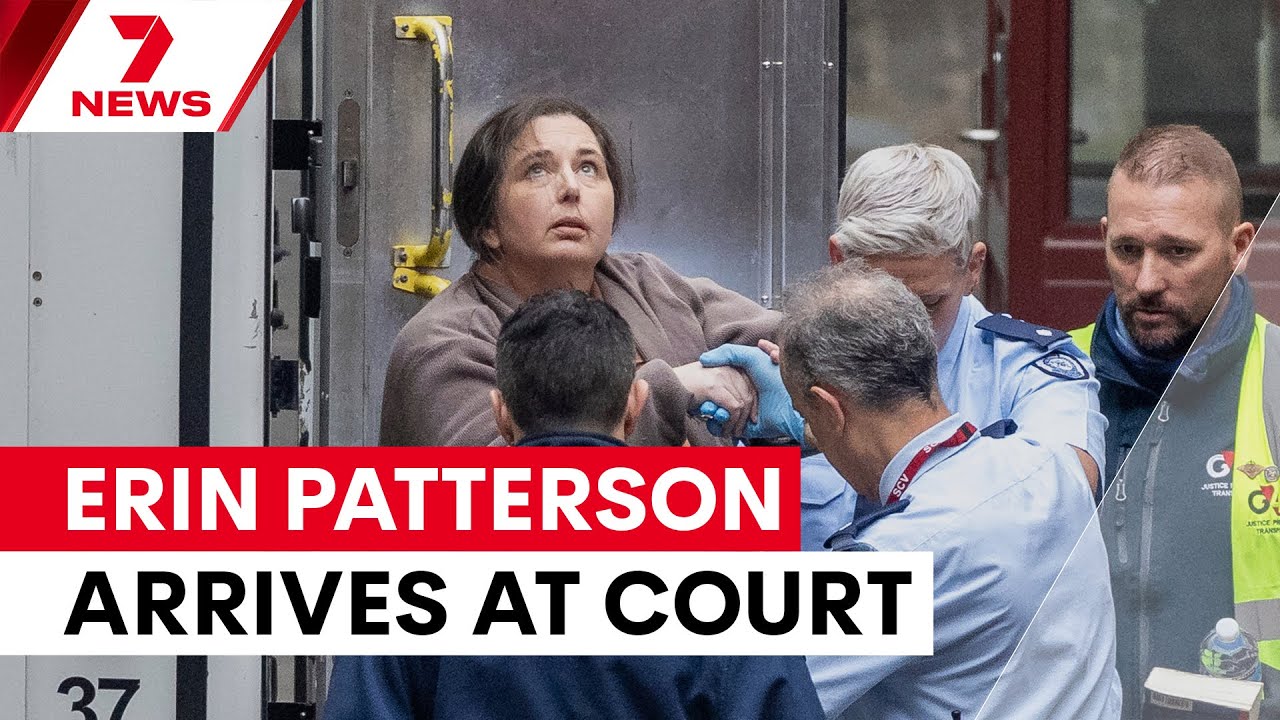
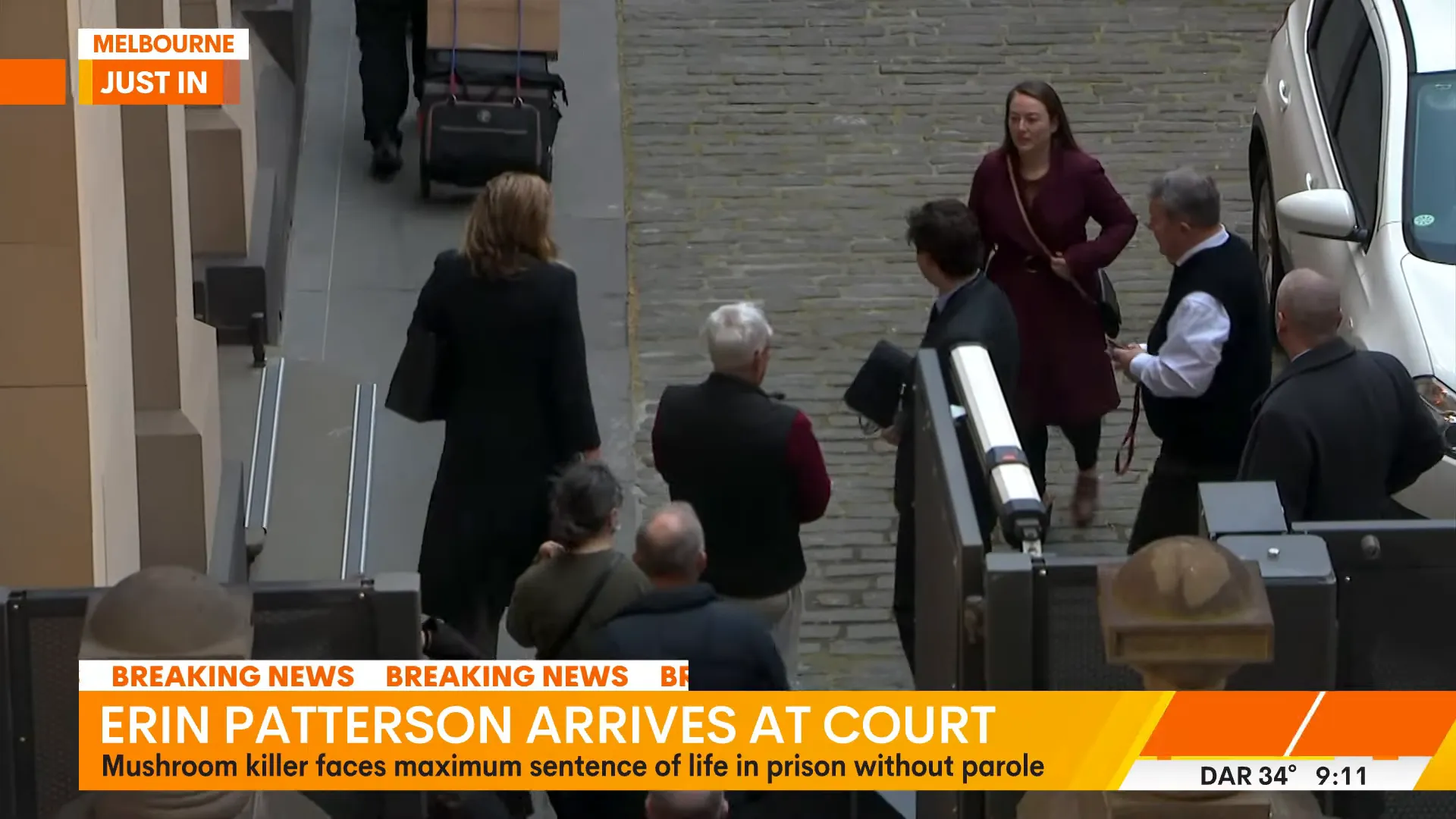
This report was produced by 7NEWS Australia. I was at the Supreme Court this morning as Erin Patterson — the 50-year-old convicted of serving death cap mushrooms to members of her estranged husband’s family — arrived to learn her sentence.
Table of Contents
- Overview: a historic, closely watched hearing
- Arrival at court: heavy security and a media scrum
- Background: what happened and the legal timeline
- Custodial conditions: Dame Phyllis Frost Centre
- Sentencing: unprecedented broadcast and potential first
- Victim and community response: Kurumbahra and forgiveness
- What happens next in the legal process
- On-the-ground notes from the day
- Conclusion
- Frequently Asked Questions (FAQ)
Overview: a historic, closely watched hearing
On the morning the Victorian Supreme Court prepared to hand down sentence, security and media activity around Lonsdale Street was intense. The case has been described as unique: a triple murder where the weapon was a death cap mushroom. The trial has already captured national and international attention, and today's sentencing was set to be broadcast live.
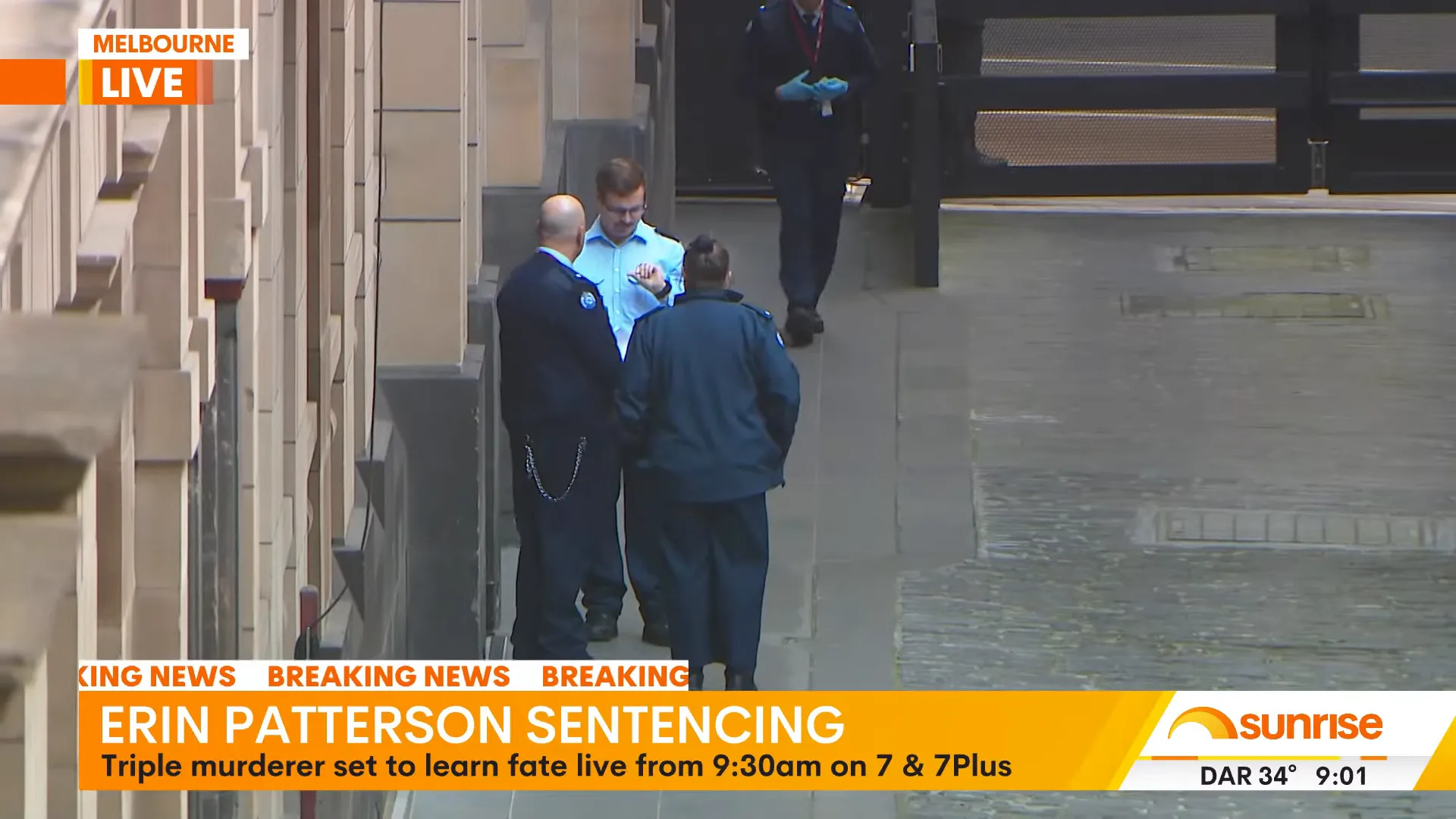
Arrival at court: heavy security and a media scrum
In the twenty minutes before the hearing, there was a continual movement of protective services officers and prison vans. Multiple vans arrived, but one in particular pulled up at the Supreme Court gates and officers began to position themselves to escort the prisoner in.
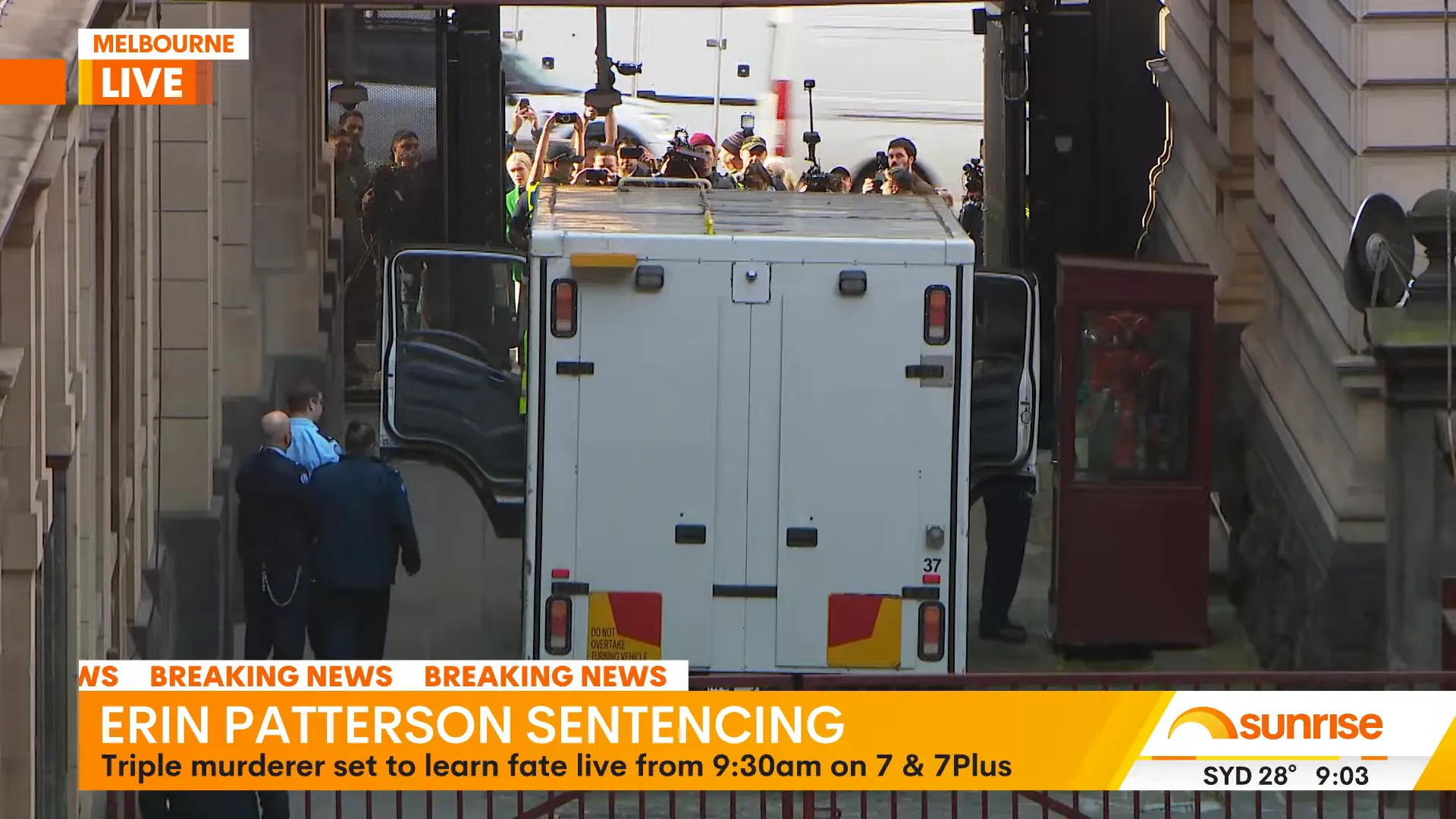
The prisoner was brought from the Dame Phyllis Frost Centre and walked only a very short distance from the van into the court building. Photographers and camera crews jostled for position — this is the only public moment many would see of Patterson before she was taken into the courtroom cells.
Background: what happened and the legal timeline
On 29 July 2023, a family lunch in Gippsland ended in tragedy. Four members of the estranged husband’s family ate a beef Wellington laced with death cap mushrooms. Three people died — Don and Gail Patterson and Heather Wilkinson — and a fourth, Ian Wilkinson, survived but was critically ill.
Patterson was arrested in November 2023. Earlier this year a jury in Morwell heard evidence over a 12-week trial and found her guilty of the three murders and the attempted murder of Ian Wilkinson. Sentencing was scheduled for today.
Custodial conditions: Dame Phyllis Frost Centre
Patterson has been held in a protective unit at the Dame Phyllis Frost Centre. Defence counsel and prison officers described restrictive conditions: solitary or near‑solitary confinement for around 22 hours a day, limited outside time, access to a television and computer and small craft activities like crocheting.
Her lawyers have argued that the onerous nature of those conditions is relevant to sentencing, requesting that some relief be considered during punishment.
Sentencing: unprecedented broadcast and potential first
Two elements made this sentencing unprecedented: it was to be broadcast live from the Supreme Court, and there was a real possibility that Justice Christopher Beale could impose life imprisonment without the possibility of parole. If that occurred, it would mark the first time a woman in Victoria received a life-without-parole sentence.
Legal observers noted the distinction between a non-parole period and life without parole. Even when a long non-parole period is set — for example, where eligibility doesn't arrive until old age — parole must still be granted later by the parole board; it is not automatic.
Victim and community response: Kurumbahra and forgiveness
The small Gippsland town where the family lived has been deeply affected. Kurumbahra's church and community supported Ian Wilkinson during his recovery. He attended most days of the 12‑week trial and returned to lead services once he recovered enough to do so.
In a powerful and widely reported victim impact statement, Ian Wilkinson spoke of Heather and the loss he has suffered. Unusually, he said he forgave Patterson — a statement rooted in his faith and his own recovery — but also urged that Patterson make a full confession and use any time in custody for reflection and change.
What happens next in the legal process
- Sentencing is imposed by the judge in open court. If life without parole is ordered, the judge effectively rules the offender will never be released.
- If a non-parole period is set, eligibility for parole would only arise at that time and would still require a parole board to grant release.
- Either party (defence or prosecution) may seek appeal avenues depending on the sentence handed down and any legal grounds that might exist.
On-the-ground notes from the day
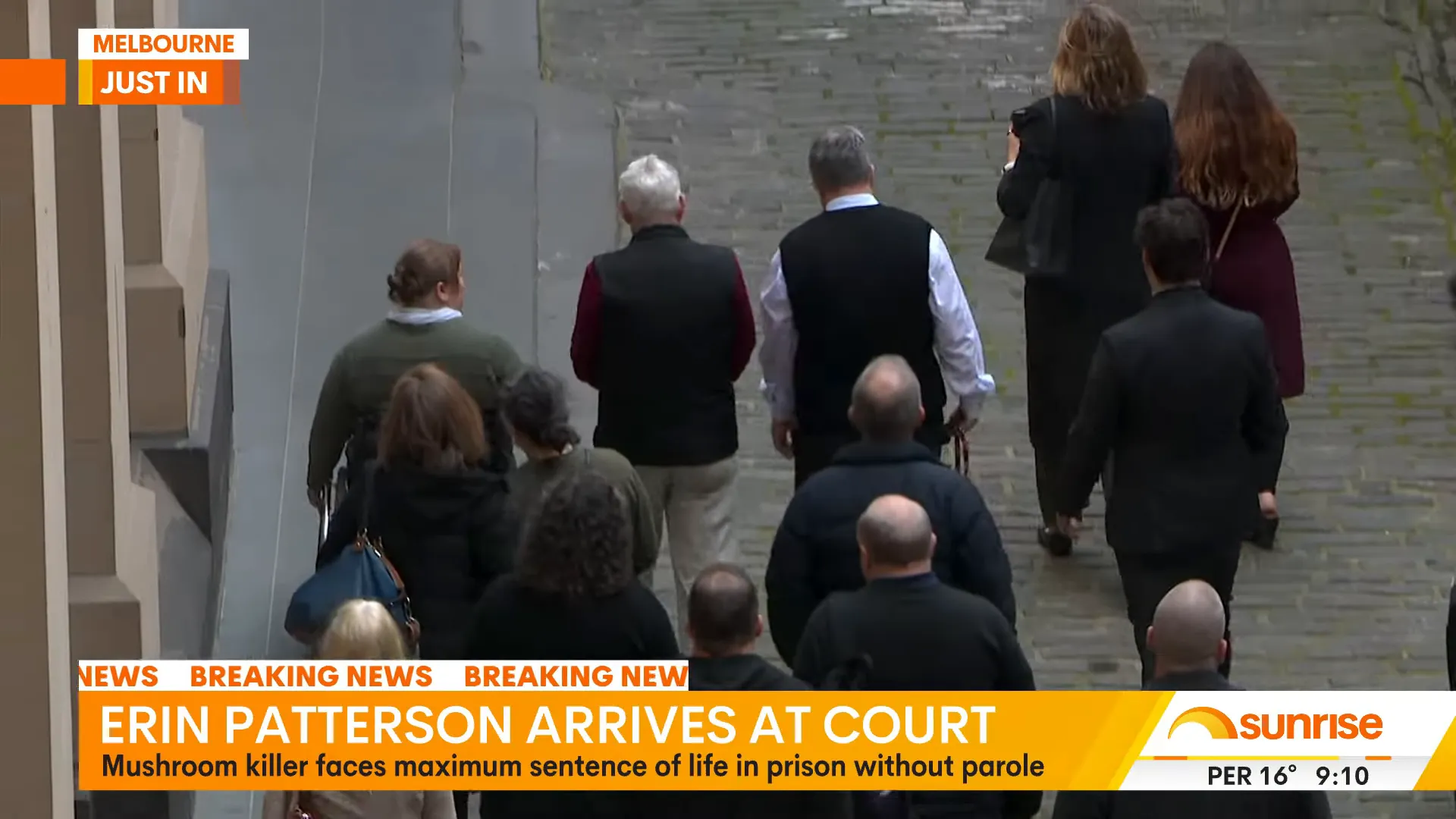
The procession to court was brief. After being escorted into the courtroom, Patterson was held in the court's cells until the judge delivered the sentence. Photographers considered that the moments outside the van could be the last public images of her if life without parole was imposed.
Conclusion
Today’s hearing closed a chapter in a case that shocked Australia and drew international attention due to the rare use of death cap mushrooms as a weapon. Whatever sentence was handed down will be measured not only by its legal severity but by its effect on a grieving community and a survivor who offered forgiveness even as he sought justice for his family.
Frequently Asked Questions (FAQ)
-
Who was convicted?
Erin Patterson was found guilty of murdering three members of her estranged husband’s family and attempting to murder a fourth by serving food laced with death cap mushrooms.
-
When did the incident occur?
The fatal lunch took place on 29 July 2023.
-
Where was Patterson held before sentencing?
She was housed in a protective unit at the Dame Phyllis Frost Centre, with very restricted daily contact and limited outside time.
-
Could this be the first woman in Victoria sentenced to life without parole?
Yes. If the judge imposed life imprisonment without the possibility of parole, it would be the first such sentence for a female offender in Victoria.
-
What does life without parole mean?
It means the offender will remain in custody for the rest of their life with no statutory right to be released on parole.
-
Was the sentencing broadcast?
Yes — the sentencing was broadcast live from the Supreme Court, an unprecedented step for this court.
For ongoing coverage and further details, follow 7NEWS Australia.


