
This Artemis 2 moon mission marked a stunning return to lunar orbit—after more than 50 years since humans last went that far. On launch day, the world watched as a powerful rocket lifted a four-person crew from Florida toward a journey built for testing, discovery, and the next steps back to the Moon.
Unlike earlier Apollo flights, Artemis 2 is not landing on the lunar surface. Instead, the crew will orbit the Moon, sending back views of regions never seen before by human eyes and paving the way for future missions.
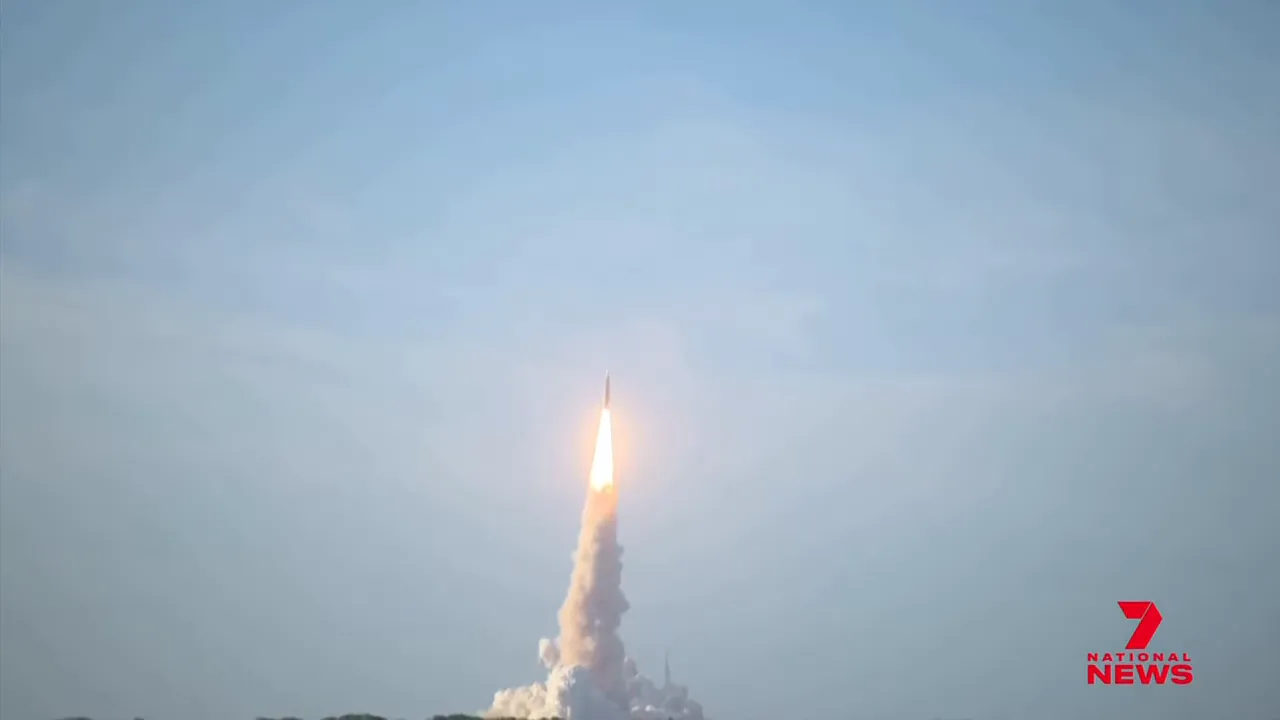
Table of Contents
- Artemis 2 blasts off from Kennedy Space Center
- How Artemis 2 will travel: figure-eight around the lunar far side
- The four-person crew: firsts across continents and history
- Why Artemis 2 matters for the next steps to a lunar base and Mars
- When and where the crew will return
- What to watch for during Artemis 2
- Key takeaways
- FAQ
Artemis 2 blasts off from Kennedy Space Center
As countdown clocks hit single digits, the Artemis 2 spacecraft and its booster ignited and lifted off from the Kennedy Space Center in Florida. The message was clear: this was a mission designed to go further than any human had travelled in history.
After early stumbles, the launch ultimately looked picture-perfect—an important sign for a programme that’s aiming to bring people back to the Moon in the coming years.
The crew is set for a loop around Earth first, then a complex path that will bring them around the dark side of the Moon. It’s a test flight—but also a moment of significance for international space ambitions.
How Artemis 2 will travel: figure-eight around the lunar far side
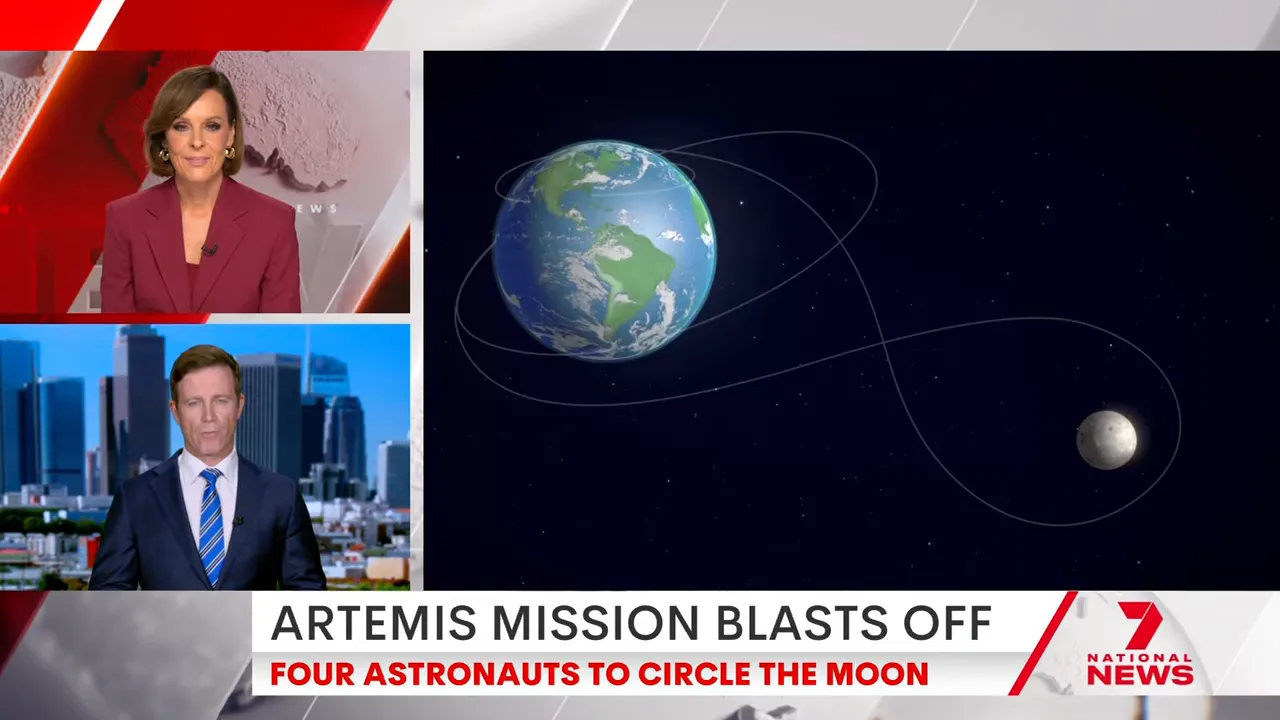
Artemis 2 will take the crew about 402,000 kilometres from Earth during the mission. The trajectory is carefully planned to demonstrate navigation and spacecraft performance on a deep-space route.
According to the mission plan described during coverage, the flight will involve a couple of loops around Earth before the Orion spacecraft engines are fired up. From there, the crew will follow a figure-of-eight trajectory around the Moon—skimming the far side—before returning to Earth.
That far-side segment matters because it allows astronauts to view lunar terrain never before seen by the human eye, even if they’re not landing.

The four-person crew: firsts across continents and history
While the spacecraft is the headline, the crew brings its own layer of milestones. The mission pilot, Victor Glover, is set to become the first Black man to orbit the Moon.
Christina Cook serves as mission specialist, and she’s the first woman to fly on a mission of this type to the Moon’s vicinity. Jeremy Hansen, from Canada, is the first Canadian to go into deep space on such a lunar-bound mission.
NASA is treating this flight as a major test—one intended to reduce risk and confirm readiness for future Artemis missions that may land on the Moon and support longer-term operations.
Why Artemis 2 matters for the next steps to a lunar base and Mars
Artemis 2 is widely seen as a crucial leap towards getting humans back to the Moon soon after. With a successful test flight, NASA hopes to move closer to establishing a permanent lunar base.
In the longer term, the programme’s ambitions go beyond the Moon entirely, with an eventual goal of leapfrogging to Mars. Artemis 2 is part of that pathway—proving that crews, spacecraft, and mission planning can handle journeys well beyond low Earth orbit.
When and where the crew will return
Right now, the immediate focus is on the success of the ten-day mission and a safe return home. The plan is for the crew to splash down in the ocean off the coast of California after completing the lunar-orbit test.
For a mission like this, every phase matters—from launch performance to engine burns, spacecraft checks, and re-entry readiness.
What to watch for during Artemis 2
- Trajectory execution: the figure-of-eight path and the ability to navigate accurately around the Moon.
- Far-side observations: astronaut perspectives of regions that have not been seen by humans up close.
- System performance: confirmation that Orion and mission hardware operate as expected over the full deep-space profile.
- Return to Earth: a safe, controlled recovery after the ten-day flight.
Key takeaways
- The Artemis 2 moon mission launched from Kennedy Space Center with four astronauts.
- The crew will travel about 402,000 kilometres and follow a figure-of-eight trajectory around the Moon’s far side.
- This flight is not a landing mission, but it will deliver first-time human views of lunar regions.
- The crew includes multiple historic firsts, including the first Black man to orbit the Moon and the first woman on this lunar-orbit path.
- Artemis 2 is a test flight intended to support future Moon missions and long-term ambitions for Mars.
FAQ
Is Artemis 2 landing on the Moon?
No. Artemis 2 is designed to orbit the Moon and travel around its far side, with the crew returning to Earth without stepping onto the lunar surface.
How far will the Artemis 2 crew travel from Earth?
The mission is expected to take the crew about 402,000 kilometres from Earth at its farthest point.
What route will the spacecraft take?
After looping around Earth, the crew will fire up the Orion spacecraft engines and follow a figure-of-eight trajectory around the Moon’s far side before returning to Earth.
Who is on the Artemis 2 crew?
The crew includes pilot Victor Glover, mission specialist Christina Cook, and Jeremy Hansen, along with a fourth astronaut as part of the four-person team.
Why does Artemis 2 matter beyond this flight?
It’s a major test mission intended to reduce risk and build the momentum needed for landing missions, a potential permanent lunar base, and future deep-space goals such as Mars.
The information in this article has been adapted from mainstream news sources and video reports published on official channels. Watch the full video here Artemis 2 blasts off for historic moon mission | 7NEWS


