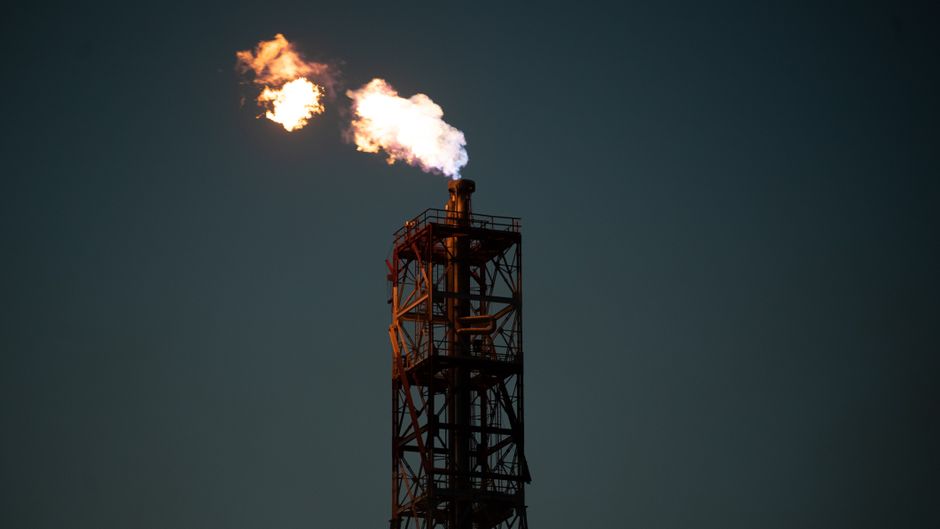
Ukrainian forces carried out a major overnight strike on one of Russia's largest oil refineries, setting it ablaze just hours after President Volodymyr Zelensky wrapped up high-stakes talks with US President Donald Trump in Washington. The attack on the Ryazan refinery — located roughly 400 kilometres from Ukraine's border — is the latest in a sustained campaign of long-range strikes targeting Russia's energy infrastructure.
According to Ukraine's General Staff, the Ryazan facility processes around 17 million tonnes of oil per year, producing petrol, diesel, aviation fuel and a range of other petroleum products. The regional governor confirmed six people were taken to hospital following the drone strike, saying debris from the attack ignited fires at industrial sites in the area.
Zelensky links strikes to peace pressure on Moscow
Zelensky framed the attack in explicitly strategic terms. "Russia must feel that every day of this war will only come at a higher cost for it. We need to weaken the aggressor and keep up the pressure to bring an end to this war closer," he wrote on social media following the strike.
Ukraine's near-daily long-range drone and missile strikes, carried out with domestically developed weapons, have repeatedly hit Russian oil facilities over more than four years since Russia launched its full-scale invasion. The campaign has contributed to a deepening fuel crisis that has become an increasing embarrassment for the Kremlin.
In addition to the Ryazan strike, Ukrainian forces also hit a naval base used by Russia's Black Sea fleet, a radar station in Russia's Bryansk region near the border, a drone launch site, and a road bridge in the Russian-occupied section of the Donetsk region, according to the General Staff. Russia's defence ministry said its air defences intercepted 295 Ukrainian drones overnight across multiple regions and occupied Crimea.
Zelensky's Washington visit yields positive signals
The overnight strikes followed Zelensky's visit to Washington on Tuesday, where he held what both leaders described in positive terms. Zelensky called it a "good meeting," while Trump wrote on his Truth Social platform: "Many things were discussed. The meeting went very well!"
Ukraine's recent battlefield and strategic successes are understood to have impressed Washington and helped rebuild US goodwill, which had been strained at the start of Trump's second term when the administration showed hesitancy about continuing support for Kyiv.
Beyond his meeting with Trump, Zelensky also addressed more than 60 senators from both parties on Capitol Hill as Ukraine intensifies its push for additional sanctions against Russia. He separately met with representatives of defence manufacturer Lockheed Martin — just days after welcoming a delegation from Raytheon to Kyiv. Both companies are seen as critical suppliers of advanced weapons systems, including Patriot air defence batteries, that Ukraine is hoping to eventually manufacture domestically. Trump earlier in July said he would grant Ukraine licences to produce the Patriots it needs to counter Russian ballistic missile attacks.
Diplomatic momentum — but peace remains elusive
Despite the warmer tone coming out of Washington, prospects for a negotiated end to the conflict remain uncertain. A yearlong diplomatic push by the Trump administration has yet to produce a breakthrough. However, it is understood that Trump's key envoys, Steve Witkoff and Jared Kushner, have agreed in principle to travel to Kyiv at some point, according to a source familiar with the discussions.
On the military command front, Ukraine's newly appointed commander-in-chief, Major General Mykhailo Drapatyi — who took up the role last week as part of a broader government reshuffle — said he held his first phone conversation with NATO's supreme allied commander Europe, General Alexus G Grynkewich. "I outlined my vision of Ukraine's victory and the capabilities required to achieve it," Drapatyi said.
As diplomatic efforts continue and the human toll of the conflict mounts on both sides, Ukraine is clearly signalling it intends to maintain maximum pressure on Russia at every level — military, economic and diplomatic — until a settlement is reached.