
UKRAINE — Russian strikes killed at least 10 people in Ukraine after more than 260 drones and ballistic missiles were launched across five regions in a single night of attacks. The barrage hit both military-linked infrastructure and residential areas, underscoring how deeply the war continues to affect civilians far from the front line.
In Odessa, emergency crews were forced to battle fires after one of the strikes, while elsewhere Ukraine responded by targeting Russian oil tankers near Novorossiysk with sea drones. Amid the destruction, one extraordinary rescue stood out: a 77-year-old Ukrainian woman survived after entering a robotic drone marked with the words “Grandma, get in”.
Large-Scale Overnight Attacks Across Ukraine
The latest wave of Russian attacks was notable for both its scale and spread. More than 260 drones and ballistic missiles were fired overnight, with five separate Ukrainian regions affected.
The strikes appeared to blur the line between military targets and civilian life. Homes were caught in the same pattern of bombardment as strategic sites, reinforcing long-running concerns about the human toll of Russia’s air campaign.

At least 10 people were reported killed in separate attacks. The figure reflects the deadly impact of a barrage that stretched across multiple parts of the country in a single night.
For broader context on the conflict, readers can follow updates from the United Nations’ Ukraine crisis coverage and the BBC’s Europe and Ukraine reporting.
Odessa Hit as Firefighters Tackle the Aftermath
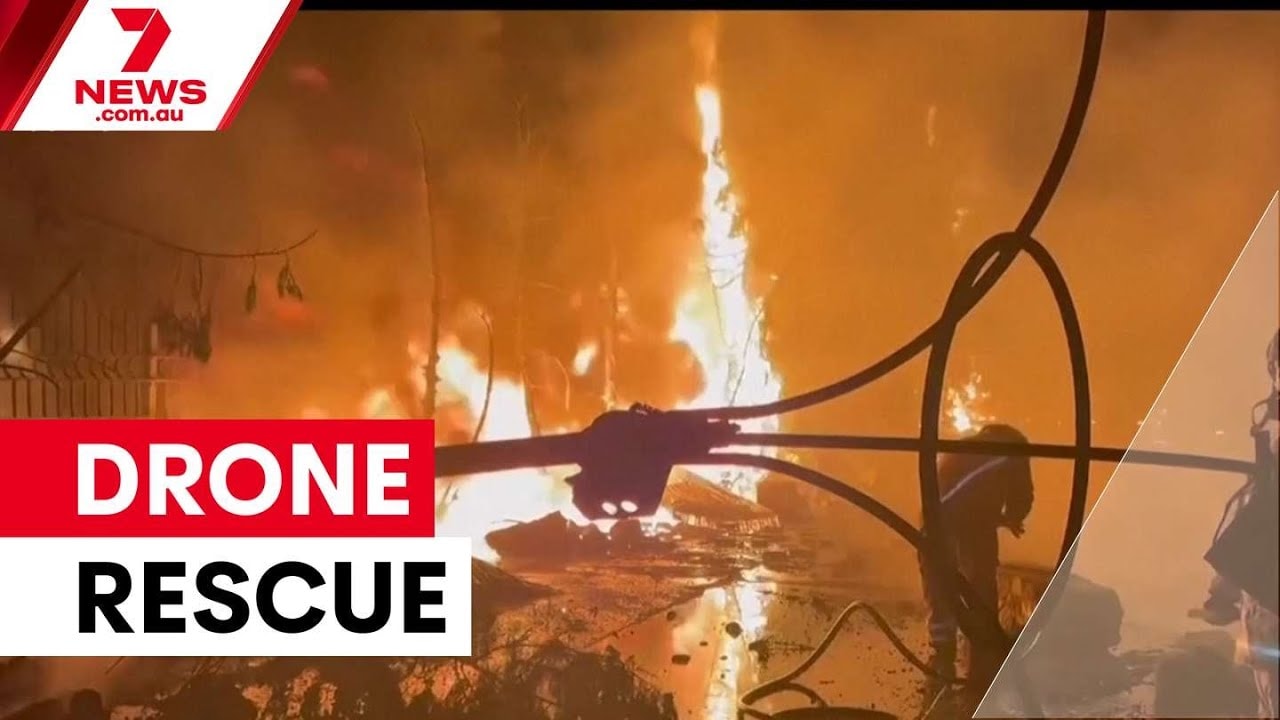
Among the clearest images of the night’s destruction came from Odessa, the major port city on Ukraine’s south-west coast. Two people were killed there, and emergency services were shown extinguishing flames after one of the strikes.
The scene in Odessa illustrated the immediate consequences of missile and drone attacks on urban areas: damaged buildings, fires, and rescue operations unfolding in the dark. It also highlighted how even cities with strategic importance remain, first and foremost, places where ordinary people live.

Odessa has repeatedly been a target during the war because of its location on the Black Sea and its significance to Ukrainian trade and logistics. Yet every renewed attack also carries a civilian cost that goes beyond military calculations.
Ukraine Hits Back in the Black Sea
Ukraine’s response was not limited to air defence and recovery operations. Across the Black Sea, Ukrainian sea drones reportedly struck several Russian “shadow fleet” oil tankers near Novorossiysk.
These tankers are significant because they help transport Russian oil, a major source of revenue that supports Moscow’s war effort. By targeting them, Ukraine is seeking to disrupt the economic networks that sustain the invasion, not just the weapons systems used on the battlefield.
The use of sea drones also reflects the widening role of unmanned systems in the war. What began largely as a conflict defined by artillery, missiles, and troop movements has increasingly become a contest shaped by remotely operated technologies on land, in the air, and at sea.
Readers looking for more on sanctions and maritime enforcement can refer to the Reuters Europe desk and the International Maritime Organization for shipping-related context.
Diplomacy Continues Alongside the Fighting
While military operations dominated the night, diplomacy remained active in parallel. Ukrainian President Volodymyr Zelensky travelled to Armenia for bilateral talks, continuing Kyiv’s effort to maintain international engagement even as attacks persisted at home.
He also expressed thanks, via British Prime Minister Keir Starmer, for words of support from King Charles during the monarch’s speech to Canada’s Parliament. The moment served as a reminder that symbolic backing from international partners still matters politically, especially during periods of intense military pressure.
In wartime, external support is not measured only in weapons and aid packages. Public statements from allied leaders and institutions can carry strategic weight by reinforcing legitimacy, solidarity, and diplomatic momentum.
How One Drone Became a Lifeline
The most remarkable story from the latest developments in Ukraine was not about destruction, but survival. A 77-year-old woman named Antonina had been hiding in a basement for four months.
At some point, she fled with her family, but she was unable to keep pace. Too slow to continue, she turned back, separated and exposed in a war-torn landscape.

That was when she saw a robotic drone approach. Not knowing what it was, she noticed a message spray-painted on it: “Grandma, get in.”
Antonina climbed inside. Four hours later, she had made it to safety.
Why the Rescue Matters
The rescue is extraordinary not only because of the woman’s age and vulnerability, but because it reverses the usual image of drone warfare. In Ukraine, drones are often associated with surveillance, targeting, and lethal strikes.
Here, however, a drone became a humanitarian tool. Instead of delivering force, it delivered escape.
The episode shows how quickly wartime technology can evolve beyond its most familiar use. The same broader technological shift that has made the conflict more dangerous has also created new possibilities for rescue, logistics, and battlefield medical support.

Antonina’s four-hour journey through devastated terrain is also a stark reminder of how many civilians remain trapped in dangerous conditions for long periods. Her story stands out because she survived, but it points to a wider reality of isolation, fear, and prolonged displacement.
A War Increasingly Defined by Drones
From ballistic missile barrages to sea-drone strikes and a robotic evacuation, the latest developments captured a central truth about the war in Ukraine: drones are no longer a side feature of the conflict. They are now embedded in nearly every aspect of it.
They are being used to attack cities, threaten shipping, monitor enemy positions, and, in rare cases, save lives. That dual role makes them one of the most consequential technologies in the war.
- Air drones are being used in mass attacks on Ukrainian regions.
- Sea drones are enabling strikes on Russian maritime assets and oil-linked logistics.
- Ground or robotic rescue platforms are beginning to show humanitarian potential in dangerous terrain.
This mix of uses illustrates how modern warfare increasingly collapses the boundaries between combat innovation and survival technology. The same conflict that produces devastation can also accelerate highly unconventional forms of rescue.
The Human Picture Behind the Headlines
Behind the numbers, locations, and military responses are two sharply contrasting realities. One is the ongoing vulnerability of civilians under sustained attack. The other is the resilience and improvisation that continue to emerge in response.
The overnight strikes that killed at least 10 people show the scale of danger still facing Ukrainian communities. The rescue of Antonina shows that even amid extreme destruction, there are moments of ingenuity and humanity that cut through the violence.
Together, these developments offer a clearer picture of the war as it stands now: brutal, technologically transformed, and still deeply personal.
Key Takeaways
- Russia launched more than 260 drones and ballistic missiles across five Ukrainian regions overnight.
- At least 10 people were killed in separate attacks.
- In Odessa, two people died and firefighters battled blazes after the strikes.
- Ukraine responded by using sea drones to hit Russian shadow fleet oil tankers near Novorossiysk.
- President Volodymyr Zelensky travelled to Armenia for bilateral talks and acknowledged support from Britain’s leadership and monarchy.
- A 77-year-old Ukrainian woman, Antonina, was rescued after entering a robotic drone marked with the message “Grandma, get in”.
FAQs
How many weapons were used in the latest Russian attacks on Ukraine?
More than 260 drones and ballistic missiles were launched across five Ukrainian regions in a single night.
How many people were killed in the attacks?
At least 10 people were reported killed in separate strikes.
What happened in Odessa?
Odessa was among the affected regions. Two people were killed there, and firefighters were deployed to extinguish flames after the attack.
What are Russian shadow fleet oil tankers?
They are vessels used to transport Russian oil, helping generate revenue that supports Moscow’s war effort. Ukraine reportedly targeted several of them near Novorossiysk using sea drones.
Who was the grandmother rescued by drone?
The woman was identified as 77-year-old Antonina, who had been hiding in a basement for four months before being rescued through war-damaged territory by a robotic drone.
Why is the drone rescue significant?
It highlights the unusual and evolving role of unmanned technology in the war. In this case, a drone was used not to attack, but to save a civilian life.
The information in this article has been adapted from mainstream news sources and video reports published on official channels. Watch the full video here Russian strikes kill 10 as drone rescues Ukrainian grandmother | 7NEWS