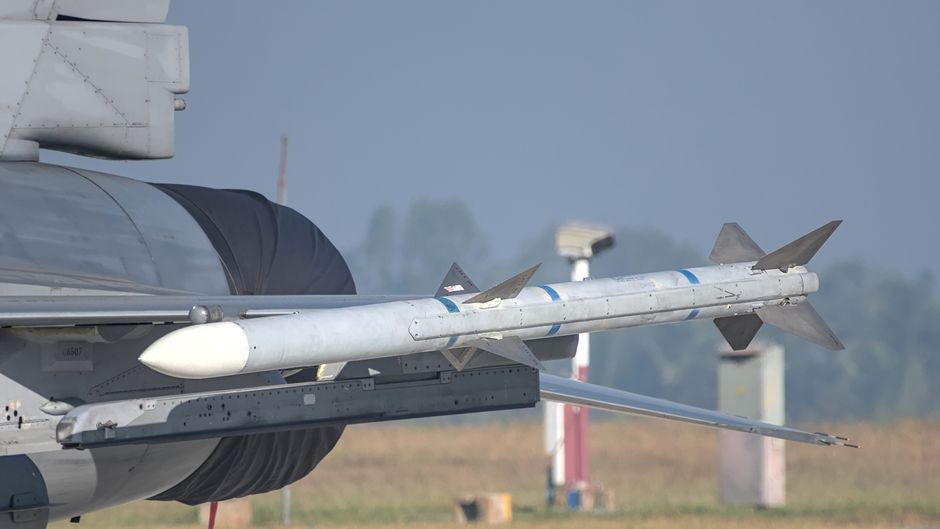
US President Donald Trump has offered Ukraine a licence to manufacture Patriot interceptor missiles — one of the most capable air defence systems in the world — during a NATO summit in Ankara. While the announcement has been welcomed as a potential lifeline for war-torn Ukraine, defence analysts are cautioning that the deal's benefits are likely years away, leaving the country exposed in the interim.
What Trump Actually Offered on Patriot Missiles
Speaking at the NATO summit, Trump said Ukraine could be granted the rights to produce Patriot interceptor missiles domestically. Ukrainian President Volodymyr Zelenskyy has sought both the missiles themselves and a manufacturing licence for some time, making the offer — at face value — a significant concession.
When pressed on whether additional Patriot interceptors would be dispatched to Ukraine immediately, Trump indicated that "some" could be sent in the short term, while suggesting Ukraine could begin local production relatively quickly. He did, however, acknowledge the US has its own supply constraints. "We have Patriots, but we don't have that many. We need them for ourselves too," he said.
The Patriot missile is just over five metres in length, 40 centimetres in diameter, and has a range of 70 kilometres. A single battery costs approximately US$10 million ($14.4 million AUD) to produce and can require up to 90 personnel to operate and maintain.
Why Ukraine Needs Them So Urgently
Russia has intensified its ballistic missile campaign against Ukraine in recent weeks, with strikes killing dozens of civilians and causing widespread infrastructure damage. The Patriot system is considered one of the few weapons capable of countering these high-altitude, high-speed attacks.
A senior lecturer in aviation safety at the University of New South Wales described Patriots as among the most effective air defence systems available. "They are very effective at downing incoming ballistic missiles, which fly at much higher altitudes and are much faster than other types of missiles or drones," she said.
The situation on the ground appears increasingly dire. A former US ambassador to NATO said it is likely Ukraine has now exhausted its existing Patriot interceptor stockpile. "Recently, none of the incoming Russian ballistic missiles has been downed. That suggests that Ukraine is essentially out of its Patriot air defence system," he said. For more on the recent wave of Russian strikes and their impact, see our earlier coverage of Russian strikes and the Ukrainian response.
The Major Catch: Manufacturing Is Years Away
Despite the headline announcement, experts are tempering expectations significantly. The same former ambassador estimated that even the United States — with its existing industrial base — takes around two years to produce Patriot missiles at scale. For Ukraine, the challenge is far greater.
"The factory today doesn't exist in Ukraine. The workforce is not in place. And of course, any production in Ukraine will face some of the same supply chain challenges as American manufacturers," he said. "So, this is good news, but it's good news only down the road."
The UNSW aviation expert raised an additional concern: given how rapidly weapons technology evolves, Patriot missiles could be partially obsolete by the time Ukraine is in a position to manufacture them at scale.
Is This About Ukraine — Or About Trump's Broader Strategy?
Analysts have noted that Trump's offer may be as much about managing his relationships with other world leaders as it is about Ukraine's battlefield needs. The announcement came in the context of a broader diplomatic gathering, and Trump's simultaneous manoeuvring on multiple geopolitical fronts suggests the Patriot offer is part of a wider diplomatic calculus rather than a straightforward military commitment.
The approach is consistent with the transactional, deal-oriented foreign policy style associated with Trumpism — where strategic announcements serve multiple audiences at once.
For Ukraine, the immediate reality remains stark: its air defences are depleted, Russian strikes are intensifying, and the promise of domestically produced Patriots — however welcome in principle — offers little protection today.