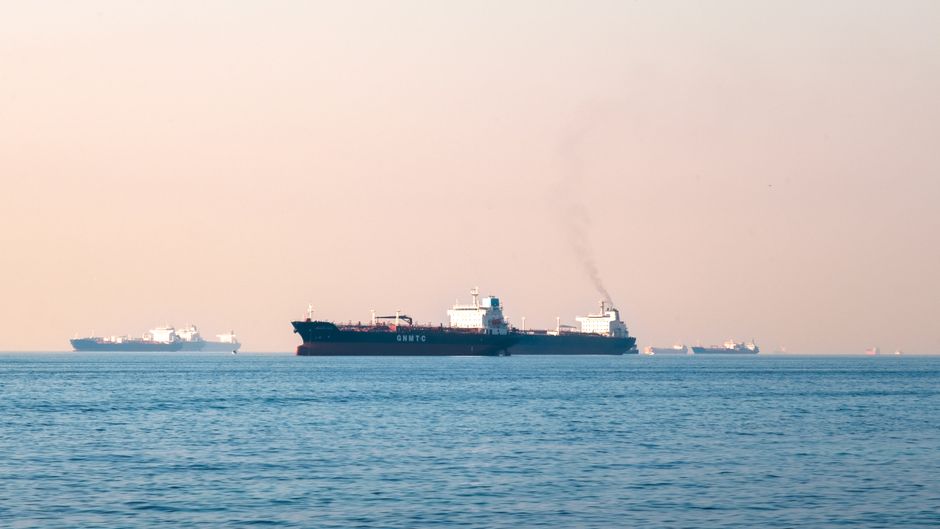
A massive column of black smoke has blanketed the skies above Russia's Black Sea coastline after a crude oil tanker was struck in waters off the port city of Sochi in what is believed to be a Ukrainian attack, with an ocean fire now burning as firefighters wait for conditions to allow an approach to the vessel.
The stricken ship is understood to be the Liberia-flagged Aframax Rea tanker, based on footage circulating on Russian Telegram channels that shows the vessel engulfed in flames. Russia's Ministry of Transport confirmed that all 23 crew members — all Indian nationals — were rescued, with preliminary reports indicating no injuries among those aboard.
"An open oil fire is currently burning in the Black Sea. Firefighting efforts will be possible once the fire's intensity subsides," the ministry said in a statement.
Strike Follows a String of Black Sea Attacks
The tanker strike comes just one day after Ukrainian President Volodymyr Zelensky publicly accused Russia of launching drone strikes against a grain-carrying merchant vessel travelling through what he described as "neutral waters" on the Black Sea. That incident added to a growing list of attacks on commercial shipping that have alarmed European leaders and international maritime authorities.
Earlier on the same day as the tanker fire, two merchant ships were struck inside Bulgaria's exclusive economic zone — reportedly the first time attacks have occurred within Bulgarian maritime territory. It remains unclear which side launched those strikes, but the incidents have intensified fears that the theatre of the war is expanding well beyond Ukrainian and Russian borders.
Romanian authorities also reported that two people died in a fire aboard a ship in the Black Sea outside Romania's territorial waters. Zelensky attributed that incident to Russian drones, while Russian authorities declined to comment.
The pattern of escalating maritime attacks is raising serious concerns for global trade. As the conflict continues to intensify on multiple fronts, commercial shipping lanes that carry food, fuel and other essential goods are increasingly caught in the crossfire.
Zelensky Warns of Incoming Russian Massive Strike
Hours after footage of the burning tanker near Sochi began spreading online, President Zelensky took to social media to issue a stark warning to Ukrainian civilians, saying he had received updated intelligence about Russian preparations for what he described as a "massive strike".
"I ask you, please, take care of yourselves and respond to missile threat alerts. Ukrainian services and our Air Force are ready to respond," Zelensky wrote.
The warning signals a further escalation in a conflict that has already seen deadly Russian strikes on Ukrainian territory and increasingly bold Ukrainian retaliatory operations deep inside Russian-controlled and Russian sovereign areas.
European Leaders Condemn Attacks on Civilian Ships
The string of maritime incidents has drawn sharp condemnation from European leaders, who are warning that the conflict risks spilling into a broader global crisis.
Bulgarian Prime Minister Rumen Radev called the strike within his country's exclusive economic zone a gross violation of international law, warning of severe consequences if the war is not brought to a halt.
"If this war is not brought to an end in time, it will continue to expand its geographical scope and increase the risk of even a global conflict," Radev said. "We are seeing the war intensify, with all the rules of international law now being violated, and civilian vessels being attacked at sea. This is absolutely unacceptable."
European Commission President Ursula von der Leyen also condemned the targeting of commercial vessels, stating: "Commercial ships — and innocent crews — are being targeted, with lives already lost at sea."
Ukraine's Foreign Minister Andrii Sybiha warned that Russia's actions against civilian shipping were creating a "dangerous chain of consequences" for global food security, arguing that attacks on merchant vessels drive up insurance costs, deter navigation, and threaten the supply of food to international markets.
With the Black Sea blaze still burning and both sides signalling further escalation, the conflict — now more than four-and-a-half years old — shows no signs of returning to clearly defined frontlines.