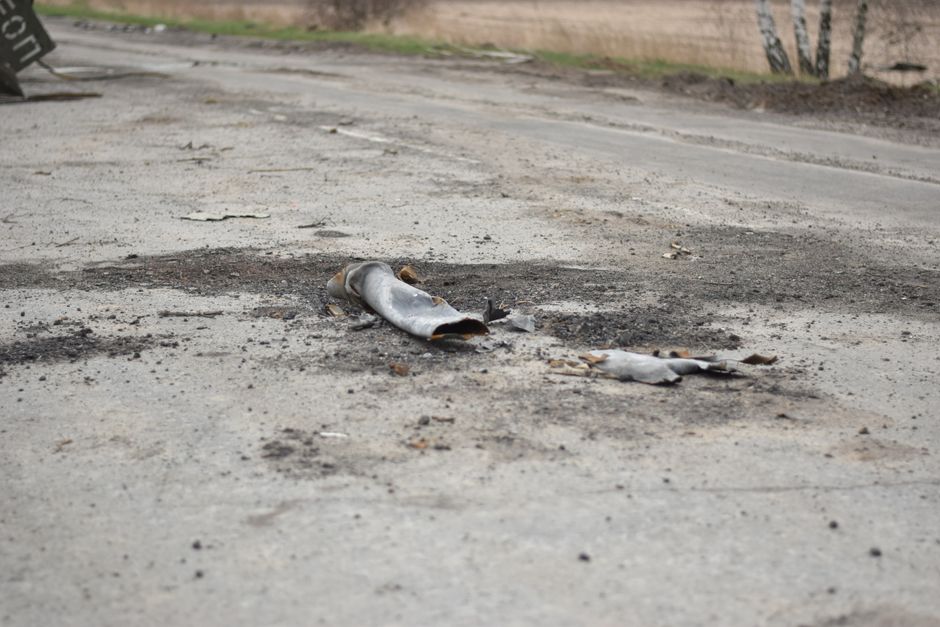
Russia launched what Kyiv's mayor described as the most devastating aerial assault on the Ukrainian capital in the history of the war, killing at least 25 people, injuring more than 90 others and sending tens of thousands of residents fleeing to underground shelters. The overnight barrage — lasting roughly 11 hours — tore open apartment buildings across multiple districts of Kyiv, and both Ukraine and Russia emerged from it vowing to intensify hostilities rather than step back from the conflict now in its fifth year.
A Night of Explosions and Rubble
The attack began late on Wednesday local time, with blasts continuing deep into the early hours of Thursday morning. Russia fired 74 missiles — 24 of them ballistic — and 496 drones of various types at Kyiv and surrounding regions, according to Ukraine's air force. Of those, 48 missiles and 476 drones were intercepted.
Damage was recorded at 30 locations across the city, the vast majority of them residential buildings and civilian infrastructure. In the Desnianskyi district, residents were left trapped inside a damaged nine-storey building, while in the Darnytskyi district six levels of another nine-storey block collapsed entirely. Fires broke out across multiple sites, with smoke visible over the Kyiv skyline at dawn as emergency crews continued digging through rubble in search of survivors and victims.
Ukrainian Foreign Minister Andrii Sybiha called it a "night of horror". Interior Minister Ihor Klymenko said around 20 residential buildings were damaged in total. Among the civilian losses beyond Kyiv, a Russian guided bomb strike in the central Dnipropetrovsk region killed a seven-year-old girl and wounded four other people — including an 11-year-old girl — all members of the same family.
The Ukrainian branch of the Red Cross confirmed that its key warehouse in the capital had been destroyed in the attack, with approximately US$2 million (around AU$2.8 million) worth of humanitarian aid lost. A building housing a number of diplomats was also struck by debris, though EU officials confirmed those diplomats were unharmed.
Ukraine and Russia Trade Vows of Escalation
Ukrainian President Volodymyr Zelenskyy, who cut short a visit to Dublin when news of the strikes broke, returned to Kyiv and inspected the wreckage of a partially destroyed apartment block. He said his forces would "definitely" retaliate for the attack and urged Ukraine's allies to accelerate military support.
"We also very much count on a decision by the United States regarding licences for Patriots," Zelenskyy wrote on Facebook, referring to Ukraine's request to manufacture Patriot air-defence missiles domestically. Speaking after talks with Finland's President Alexander Stubb, he added: "Defending against ballistic missiles is impossible without a sufficient number of missiles for Patriot systems." Defence analysts caution, however, that establishing domestic Patriot production would take considerable time.
Sybiha rejected Russia's framing of the strikes as legitimate retaliation, insisting Ukraine was exercising its right to self-defence under Article 51 of the UN Charter. He urged allied nations not to delay decisions on supplying air defence systems and missiles.
Russia, for its part, showed no sign of softening its position. The Kremlin maintained the bombardment was directed exclusively at military and military-linked targets — a claim flatly contradicted by the widespread destruction in residential areas. Moscow's General Staff chief General Valery Gerasimov reported the results of what the Kremlin called a "massive retaliatory strike" directly to President Vladimir Putin. Russia vowed to further intensify "pressure" on Ukraine, as it has consistently done throughout the conflict.
Russia described the assault as retaliation for Ukraine's long-range strikes on Russian oil infrastructure — part of what Zelenskyy has characterised as a 40-day blitz targeting refineries and energy facilities that has created fuel shortages inside Russia. This pattern of Russian strikes against Ukrainian infrastructure has defined much of the conflict's recent phase, with both sides inflicting severe damage on civilian and economic targets.
International Condemnation and Diplomatic Pressure
United Nations Secretary-General António Guterres condemned the barrage and renewed calls for a ceasefire. His spokesman Stéphane Dujarric stated plainly: "Attacks against civilians and civilian infrastructure wherever they occur are a clear violation of international humanitarian law and must stop immediately."
The European Union's top diplomat proposed fresh sanctions against Moscow in response to the attack. A US official indicated President Donald Trump sought a peace deal to end what he called the "senseless killing," though diplomatic efforts by the Trump administration have so far failed to produce any breakthrough. Ukraine's officials have said their long-range strikes are intended to pressure Putin into genuine negotiations, but Moscow has thus far responded by escalating rather than engaging.
As Kyiv continued to clear debris and account for the missing, the prospect of any near-term de-escalation appeared remote, with both capitals issuing hardened rhetoric and the international community struggling to translate condemnation into action. For an earlier example of the human cost these attacks continue to exact, see our previous coverage of Russian strikes killing civilians and a dramatic drone rescue.