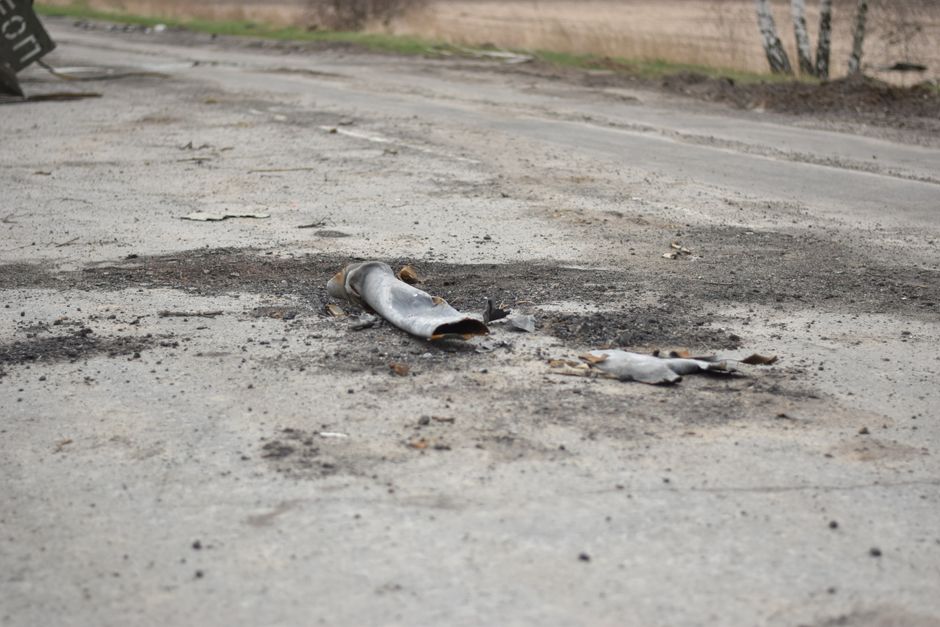
Russian missile and drone attacks targeting Kyiv and more than a dozen other Ukrainian regions overnight have killed at least 25 civilians, including five children, and left around 100 people wounded. Ukrainian President Volodymyr Zelenskyy confirmed the death toll on Wednesday, noting bitterly that the large-scale bombardment fell on the same day as Russian President Vladimir Putin's 74th birthday — strikes Kyiv had anticipated but could not fully prevent.
Deadliest Blow Falls on Pryluky
The single worst incident occurred in Pryluky, a city in Ukraine's northern Chernihiv region, where a Russian missile destroyed an apartment building and killed 19 people — among them five children. Around 50 others were wounded in that strike alone, with rescue operations continuing through the night.
Further casualties were reported in the southern city of Kremenchuk, in the Poltava region, where two people were killed and seven injured. Deaths were also recorded in the capital, Kyiv, and at least one other city, according to Zelenskyy.
In a late-night address, the Ukrainian president did not mince words about the timing. "This is the 'gift' that Putin gave himself for his birthday: the killing of children, the killing of people," Zelenskyy said. He added that Russia had deliberately sought to strike "painfully and demonstratively."
Ukraine Saw the Attack Coming — But Couldn't Stop It
The strikes came just one day after Zelenskyy publicly warned that Ukrainian intelligence had identified a Russian build-up consistent with a "massive" incoming attack. Despite that forewarning, Ukraine's air defences were unable to intercept all of the incoming weapons.
The difficulty lies partly in the nature of the weapons being used. Russia has been deploying ballistic missiles alongside a newer generation of jet-propelled drones, both of which pose serious challenges for Ukrainian air defence systems. Without sufficient ammunition for its US-made Patriot systems, Ukraine cannot reliably stop ballistic missile strikes. Meanwhile, its military is racing to develop interceptors capable of catching the high-altitude, high-speed jet-powered drones increasingly used in Russian bombardments.
Ukraine is reported to be searching globally for available Patriot missiles, a task made harder by high demand elsewhere, including from US-Israeli operations directed at Iran.
This pattern of escalating aerial bombardment has been a recurring feature of the conflict. Russian drone strikes have repeatedly targeted civilian areas in Kyiv, underscoring the relentless pressure Ukraine's capital and other cities face from the air.
Russia Frames Strikes as Military Targets
Russia's defence ministry offered a starkly different characterisation of the overnight attacks, stating that its forces had carried out a large-scale strike against industrial facilities involved in the production and storage of missiles and drones across Ukraine. The ministry also said port infrastructure and ship repair facilities in the southern Odesa region were struck, as well as vessels carrying military cargo for Ukrainian forces.
Ukrainian officials and international observers have consistently disputed such framing, pointing to the civilian toll and the targeting of residential buildings.
European Commission President Ursula von der Leyen condemned the strikes, writing that "Russia is pursuing a deliberate strategy of terror," aimed at making ordinary life unbearable for Ukrainians. Zelenskyy echoed that sentiment, describing Russia's intent as psychological as much as military. "That is exactly what the enemy is counting on," he said. "For us to be afraid to fall asleep. To let our children out of our sight. To plan anything. So that everyone thinks: next time it could be my address."
A War Locked in Stalemate, With No Peace in Sight
The overnight attacks are the latest chapter in an intensifying aerial campaign that has run parallel to a largely deadlocked ground war — now more than four and a half years since the 2022 Russian invasion of Ukraine began in full force. With front lines barely moving, both sides have escalated their long-range strikes, though analysts note the asymmetry is particularly dangerous for Ukraine, which is smaller and has fewer resources to absorb sustained bombardment.
Western analysts say Putin continues to press the invasion believing that Ukrainians will eventually buckle under relentless pressure and that Kyiv's Western backers will lose the political will to sustain their support. US-led diplomatic efforts have so far failed to produce any tangible ceasefire progress, with even preliminary technical discussions still described as under consideration rather than underway.
For Ukraine, Wednesday's attacks were a grim reminder that knowing a strike is coming offers little protection when the means to stop it are in critically short supply. Earlier Russian strikes have similarly exposed the limits of Ukraine's air defences, a vulnerability its military and government are urgently working to address.