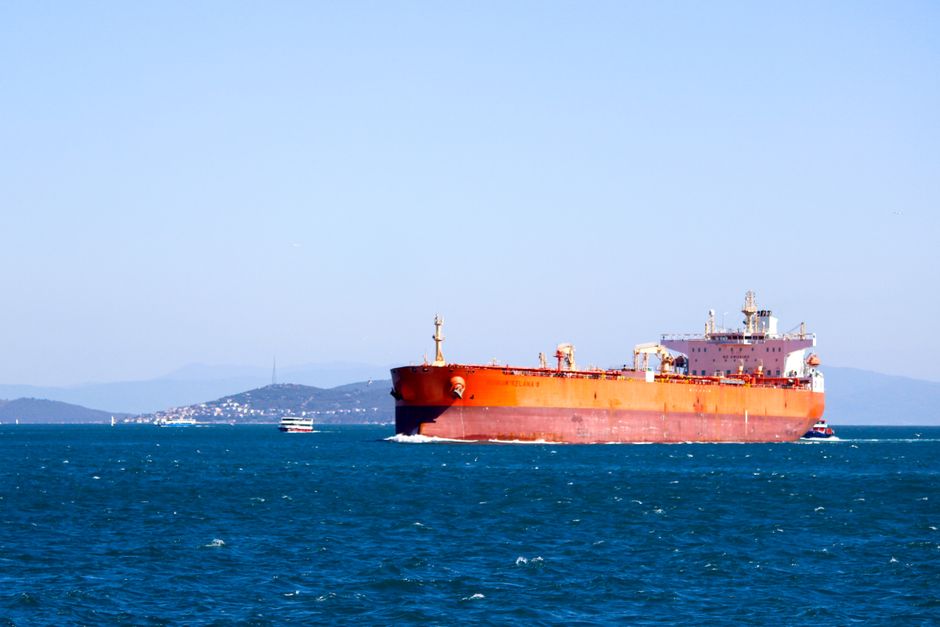
Iran is signalling it may be ready to deploy what analysts are calling its last major strategic reserve — using its Houthi allies in Yemen to close the Bab el-Mandeb Strait, the narrow Red Sea gateway through which Saudi oil exports and a large share of global shipping pass, opening a second front against the United States at the same time as tensions over Tehran's nuclear programme are sharply escalating.
The warning comes as US strikes continue to deepen inside Iran and Houthi attacks intensify in parallel, with analysts saying Tehran is deliberately widening the conflict to maximise pressure on Washington by threatening two of the world's most critical energy arteries simultaneously.
A second chokepoint enters the frame
Iran has already demonstrated the strategic weight of the Strait of Hormuz by disrupting traffic through the Gulf. Now, a senior Yemeni official has warned that Yemen's armed forces stand ready to close Bab el-Mandeb as well, should Saudi Arabia continue striking Yemeni territory. For background on how the current confrontation unfolded, see our earlier coverage of the Hormuz crisis and Iran escalation.
Mohammed al-Farah, a member of the political bureau of Ansarullah — the Houthi resistance movement — said Washington was actively inciting Saudi Arabia to strike Yemen, and that such a course of action would never serve American interests.
"If the current situation aggravates, the Bab el-Mandeb Strait and the Strait of Hormuz will be closed in an operational alliance," al-Farah said. "Oil prices would then skyrocket to $200 a barrel in a dreadful shock."
The Houthis have previous form in targeting the Red Sea corridor. After the Gaza war erupted in October 2023, the Iran-backed group launched sustained attacks on commercial shipping, claiming it was targeting vessels linked to Israel in solidarity with Palestinians. The campaign forced major shipping companies to reroute around southern Africa, drove up transport costs, and triggered US and British airstrikes as well as a multinational naval protection mission.
Andreas Krieg, a senior lecturer at King's College London's School of Security Studies, described the latest threat as "another nuclear option" for Iran after Hormuz — a card it would only play if Iran's Islamic Revolutionary Guard Corps concluded that a return to all-out war had become unavoidable.
Middle East scholar Fawaz Gerges said Tehran was sending a clear message to Washington that it could threaten both chokepoints at once, transforming what began as a bilateral confrontation into a direct challenge to the sea lanes underpinning global energy trade. "Now [Tehran] is escalating both near and wide," he said. "The message is that not only Hormuz, but Bab el-Mandeb is at risk."
The danger, analysts warn, is less an immediate return to full-scale war than a steady "mission creep" — a gradual ratcheting of stakes by both sides that stops just short of direct confrontation but risks spiralling beyond anyone's control.
Pickaxe Mountain: the nuclear site that survived 'obliteration'
Complicating the picture further is a separate and significant nuclear flashpoint. US President Donald Trump on Monday threatened to destroy Pickaxe Mountain, a heavily fortified site near Iran's already-damaged Natanz facility, where Western intelligence suspects Tehran is constructing an undeclared uranium enrichment facility.
"We're going to take out Pickaxe Mountain. Tell the Iranians to be ready," Trump said.
The threat raises an awkward question. Last June, Trump declared that "all" nuclear sites in Iran had been "obliterated" following 2025 United States strikes on Iranian nuclear sites. Yet Pickaxe Mountain was not among the three facilities — Fordow, Natanz and Isfahan — targeted in those June strikes, and it has remained untouched through both phases of the conflict.
Construction at the site began in 2020 and has accelerated since the June strikes. The Iranian government has described it as a centrifuge assembly plant, while independent analysis has raised deeper questions about whether it includes plans for a full enrichment facility. As of June 2025, the site was not yet assessed as operational — a factor that may explain why it was not struck at the time.
The critical obstacle to any strike is physical: Pickaxe Mountain sits an estimated 600 metres below solid granite, a depth assessed as beyond the reach of even the most powerful bunker-buster bombs in the US arsenal, including the GBU-57 Massive Ordnance Penetrator deployed by B-2 bombers last June.
Deakin University professor of global Islamic politics Greg Barton noted that despite Trump's "obliteration" claim, approximately 440 kilograms of enriched uranium is believed to remain buried underground and is assessed as "relatively accessible."
The path back to the negotiating table
As the conflict extends from the Gulf to the Red Sea and questions mount over Iran's surviving nuclear infrastructure, analysts say the mounting economic and strategic costs could ultimately push both sides toward diplomacy. Earlier ceasefire efforts have so far failed to produce a durable arrangement.
Former US Middle East peace negotiator Dennis Ross framed the core challenge facing Washington: "The issue is, how do you change the Iranian calculus to the point where they're ready, again, to talk — but not just to talk, but actually to work out an arrangement that is acceptable?"
With two of the planet's most important oil chokepoints now openly in play, and a buried nuclear site defying both bombs and presidential declarations, the pressure on both governments to find an answer to that question is growing by the day.