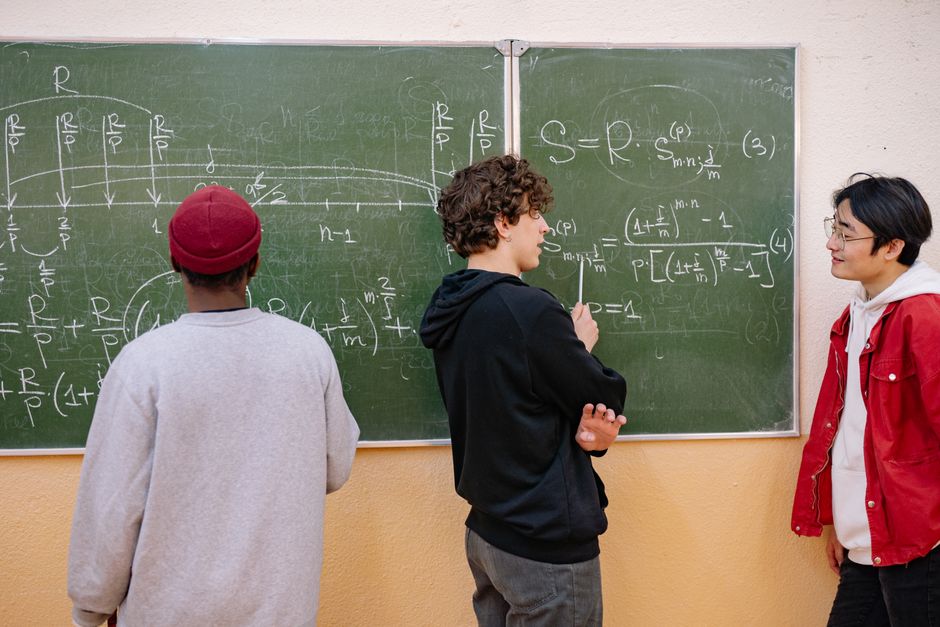
Enrolments in the toughest mathematics course offered through the Higher School Certificate are hovering near record levels, with boys driving the bulk of a significant decade-long surge in students choosing to take on the challenge. New data shows 3,769 students are currently enrolled in mathematics extension 2 across New South Wales, with boys accounting for roughly 90 per cent of the approximately 500 additional students who have taken up the subject compared to ten years ago.
Why more students are choosing HSC extension mathematics
Educators say the growth in extension mathematics enrolments is not happening by accident — it is the result of deliberate, sustained effort in the earlier years of high school to build students' mathematical foundations before they ever reach senior level.
Mathematics teacher Eddie Woo points to two key capabilities that schools have increasingly focused on developing in tandem: procedural fluency — the ability to carry out mathematical techniques accurately and efficiently — and conceptual understanding, meaning students genuinely grasp the reasoning behind what they are doing, not just the steps.
"So those two are kind of two wings of a plane," Woo said. "If you have only one, you are in trouble. You're only going to get so far."
He describes the payoff as a gradual process. "It's a slow boil kind of thing," he said, noting that students are also increasingly aware of the career pathways that strong mathematics skills can open up.
That dual focus matters especially in extension subjects, which are known for setting non-routine problems that require students to think flexibly rather than simply apply a memorised method. Without genuine conceptual grounding, Woo says, students are likely to find themselves at a loss when they encounter an unfamiliar question. "If you don't understand what the concepts are about and how to apply them in novel ways, you're like, 'I don't know how to start this question'."
At Quakers Hill High School in Sydney's west, head of mathematics Melhem Daghel echoes that view, saying students are choosing harder courses because they are arriving in senior years with stronger foundational knowledge built up progressively through high school.
The gender gap — and why girls hold back
The lopsided gender split in extension 2 enrolments is a concern that educators say has its roots in how girls experience mathematics long before they reach the HSC. Despite often performing at the same level as their male peers, girls are more likely to internalise doubts about their own ability — particularly when they make mistakes.
"Boys make mistakes. Girls make them. But the girls tend to take it harder. Boys kind of just shrug it off," Woo said.
Over time, he argues, this creates a false but persistent narrative in many girls' minds that mathematics does not come naturally to them — even among students who are objectively excelling. "I've had to convince some of the best mathematicians in my classes who were girls because they'd say: 'This is really hard for me. I feel like it's not coming naturally.'"
Woo says this confidence gap has an outsized influence on girls' subject choices and is a key factor behind the enrolment disparity seen in the most demanding mathematics courses. Barriers to subject access more broadly remain a live conversation across Australian education.
Snapshot of broader HSC maths enrolments
Beyond extension 2, the data reveals a mixed picture across the range of HSC mathematics offerings:
- Mathematics standard 1, which includes an optional ATAR exam, has grown by more than 60 per cent since its introduction in 2019, reaching 8,389 enrolments this year.
- Mathematics standard 2, the most popular course, has held steady at 31,698 enrolments.
- Advanced mathematics has seen a dip of more than 1,000 students, sitting at 16,151 enrolments.
Among those heading into the HSC exam period — which begins on October 13 — is Quakers Hill student Aarchi Dhobi, who will sit both the advanced and extension 1 examinations. She credits her teachers with building her confidence and conceptual understanding throughout high school. "I think the support from the teachers in just pushing us and explaining everything properly just led me to choosing extension maths," she said. Working through past papers ahead of the exams, she finds them both demanding and rewarding. "It's like you get to think outside the box."