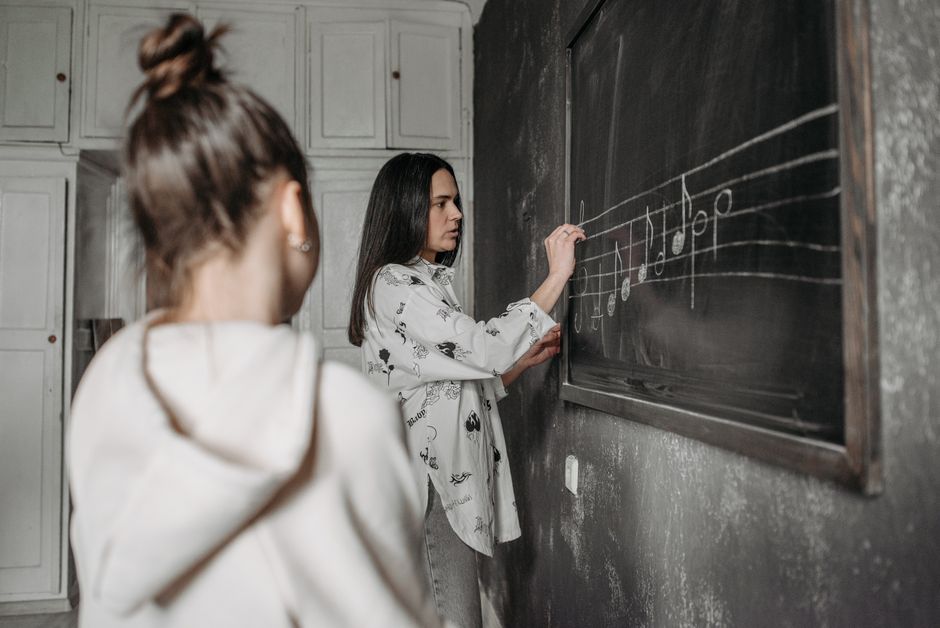
Queensland families are facing significant out-of-pocket costs to keep their children in school music programs, while experts warn that recent curriculum changes and a declining number of specialist teachers are quietly eroding access to music education across the state.
At some of Brisbane's largest state high schools, instrumental music programs can cost families $175 per year in uniform costs alone, with instrument hire adding more than $130 on top of that — and none of that accounts for private tuition. At private schools, the total bill can exceed $600 annually.
Curriculum Changes Raise Alarm Among Education Experts
Changes to the Queensland curriculum introduced in February have reduced the mandatory minimum number of creative arts subjects schools are required to offer and assess. Under the updated framework, schools must provide just one semester of assessable creative arts learning every two years as a minimum requirement for students in years 1 to 6.
While students are still expected to have engaged with all five arts disciplines — dance, drama, media, music and visual arts — at least once by the end of year 6, the broader framework no longer specifies which subjects must be taught and assessed.
Education consultant Kathleen Jenkins, who brings a decade of schooling experience and a background in the music industry, says the changes are a cause for concern.
"When it comes to the state system, their framework says that you just have to teach and assess the arts, and it doesn't actually state which subjects," Jenkins said.
Jenkins also noted that selection into instrumental music programs — available to students from year 3 — is determined by each school individually, with factors including ensemble composition and available time taken into account.
A Shrinking Pool of Music Teachers
The shortage of specialist music educators is compounding the problem. Queensland Teachers' Union vice-president Leah Olsson confirmed there are approximately 500 full-time equivalent classroom music teachers working across more than 900 state primary schools — meaning many schools share teachers or go without dedicated music instruction altogether.
Olsson said schools are increasingly employing generalist arts specialists who cover the full spectrum of creative arts subjects, a shift from the previous model in which music held its own dedicated specialty area.
"Previously, music was its own specialty area, and the classroom teacher would actually take on the responsibility of teaching [other creative arts]," Olsson said.
The Queensland Teachers' Union flagged the issue more than a decade ago, establishing a focus group on primary music education after teachers began noticing fewer students choosing music — a trend particularly pronounced in regional areas, where music teachers frequently covered multiple schools.
Where a classroom music teacher is available, they typically deliver between 30 and 40 minutes of music instruction per year level each week.
The Funding Gap and What Families Can Do
Metropolitan schools have had more success retaining music students into high school than regional counterparts, partly because of extracurricular programs such as school bands. But even in cities, the cost burden is significant — and not all families can absorb it.
Jenkins pointed to the disparity between arts funding and sport funding as a structural problem. She noted that schemes like the Play On vouchers help families cover sport participation costs, but no equivalent program exists for creative arts.
"I bet my kids would probably be learning more about music if we had them [for the creative arts]," she said.
When asked about cost-of-living support for arts courses, an Education Department spokesperson said families could approach school principals about fee waivers. The department's Back to School Boost program — set to increase to $150 per primary school child next year — can be applied to music-related costs if they are invoiced directly by the school. Remote and regional schools can also access travel grants and funding for creative arts incursions.
However, Jenkins cautioned that while industry and external providers could help fill gaps in the public system, funding remains the central barrier to making that work at scale.