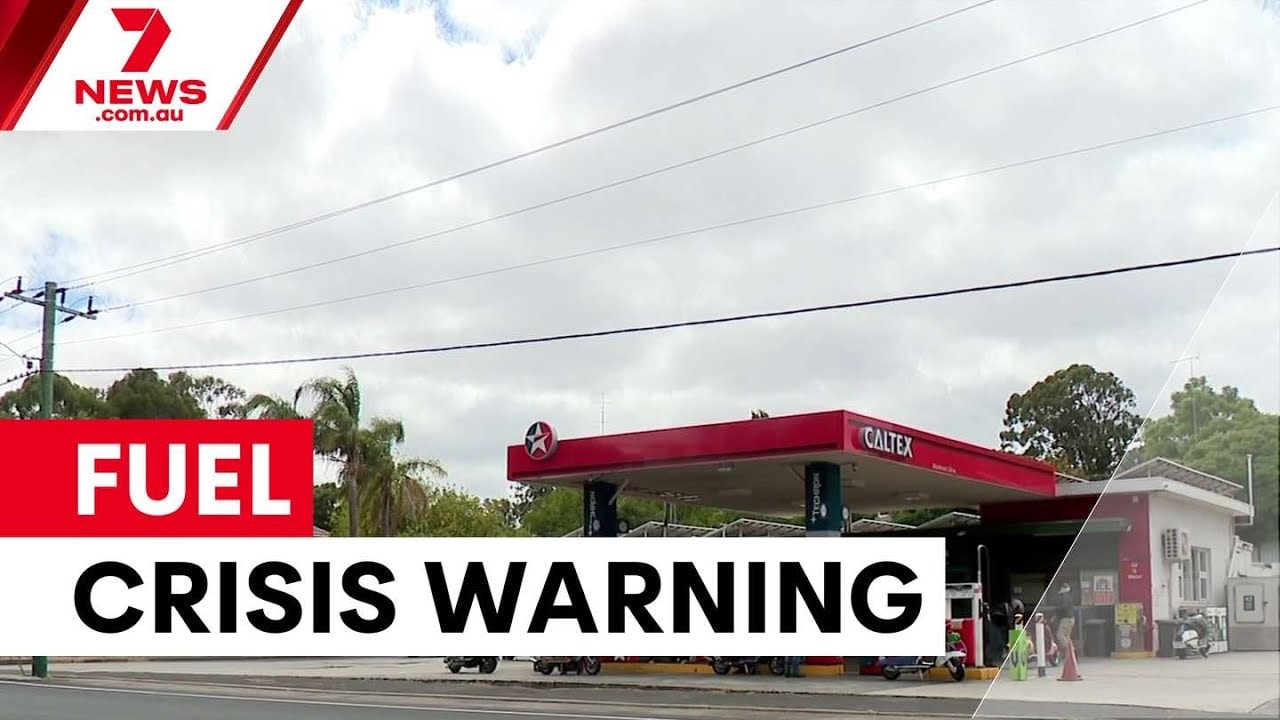

SYDNEY, AUSTRALIA — A fresh fuel crisis warning is raising concern about how prepared Australia really is for prolonged disruption in global oil supply. While the federal government says the country remains well placed to manage current pressure, analysts are warning that the most serious consequences may not yet have arrived.
The immediate issue is not only how much petrol, diesel and jet fuel Australia has in reserve today. It is also how long regional instability in the Middle East could continue to disrupt supply chains, freight movements, food logistics and broader economic stability in the months ahead.
Why the latest fuel warning matters
The warning comes amid conflict-linked pressure on energy routes tied to the Middle East, particularly around the Strait of Hormuz, one of the world’s most important oil chokepoints. Disruptions there can ripple across shipping routes, refining networks and import-dependent countries such as Australia.
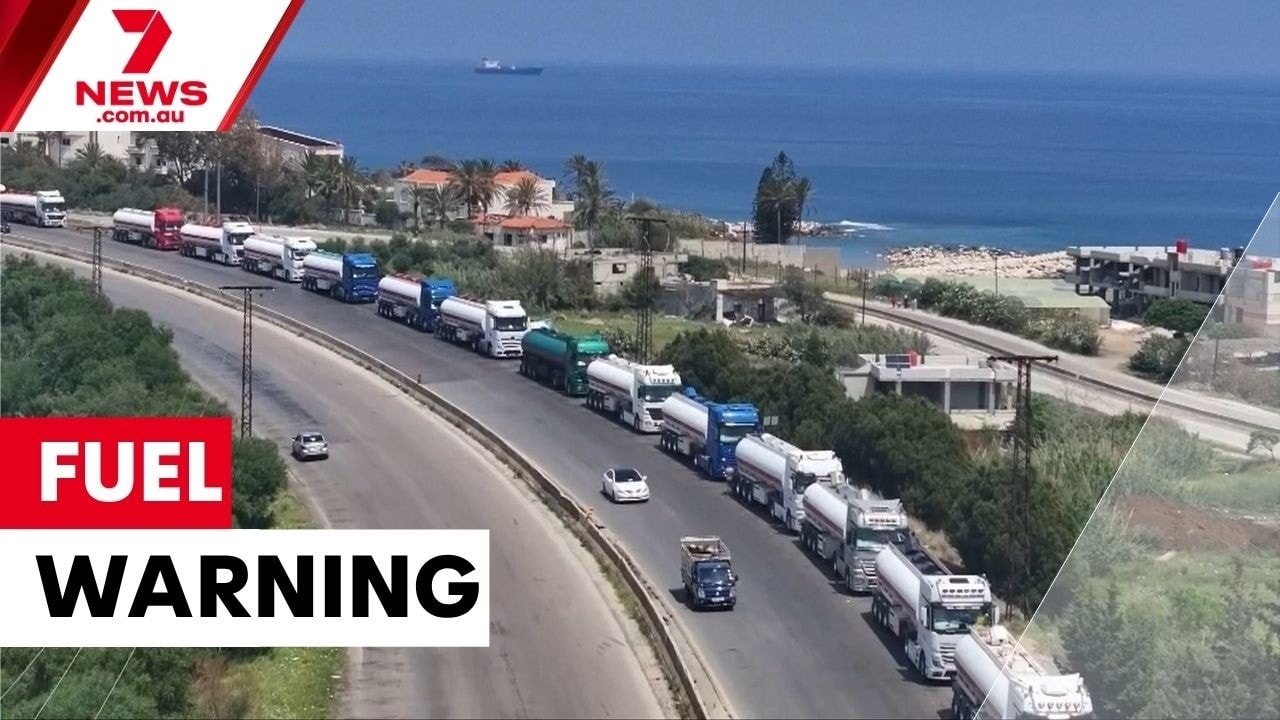
Those ripple effects are already visible far from the conflict zone. One example highlighted the strain on regional transport networks: hundreds of oil trucks were queued at a Syrian Mediterranean port, underscoring how fuel is still moving, but more slowly and under greater pressure.
An Iraqi driver described trips taking as long as 15 days, a sign of how congestion and instability can slow the journey from oil fields and refineries through to tankers and, eventually, fuel customers overseas.

Australia’s current fuel stock position
The federal Energy Minister said Australia has 43 days of petrol in reserve, a slight drop from the previous week. Diesel stocks were reported at more than one month, while jet fuel stood at 28 days, also slightly down.
At the same time, 56 ships carrying fuel were on their way to Australia. The government’s position is that the country is in a strong enough position to absorb current disruption and manage through the immediate uncertainty.
That message is intended to reassure households, businesses and industries heavily dependent on fuel supply. In practical terms, it suggests there is no immediate signal of a sudden nationwide shortage at the bowser.

Why some experts say Australia is not ready
Not everyone agrees with the official confidence. Former Air Force deputy chief John Blackburn issued a much darker warning, arguing that Australia is not ready for the risks it now faces.
His concern is not limited to the fuel already in storage. Instead, it centres on the longer-term consequences of disruption around Hormuz and the wider vulnerability of a country that relies heavily on imported refined fuel.
“We’re only now about to see the impacts of the Strait of Hormuz closing on Australia’s fuel supply.”
That assessment points to a time lag built into global energy logistics. A crisis in a distant shipping corridor does not always produce instant shortages, but it can create delayed strain as cargoes are rerouted, shipping capacity tightens, insurance costs rise, and regional demand competes for finite supply.
The bigger risk may be food and regional supply chains
One of the most serious warnings was not about service stations at all. Blackburn said food supply disruptions across Australia’s region may take months to become fully visible.
That matters because fuel is deeply tied to food production and distribution. Diesel powers freight transport, agricultural machinery and large parts of the logistics network that moves goods across ports, warehouses and supermarket supply chains.
If surrounding countries face deeper shortages or transport bottlenecks, the knock-on effects can spread beyond the energy market. Delays in one part of the region can create scarcity, higher prices and pressure on shipping availability elsewhere.
In that sense, the fuel crisis is not simply an energy story. It is also a supply chain story, a food security story and a regional resilience story.

Spot market dependence and the limits of short-term thinking
A central criticism in the warning is Australia’s reliance on buying fuel on the spot market rather than building stronger long-term resilience. Blackburn argued that this approach reflects a broader tendency to assume supply will always be available if the country is willing to pay for it.
“We’re sort of sticking our head in the sand a bit and going, ‘Oh, we’ll just buy fuel on the spot market.’”
That strategy can work in relatively stable times. It becomes far riskier when multiple countries are chasing the same fuel cargoes during geopolitical upheaval.
Australia’s exposure is heightened by its geographic distance from major energy hubs and by the importance of imported fuel to transport, defence, aviation and agriculture. In a prolonged crisis, supply access matters just as much as headline reserve numbers.
For broader context on Australia’s fuel security settings, readers can review information published by the Department of Climate Change, Energy, the Environment and Water and the International Energy Agency.
How the Middle East conflict reaches Australia
The chain is long but straightforward. Oil from the Middle East moves through constrained maritime routes, into refineries, then onto tankers and across international shipping lanes before reaching importing markets like Australia.
When one part of that chain slows or becomes threatened, the impact does not stay local. Delays at ports, reduced tanker movement, congestion in loading zones and uncertainty in refining all contribute to a tightening market.
Even if some oil continues to move, “trickling out” is not the same as a stable, predictable supply system. Reduced efficiency in a globally connected fuel network can eventually show up in costs, delivery times and availability.

A warning tied to larger national risks
Blackburn placed the fuel emergency in a wider list of slow-building crises that governments have seen coming: pandemics, climate risk and war. His argument was that the pattern is familiar.
The warning signs are visible well before the full impact arrives. The challenge is that democratic systems often struggle to invest in long-term preparedness when the political reward is immediate and electoral cycles are short.
“What’s the common factor in all of this? It’s the electoral cycle, the political culture.”
This criticism goes beyond fuel inventories. It speaks to whether Australia has the policy discipline to plan for strategic vulnerabilities before they become emergencies.
What this could mean for households and industry
The report did not forecast immediate retail shortages, but it strongly suggested that the deeper consequences of disruption may still be ahead. If the crisis persists, the effects could extend across several parts of the economy.
- Motorists could face higher and more volatile petrol prices.
- Freight operators may encounter rising diesel costs and delivery uncertainty.
- Aviation could be exposed to pressure on jet fuel availability.
- Food supply chains may feel delayed impacts through transport and regional distribution disruptions.
- Import-dependent sectors may face tighter competition for available fuel shipments.
None of these outcomes are guaranteed in the immediate term. But the warning is that looking only at today’s stock levels may underestimate the scale of what a drawn-out regional conflict can produce.
Why reserve numbers alone may not tell the full story
Fuel reserve figures are important, but they offer only a snapshot. They do not fully capture how quickly those stocks may need to be replenished, how efficiently incoming cargoes are moving, or what happens if conditions deteriorate further.
They also do not reflect the broader dependence of modern economies on constant replenishment. Australia’s fuel security is not just about what is in storage, but about the reliability of the international system supplying it.
That is why the debate now extends beyond calm-versus-alarm. The real issue is whether Australia has enough strategic depth to cope if temporary disruption becomes a prolonged regional shock.
The central question now facing Australia
The government says Australia is well placed to weather the current storm. Experts such as John Blackburn say the country remains exposed, underprepared and too reliant on short-term fuel purchasing in an increasingly unstable region.
Both statements can be true at once. Australia may have enough fuel to avoid an immediate crisis, while still being vulnerable to the medium-term consequences of a conflict that disrupts shipping, refining and regional supply chains for months.
That is what makes this warning significant. The concern is no longer just whether fuel is arriving today, but whether Australia has planned seriously enough for what happens if these disruptions continue.
Key takeaways
- Australia has been issued a fresh fuel crisis warning linked to Middle East instability.
- The government says the nation holds 43 days of petrol, more than one month of diesel, and 28 days of jet fuel.
- 56 fuel ships are reportedly on their way to Australia.
- Former Air Force deputy chief John Blackburn says Australia is not ready for the risks ahead.
- The biggest delayed impacts may involve food supply chains and broader regional disruption, not just fuel prices.
- The warning also highlights concerns about spot market dependence and weak long-term planning.
FAQs
How much fuel does Australia currently have in reserve?
Australia was reported to have 43 days of petrol in reserve, more than one month of diesel, and 28 days of jet fuel, with some of those figures slightly down on the previous week.
Is Australia facing an immediate fuel shortage?
No immediate nationwide shortage was indicated. The government’s position is that Australia is well placed to manage the current disruption, although concerns remain about longer-term impacts.
Why is the Strait of Hormuz so important to Australia?
The Strait of Hormuz is a major global oil shipping route. Disruption there can affect international fuel flows, tanker movements and refining supply chains that eventually influence fuel availability in Australia.
What are experts most worried about?
Beyond fuel reserves themselves, experts are warning about delayed impacts on regional food supply chains, transport logistics, and Australia’s dependence on buying fuel through the spot market during a period of geopolitical instability.
How long could the effects last?
The warning is that the knock-on effects could be felt for months, particularly if regional disruption continues and supply chains remain under pressure.
What is the broader policy concern?
The broader concern is that short-term political cycles may be undermining long-term planning for strategic risks such as fuel security, war, climate-related disruption and other major national vulnerabilities.
The information in this article has been adapted from mainstream news sources and video reports published on official channels. Watch the full video here Worrying fuel crisis warning as trucks begin hauling oil out of the Middle East | 7NEWS