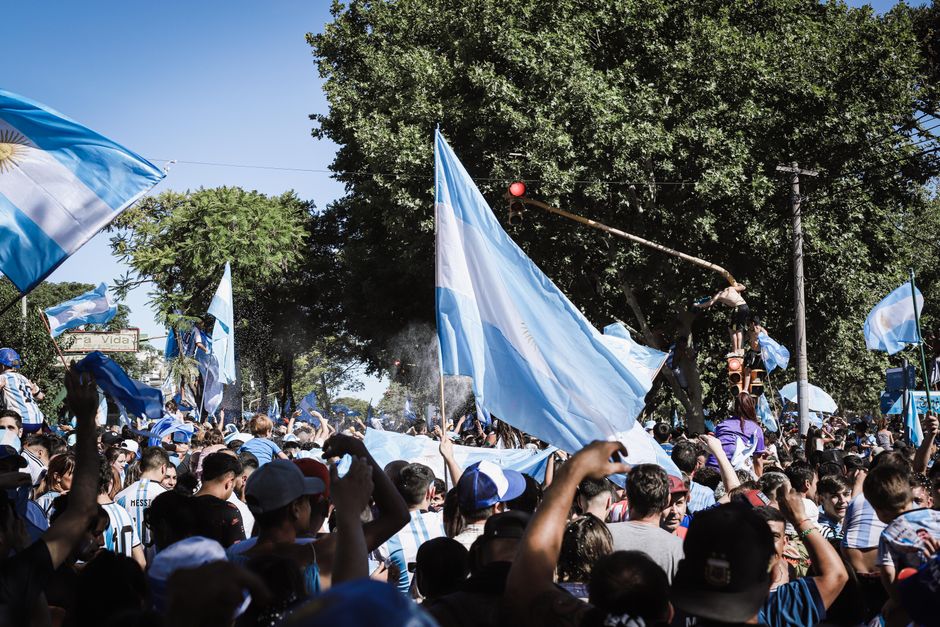
Argentina have booked their place in the FIFA World Cup final with a breathtaking 2-1 come-from-behind victory over England in Atlanta, with Lautaro Martínez's 92nd-minute header — delivered from a Lionel Messi cross — extinguishing England's hopes of reaching their first World Cup final in 60 years. The reigning champions will now face Spain at New York New Jersey Stadium at 5am Monday (AEST), in what promises to be one of the most extraordinary finals in the tournament's history.
A comeback for the ages
England had led and appeared to be managing the match with growing confidence, but Argentina — as they have done throughout this tournament — refused to accept defeat. In similar fashion to their astonishing comeback against Egypt, the South Americans turned the contest on its head in the dying moments, with Enzo Fernández finding the net before Martínez's dramatic late header sealed the result.
England's strategy of sitting deeper and defending their lead ultimately proved costly. Argentina goalkeeper Emiliano Martínez noted after the match that the tactical shift gave his side an opening they were able to exploit.
"We had the experience of coming back from losing positions," the goalkeeper said. "They started defending a little bit deeper and that gave us a bit of an advantage through the lines. Getting Messi on the wing was the key for us. We felt them going backwards and backwards rather than going forward."
It was Messi himself who delivered the decisive moment — a precise right-foot cross into the penalty area that Lautaro Martínez met with his head to spark scenes of wild celebration among the large Argentina contingent that had dominated the atmosphere inside Atlanta Stadium from the outset.
Martínez and Scaloni react with joy and disbelief
Goal-scorer Lautaro Martínez was visibly emotional after the final whistle, describing the moment in deeply personal terms.
"The first time my dad bought me a pair of boots, I always dreamed of scoring this goal," he said. "It was really tough today. Enzo scored a brilliant goal and I'm confident this team is continuing to show what it's made of."
Argentine manager Lionel Scaloni was equally overcome, struggling to find the words to describe what his squad had achieved.
"Well, I'm lost for words. A great happiness for our country and our people," Scaloni said. "And another great happiness for this group who just do not know when they are beaten. We are unique. It's not arrogance, it is all heart. This shirt merits us giving absolutely everything possible until the very end."
Messi chases history — and a fairy-tale send-off
While Messi did not score in the semi-final, his influence on the match was decisive and his broader tournament numbers are staggering. He has matched France's Kylian Mbappé as the tournament's equal highest scorer with eight goals, and he remains the World Cup's all-time leading scorer with 21 goals — one ahead of Mbappé.
Should Argentina defeat Spain in Monday's final, Messi would lead his country to back-to-back World Cup titles — a feat no nation has achieved since Brazil in 1962. It would also cap a tournament many had questioned whether the 39-year-old could physically sustain at the highest level.
The final itself carries an almost surreal backstory. Nineteen years ago, a promotional photo shoot for Barcelona's UNICEF fundraising calendar captured a then-20-year-old Messi awkwardly cradling a five-month-old baby named Lamine Yamal. That baby is now a teenage Spanish superstar and one of the key figures standing between Messi and another world title. The image, which resurfaced this week, has captivated football fans around the world as the two players prepare to face each other on the grandest stage of all.
Yamal, who turned 19 this week, had announced himself to the world with a stunning goal against France at the 2024 European Championships, and has been central to Spain's run through this tournament.
A political moment — and what comes next
The post-match celebrations were not without controversy. Argentine players were seen holding a banner reading "Las Malvinas Son Argentinas" — "The Falklands are Argentine" — inside the stadium. FIFA's Stadium Code of Conduct explicitly prohibits banners of a political, offensive or discriminatory nature, and the governing body had not responded to requests for comment at the time of reporting. The Falkland Islands — known in Argentina as the Malvinas — have been a source of deep tension between the two nations since a 1982 conflict in which 649 Argentine and 255 British soldiers died.
England, meanwhile, must regroup quickly. They will face France in a third-place play-off at Miami Stadium at 7am Sunday (AEST) — a match that offers little comfort after coming so close to ending their six-decade wait for a return to the World Cup's final stage.
For Argentina, the focus now turns entirely to Monday and a chance to make World Cup history. With Messi pulling the strings and a squad that seemingly refuses to lose, the reigning champions arrive at the final as a team that has already defied expectations — and shows no sign of stopping.