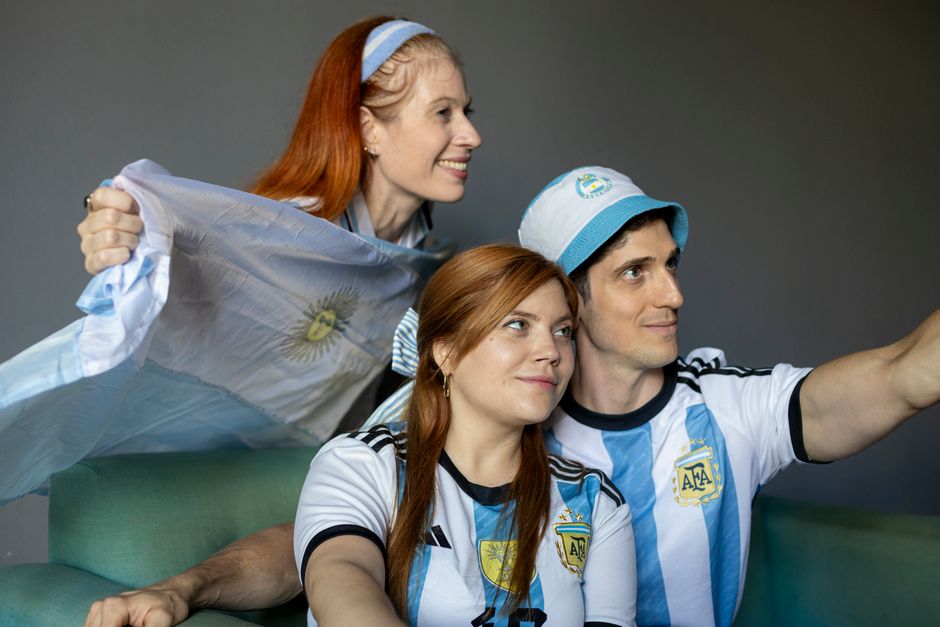
Argentina are on the brink of World Cup immortality, and as the nation holds its breath ahead of Monday's final against Spain, fans across Buenos Aires are reaching for something beyond tactics and talent — their most trusted good-luck rituals. With Lionel Messi's men just one game removed from a dramatic 2-1 semi-final win over England in Atlanta, the pressure is enormous — and superstition is stepping in to fill the gap.
Nobody moves, nobody breathes: the rituals of match day
In the working-class Liniers neighbourhood of Buenos Aires, the rules during a match are non-negotiable. Andres Gonzalez, a 48-year-old accountant and self-described "football addict", insists that no one shifts from the spot they occupied during the previous game.
"If you went to the bathroom and there's a goal, we lock you in. You stay there until the match is over," he explained with complete conviction.
Gonzalez is describing what Argentines call a cabala — a ritual believed to bring good fortune. These practices are woven into everyday life across the country, and they range from the endearing to the eccentric.
Saleswoman Estela Vargas, 65, has her own iron-clad match-day code: everyone in the house wears the same clothes and sits in the same chair. The family dog — an English bulldog — is banished outside. "In the match against England, since he's an English bulldog, we put an Argentina jersey on him," she said. "For Spain, rain or shine, he stays outside."
In Graciela Campos's household, it is her mother-in-law who must vacate the room entirely. "She goes into the kitchen and knits a blue-and-white scarf," Campos said.
From the presidential residence to the terraces
The rituals extend well beyond living rooms. Argentine President Javier Milei disclosed his own match-day customs ahead of the semi-final, telling a radio station that "under no circumstances" would he break his habit of watching World Cup matches from the presidential residence.
Meanwhile, 74-year-old retiree Lidia Otero — who supports both the national team and the legendary Boca Juniors, the former club of the late Diego Maradona — declared with quiet certainty: "All my rituals work every time."
Across the capital, almost every neighbourhood is draped in blue and white, and the blend of wild excitement and frayed nerves is palpable as fans count down to kick-off.
Why Argentines feel like more than just spectators
Sociologist Diego Murzi offers a compelling explanation for why these rituals matter so deeply. "In football, Argentines don't feel like spectators but like protagonists," he said. "Rituals are part of that — feeling involved by bringing good luck and warding off bad luck."
Murzi pointed to the legendary former coach Carlos Bilardo — who guided Argentina to World Cup glory in 1986 — as a striking example. Despite being "a man of science", Bilardo reportedly became fixated on a telephone ritual after an unanswered call in the dressing room coincided with an early victory.
"A player picked it up, and no one answered," Murzi recalled. "Bilardo saw that and, since Argentina won, before every match he would have someone call that phone, have the same player answer, and make sure no one responded."
It is a story that speaks to something universal about sport — the human need to feel a measure of control over outcomes that are ultimately unknowable. For Argentina, a nation that has lived and breathed football across generations, that need is amplified to its highest possible pitch.
With Messi having already weaved his magic to secure Argentina's place in the final, the stage is set. Whether it's locked bathrooms, knitting needles, or exiled bulldogs — millions of fans will be doing their part when the whistle blows.