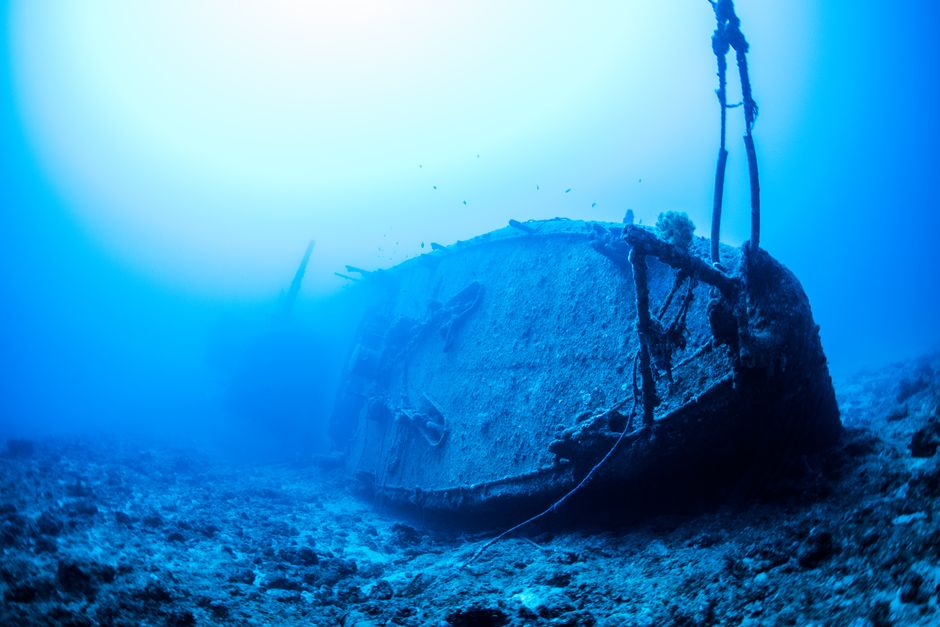
A Macquarie University archaeologist based in Sydney has played a pivotal role in identifying what researchers are calling the world's oldest known shipwreck, discovered in shallow waters off Kekova Island on the southern coast of Türkiye and dated to roughly 4,500 years ago, placing it in the same era as the construction of the Great Pyramid of Giza.
What Survives of the Ancient Wreck
The ship's timber hull has long since vanished, but a significant quantity of pottery vessels remained embedded in the rocky seabed, preserved beneath layers of barnacles and sediment. Excavators found two categories of objects at the site: a series of ceramic anchors and a substantial collection of pottery known as amphorae, some standing up to 50 centimetres tall.
The jars are understood to have been used to transport commodities including grain, oil, resins and wine, strongly suggesting the vessel was a merchant or trade ship. Researchers believe it most likely struck the rocks and sank, with the crew abandoning ship and jumping overboard to survive.
Removing the artefacts required painstaking physical effort. The ceramics were so heavily encrusted that teams used hammers and chisels to free them. Once brought to the surface, the objects were placed in water baths to draw out accumulated salts and prevent the ancient material from crumbling or disintegrating during conservation.
How the Sydney Ceramics Expert Helped Date the Shipwreck
Dr Karin Sowada, a specialist in ancient ceramics, Egyptian archaeology and Bronze Age trade at Macquarie University, was brought onto the project after being contacted by the excavation's director. She joined a research team led by Associate Professor Hakan Öniz from Akdeniz University in Antalya.
Dr Sowada examined more than 20 artefacts, analysing clay composition and construction characteristics to determine both the age and the likely origin of the pottery. She described the process as assembling a complex three-dimensional puzzle.
"Trying to understand the clays, and sort of putting together this three-dimensional jigsaw puzzle, was really quite exciting," she said.
Her findings, combined with analysis of the clay colour and decorative elements by the lead researcher, helped the team establish the wreck's extraordinary age. Associate Professor Öniz credited the use of multiple specialists as central to the project's success, describing the moment the team realised they had found the earliest known shipwreck as "amazing".
Dr Sowada said the dating work had been thorough, noting that the ceramics provide the primary evidence for establishing when the ship went down. "A lot of time and effort has been gone into trying to understand the dating of the shipwreck, which we can do through the ceramics," she said.
What Comes Next for the Investigation
While the age determination is a significant milestone, researchers are clear that the full story of the wreck is only beginning to emerge. A small quantity of residue recovered from inside the jars is currently undergoing further scientific testing, which may shed light on exactly what cargo the vessel was carrying.
Dr Sowada cautioned that the investigation remains at an early stage, but said the significance of the find is already clear. "At this stage, we can certainly say that this is at the very early edge, or the very early side, of what we know about ancient shipping," she said.
The discovery pushes back the documented history of seafaring trade and maritime commerce, offering a rare physical window into a period when civilisations around the eastern Mediterranean were beginning to develop the long-distance trading networks that would define the ancient world.
Further analysis of the residue and ongoing study of the ceramics are expected to reveal more about the ship's route, its cargo and the civilisation that built it.