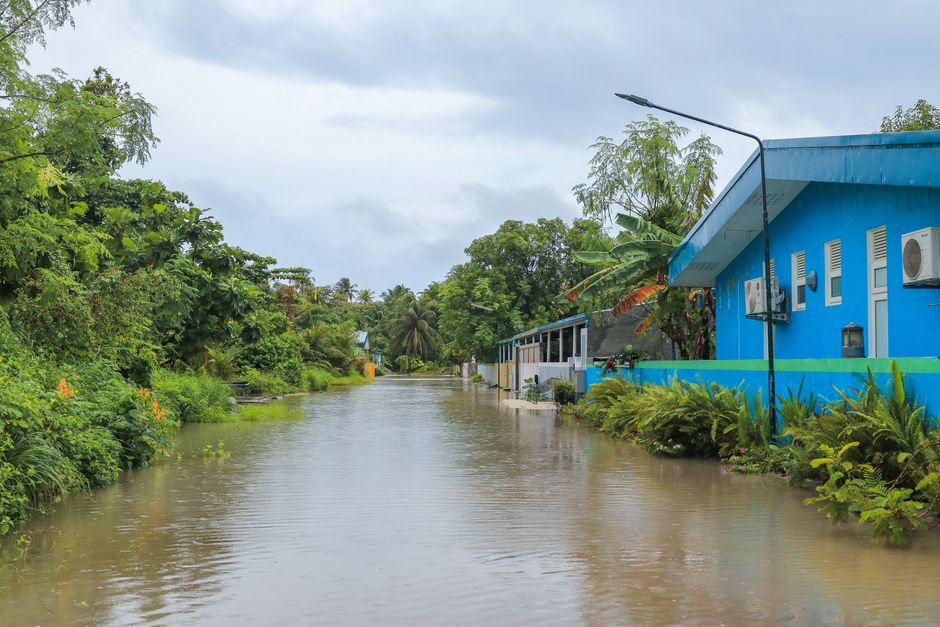
Thirteen world leaders have travelled to Tuvalu's capital, Funafuti, alongside Australian Prime Minister Anthony Albanese to witness firsthand the existential threat that rising seas pose to one of the planet's most vulnerable nations — a country that sits, on average, just two metres above sea level.
The visit forms the centrepiece of the pre-COP31 summit, a gathering that typically brings together ministers and officials ahead of the annual United Nations climate negotiations. This year, however, the Australian government took the unusual step of inviting heads of state to Tuvalu itself, flying the delegation more than 1,000 kilometres north from Fiji.
A Nation Measured in Metres — and Running Out of Time
Tuvalu is composed of three islands and reaches a maximum elevation of just 4.6 metres above sea level. That slim margin is shrinking. According to NASA's Sea Level Change Team, waters surrounding Tuvalu rose approximately 15 centimetres in the three decades to 2023 — around one and a half times the global average rate.
The same research projects that much of the country's land and critical infrastructure will fall below the average high-tide mark by 2050. The consequences are already playing out: seawater is contaminating soil and freshwater reserves, undermining the cultivation of staple crops such as taro and breadfruit, while coral bleaching threatens the fisheries that sustain the population.
"Sea-level rise is not a future threat, it is a present reality," Tuvalu Prime Minister Feleti Teo said at the UN General Assembly last month.
The visiting delegation, which includes UN climate chief Simon Stiell, European Union climate commissioner Wopke Hoekstra and COP31 president-designate Murat Kurum, travelled by canoe to inspect land raised under the Tuvalu Coastal Adaptation Project and solar installations designed to reduce the country's dependence on diesel fuel.
The Pre-COP31 Summit: Pacific Ambition, Mixed Turnout
The four-day pre-COP gathering is being co-hosted by Fiji, Tuvalu and Australia in Nadi — a role Pacific nations secured through a compromise that awarded full COP31 hosting rights to Türkiye while placing Climate Change and Energy Minister Chris Bowen in the role of president of negotiations.
Fiji's Prime Minister Sitiveni Rabuka set the tone for the summit on Monday, urging delegates to engage with the region's reality directly. "We ask you to come to the Pacific because some things cannot be understood from a distance," he told the gathering.
Yet the event has drawn criticism over the composition of attendees. Only one national leader from outside the Pacific region is expected to make the journey to Tuvalu, well below the five non-Pacific leaders Fiji had previously named as likely participants. Among those who withdrew was Thailand's Prime Minister, who pulled out as severe flooding struck Bangkok.
Several Western diplomats indicated they could not justify a multi-day trip given that COP31 itself is only weeks away. Vanuatu's climate minister Ralph Regenvanu acknowledged the shortfall plainly: "We were hoping for more."
Bowen pushed back on the criticism, noting that even one attending prime minister was considered a strong result for a pre-COP event by regional standards. Opposition energy and emissions spokesperson Dan Tehan, however, labelled the low attendance evidence that the conference represented a misuse of taxpayers' money.
A Treaty and a Ballot: Tuvalu's Migration Safety Net
With roughly 10,000 people calling Tuvalu home — about 60 per cent of them in Funafuti — the question of what happens if the islands become uninhabitable has already prompted formal action. Under the 2023 Falepili Union treaty, Australia offers up to 280 Tuvaluans permanent residency each year.
The scale of interest in that pathway has been striking. Registrations for the first visa ballot in 2025, including family members, covered more than a third of Tuvalu's entire population. The first recipients have already arrived in Australia.
The leaders' visit to Funafuti concludes with a return to Fiji, where participants are expected to sign a formal declaration. As climate scientists continue to warn of accelerating climate impacts across the region, Tuvalu's two-metre question — how a nation survives when the sea overtakes its land — is no longer hypothetical.