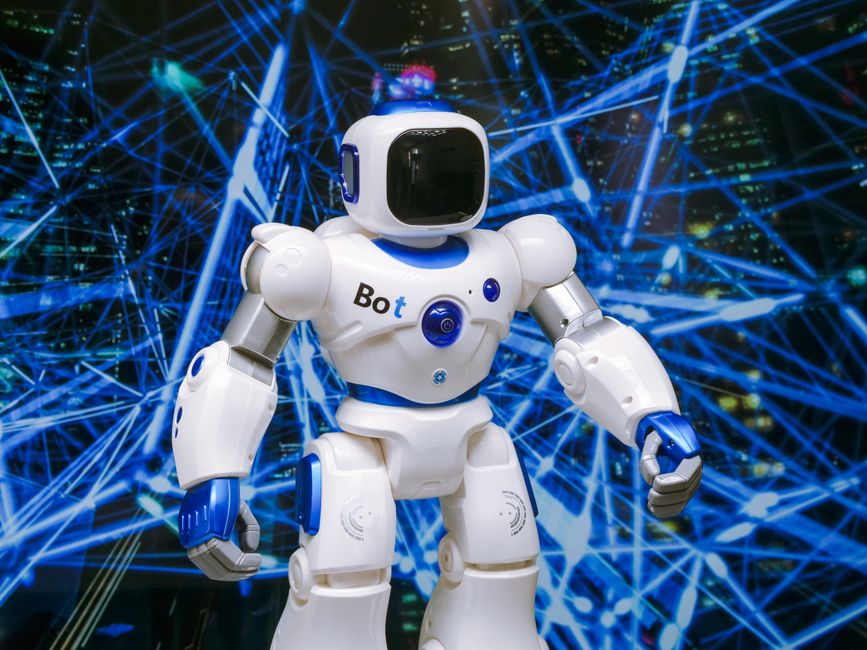
Artificial intelligence is advancing at a pace that seems to defy expectation, with new tools, chatbots and software breakthroughs emerging almost weekly. Yet step outside and look around — the physical world tells a very different story. Experts are now examining why progress in hardware, robotics, transport and energy continues to lag so far behind the digital revolution.
The Growing Divide Between 'Bits' and 'Atoms'
Technology analysts have begun framing the gap using a simple but striking distinction: "bits" versus "atoms". Digital technologies — software, smartphones and artificial intelligence — fall into the bits category, where progress has been rapid and compounding. The atoms category covers everything that exists in the physical world: robotics, manufacturing, transport infrastructure and energy systems, where advances tend to be slower, more expensive and considerably harder to bring into everyday use.
The contrast is difficult to ignore. Flying cars remain largely experimental. Household robots capable of preparing meals or doing laundry are still considered years away from practical deployment. Nuclear fusion, while edging closer to viability, has yet to become a commercial reality. Meanwhile, construction sites, rail networks and even family cars look remarkably similar to how they did several decades ago.
Those hoping the early 21st century would resemble the bold visions of mid-20th century futurists have largely been disappointed. Predictions from the 1950s, 1960s and 1970s painted a picture of cities filled with personal aircraft, widespread domestic robots and routine commercial space travel — none of which has materialised in any meaningful way for ordinary people.
Why Software Sprints While Hardware Crawls
Robotics expert Dr Sue Keay says the disparity is not surprising, because software and physical engineering operate on fundamentally different development timelines.
"Generative AI now means someone can write code, launch an e-commerce platform and be in business online within minutes," she said. "Building anything that has to move through and act on the physical world is a different order of problem."
Dr Keay explained that physical technologies must be designed, manufactured, rigorously tested for safety, formally certified, and then proven to function reliably across unpredictable real-world conditions — none of which can be fixed with a simple software patch. Even where artificial intelligence is helping robots better interpret language and navigate their surroundings, she stressed that software progress alone cannot bridge the entire gap.
"Solving the software problem doesn't solve the hardware problem. Both have to advance together," she said.
Reliability remains one of the most stubborn obstacles. Machines that perform impressively under controlled laboratory conditions can still fail when confronted with different lighting, shifting environments or unexpected physical obstacles. While the cost of humanoid robots has fallen sharply in recent years — making them far more accessible for research purposes — Dr Keay cautioned that public expectations still need to be grounded in reality. She said she does not expect to see humanoid robots in Australian homes in their current form, citing serious safety concerns around deploying large, heavy machines in uncontrolled domestic environments.
Has Physical Innovation Actually Stalled?
Not everyone argues that progress in the physical world has ground to a halt. Reusable rocket technology has slashed the cost of reaching orbit. Gene-editing tools have transformed biomedical research. Battery performance has improved steadily, and materials science continues to generate meaningful advances. The picture is nuanced rather than one of outright stagnation.
Economist Tyler Cowen explored a related argument in his book The Great Stagnation, suggesting that many of the truly transformative physical inventions — electricity, the automobile, antibiotics, aviation — had already been discovered, leaving subsequent generations with a harder task of finding equally consequential breakthroughs.
Concerns about the pace and direction of technological change, particularly around AI safety, have also grown as digital systems become more capable and influential. As the gap between the digital and physical worlds widens, the challenge for researchers and engineers is clear: software may be racing ahead, but the atoms still have to catch up. The shift toward an increasingly digital-first world only underscores how far physical technology still has to travel.