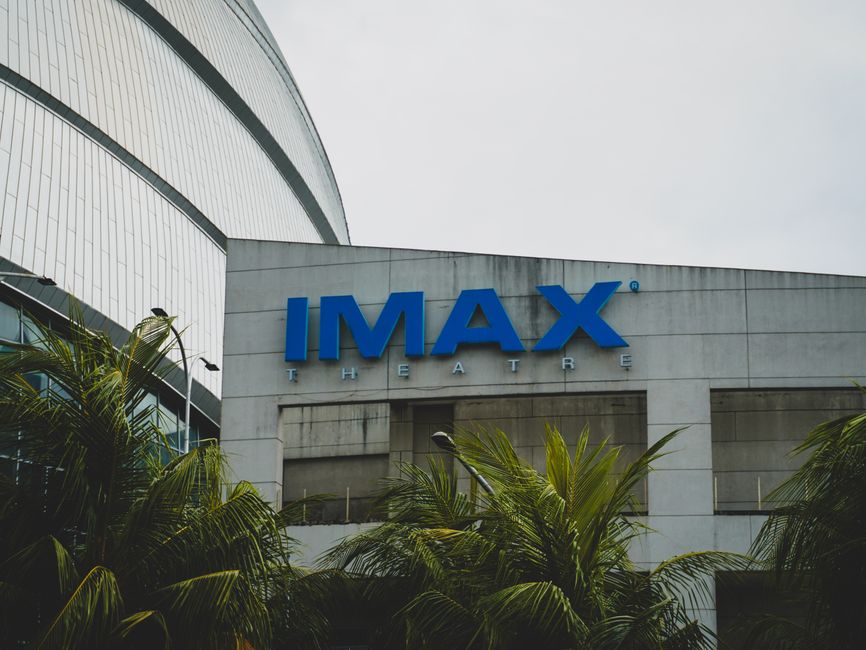
A Los Angeles projectionist who has never left the United States is about to board a 15-hour flight to Melbourne — not for the beaches, not for the coffee, but for a cinema. He is one of several international visitors who have crossed oceans to catch Christopher Nolan's latest film, The Odyssey, at Melbourne's IMAX theatre, the only venue in the Southern Hemisphere capable of screening it the way the director intended.
A once-in-a-lifetime screen experience
Vincent Simmons, 35, has spread the cost of flights and accommodation across multiple credit cards, spending close to $4,000 AUD on a three-week trip to Melbourne. He plans to see the film twice at the venue — on top of a screening back home in LA before he even boards the plane.
"I've heard about the IMAX in Melbourne for years — I've probably watched every YouTube video that shows even a sliver of it," Simmons said. "I told myself I'd go one day."
For Simmons, whose day job involves running projectors, the draw is the format itself. "70mm IMAX offers hands down the greatest sensory engrossment you could possibly have when watching a film," he said. "It's the closest sense of lifelike fidelity — a transcendent film format that everyone should experience at least once in their life."
He was characteristically self-aware about the journey. "I was brave enough to undertake my own odyssey in travelling to Melbourne," he said. "Hopefully it won't be as burdensome as Odysseus' journey."
What makes Melbourne's IMAX so special
Melbourne's IMAX is not simply a large cinema. It is one of only 41 theatres in the entire world capable of projecting true IMAX 70mm film — the largest film stock in existence. Of those 41 venues, just seven are located outside North America, making Melbourne's screen a genuinely rare destination for serious cinephiles.
The screen itself measures 32 metres wide and 23 metres tall, with a 1.43:1 aspect ratio, making it the largest of its kind anywhere on the planet.
"Because we're only one of 41 cinemas in the entire world that can screen this film on IMAX 70mm on our large 1.43:1 aspect ratio screen, it's a place that customers seek out," said Jeremy Fee, general manager at IMAX Melbourne. "This is the only place in Australia, in the Southern Hemisphere, that you can see it in the way that Christopher Nolan intended."
The Odyssey, which released in Australia on 16 July, presents its own logistical demands on the venue. A single film print stretches more than 17 kilometres end to end. The reels run on platters large enough to hold three hours of runtime — just eight minutes more than the film's own two hours and 52 minutes. During filming, the 70mm IMAX camera required reloading every three minutes, such is the volume of film stock the format consumes.
A dying craft finding new life
Running a true 70mm IMAX presentation is not simply a matter of pressing play. Each session demands constant quality assurance checks, and the technical skills required are highly specialised. Remarkably, only five people in Australia are currently qualified to carry out the work.
"It's a perishable skill," Fee said. "It was [a dying craft] … I think it's a growing art form now."
The format's revival — driven in no small part by filmmakers like Nolan who have insisted on shooting in true IMAX 70mm — has helped arrest what looked like an inevitable decline. Yet the scarcity of qualified projectionists remains, and it is precisely this combination of technical rarity and cinematic scale that is drawing visitors from across the globe to a single venue in Melbourne's CBD.
Fans queueing from around the world
On the opening weekend of The Odyssey at Melbourne IMAX, the queue told its own story. Reports indicate that travellers had journeyed significant distances specifically for the screening, with Simmons far from alone in treating the experience as a pilgrimage rather than a casual night out at the movies.
For a 35-year-old who has spent his career threading film through projectors in Los Angeles, the trip represents something larger than one movie. It is a validation of a format he has long championed — and the culmination of years of watching footage of a screen he had only ever seen through a phone.
"If they experience it once, they will want to experience it again," he said of 70mm IMAX. On current evidence, some people are willing to fly to the other side of the world to find out for themselves.