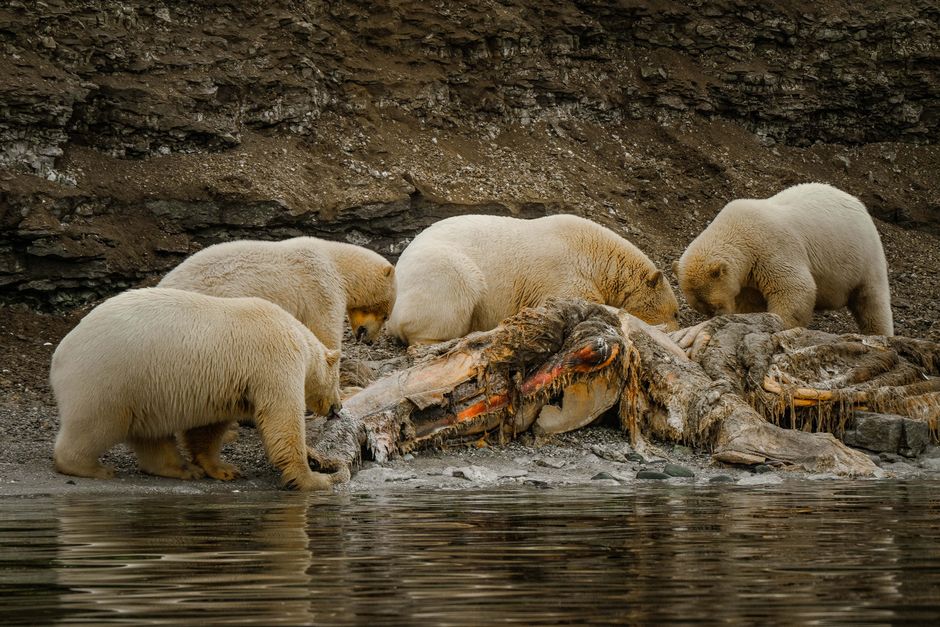
A whale carcass has washed ashore at Lurline Bay in Sydney's eastern suburbs, prompting Randwick City Council to close both Maroubra and Coogee beaches as a precaution on Thursday morning. The remains, believed to be those of a young humpback whale, were discovered wedged against the coastline between the two popular beaches, triggering an urgent response from council, state authorities and local Indigenous rangers.
What Authorities Know About the Whale
While Randwick City Council initially described the animal as a baby whale, whale scientist Vanessa Pirotta said it appeared more likely to be a young adult or teenaged humpback whale. The carcass was found with a rope wrapped around one of its pectoral fins, adding another layer of concern to what is already a complex recovery situation.
Rob Cooley from the Gamay Rangers, an Indigenous ranger group based at La Perouse, said his team responded to a call-out from council shortly after the discovery. He confirmed the animal was in an advanced state of decomposition.
"It's basically falling apart," Cooley said, noting that the location made any retrieval effort extremely difficult.
Dr Pirotta echoed the concern about public safety near the carcass, strongly advising people not to swim in the surrounding area. She noted that sharks are commonly attracted to whale remains and that, given the size of the local humpback population, such incidents are not unexpected during migration season.
"We do expect to see whales pass during this time," she said. "The population is large and more individuals mean we are likely to see this."
At the time of publication, no shark alerts had been issued for the area near the Sydney whale carcass.
A Difficult Location and Cultural Significance
The site where the carcass came to rest is presenting significant logistical challenges. Lurline Bay is surrounded by cliffs and rock ledges, making it hard to access and complicating any potential removal of the remains. Council said it was also considering closing the surrounding area and a nearby rock shelf walkway to manage gathering crowds and protect public safety.
Beyond the physical challenges, the whale carries deep cultural meaning for the local Bidjigal people, for whom the humpback whale is an important totem animal. Randwick Mayor Dr Clare Willington said that cultural sensitivity was central to how the council planned to handle the situation.
"We're working with the Gamay Rangers and NSW Department of Primary Industries on how to manage this incident safely and be culturally respectful," Dr Willington said.
The Gamay Rangers have been asked to bring cultural advisors to the site to conduct ceremony, recognising the spiritual significance of the animal.
Council confirmed that no decision had been made to remove the carcass at this stage, with discussions ongoing about an approach that was both culturally and environmentally appropriate.
"At this stage, the carcass is not being removed and discussions are ongoing with the Gamay Rangers about a culturally and environmentally sensitive approach to take," a council statement read.
Dr Willington also sought to reassure the public that, in time, the situation would resolve naturally. "This is a natural occurrence and in time nature will deal with the carcass," she said. "Our focus is to manage and limit any impact to swimmers and surfers at nearby beaches."
Beaches to Remain Closed Until Further Notice
Maroubra and Coogee beaches have been closed until further notice while lifeguards monitor developments and council continues to consult with the NSW Department of Primary Industries and the Gamay Rangers. Locals and visitors have been urged to stay away from the Lurline Bay area and to follow the directions of lifeguards on patrol.
Council also warned the public that the geography of the site posed real risks to anyone attempting to get a closer look, with unstable rock ledges and cliff faces surrounding the area.
Not the First Sydney Whale Incident This Year
Thursday's discovery is not an isolated event. A juvenile humpback whale calf washed ashore at Greenhills Beach in Sydney's Sutherland Shire in July, with tests conducted at the time returning a negative result for H5N1 avian influenza. In April, several beaches within the Royal National Park were closed for a number of days after a separate carcass washed onto rocks at Era Beach and attracted sharks to the area.
A comparable situation unfolded in late September off Perth's City Beach, which was temporarily shut after decomposing whale remains drew shark activity to the popular stretch of coastline.
The pattern of incidents highlights the challenges coastal councils face in managing unexpected material washing up on Australian beaches and the need to balance public safety with environmental and cultural responsibilities.
Council said further updates would be provided as discussions with relevant authorities and the Gamay Rangers progressed.

