Federal Climate and Energy Minister Chris Bowen has put Queensland and the Northern Territory on notice, warning he will invoke Commonwealth legislative powers to compel them to comply with a national framework requiring data centres to fully offset their electricity consumption with new renewable energy investments.
Addressing the National Press Club, Bowen framed the intersection of artificial intelligence growth and climate change as the "defining issues of our age", and made clear the federal government would not allow any state to undermine household power bills, grid reliability or emissions targets in a bid to win data centre construction contracts.
"We will use all the powers available to the Commonwealth, including Commonwealth legislation, to ensure that Australian households and Australian energy reliability is put first: even if some states have different ideas," he said.
The 'causer pays' principle at the heart of the policy
Bowen outlined a "causer pays" framework as the cornerstone of the new regulations, stating plainly: "If you cause the cost, you will pay the cost." Under this model, data centres and other large energy users that require new or accelerated transmission infrastructure would be required to foot those costs themselves, rather than passing them on to ordinary consumers.
The government has formally requested the Australian Energy Market Commission to draft a rule change requiring large data centres to make "appropriate contributions" toward funding new power poles and wires to ease the additional strain they place on the grid.
Bowen said the existing guarantee of origin scheme — which tracks and verifies renewable electricity sources through digital certificates — would be used to ensure data centres can demonstrate they are genuinely offsetting their power draw with renewable energy that would not otherwise have been built.
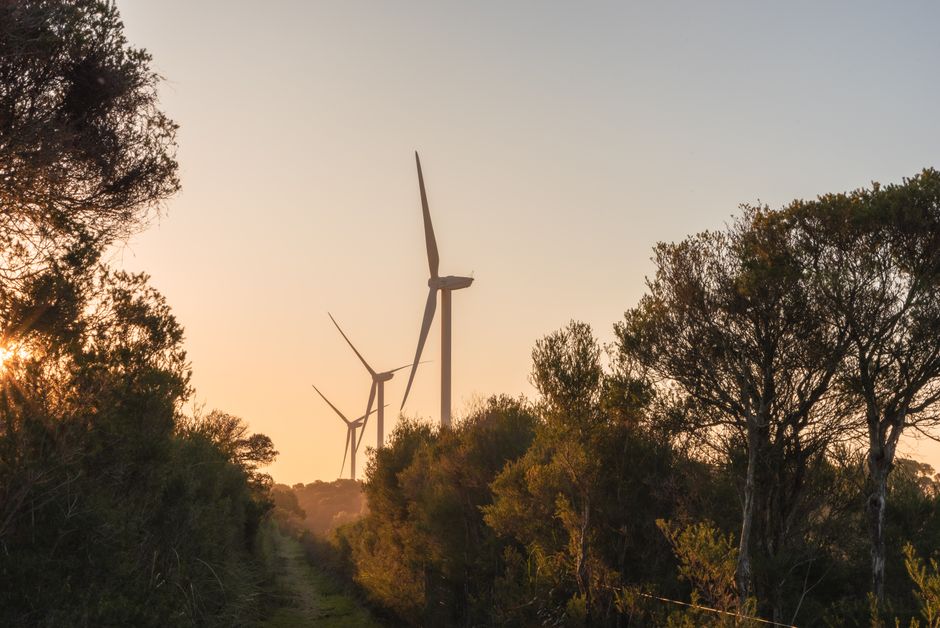
"Data centres could sign power purchase agreements or invest in renewable generation directly," he said. He added that agreements with proposed wind farms that had received support under the capacity investment scheme but had not yet reached a final investment decision could qualify as new additional renewable energy. Data centres would also need to demonstrate access to sufficient firmed power to support grid stability.
Queensland and NT break ranks at energy ministers meeting
The intervention follows a fracture at a recent energy ministers meeting, where Queensland and the Northern Territory — both governments that have signalled support for continued fossil fuel use — split from Bowen and ministers from other states over the proposed framework.
Queensland Energy Minister David Janetzki said after the meeting that his state backed "reliable and sustainable" power — widely understood as a reference to fossil fuels — rather than what he described as "underdeveloped ideas that hand increased power to Canberra".
Queensland Premier David Crisafulli had earlier sought to position his state as a more attractive destination for data centre investment, declaring it was the "only one state" that believed energy sources for data centres should come "from wherever it is best placed, not exclusively from one source of energy." He expressed confidence the stance would draw significant investment to Queensland.
Industry broadly supportive, but flags concerns over shared costs
Belinda Dennett, chief executive of Data Centres Australia — the industry's peak body — said the sector welcomed the principle of investing in renewables and paying its own way. However, she cautioned that where data centres fund shared infrastructure used by other parties, that contribution must be properly recognised.
"Where data centres pay for shared assets that others use, that contribution has to be properly recognised. That is core to a user pays system," Dennett said. She also argued the national framework should be designed to accelerate renewable energy supply and grid connections.
The standoff between Canberra and the two holdout states sets up a significant test of federal energy powers, with Bowen showing little willingness to allow a patchwork of state policies to shape the trajectory of one of Australia's fastest-growing sources of electricity demand.