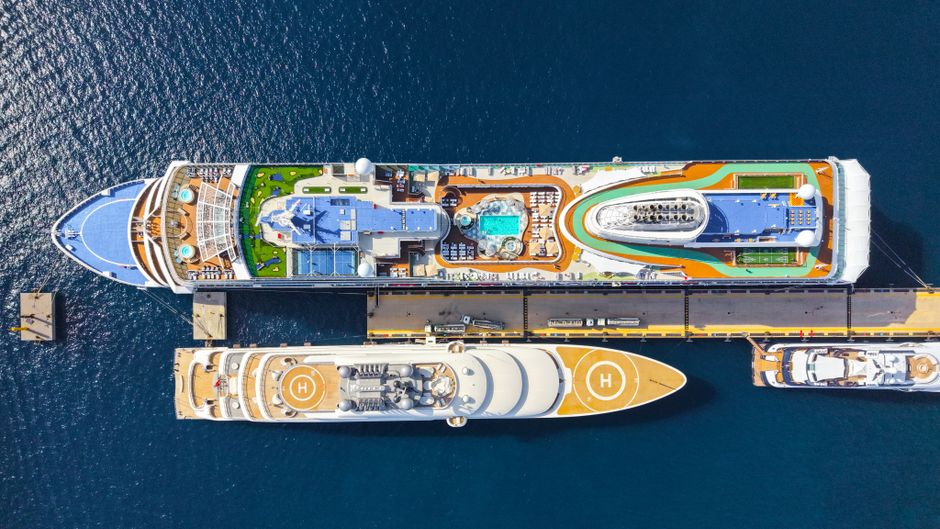
Around 200 passengers who had paid to live aboard a residential cruise ship on a round-the-world voyage were abruptly stranded in Cambodia this week, given just seven hours to pack their belongings and disembark after the ship's operator announced it was suspending all operations. The vessel, the Villa Vie Odyssey, had been at sea for roughly two years when it docked at the Cambodian port of Sihanoukville, carrying 203 passengers and 156 crew. Among those forced to make urgent alternative arrangements were five Australians, two of whom have spoken publicly about the experience.
The collapse of a floating dream
Florida-based operator Villa Vie Residences launched the Odyssey from Belfast in October 2024 on a planned three-and-a-half-year voyage, promising residents visits to more than 425 destinations across 147 countries. Cabins were marketed as an affordable path to permanent life at sea, with suite purchases for the lifetime of the vessel starting at around US$230,000. The company had explicitly invited buyers to "make the Odyssey your permanent home."
When the ship arrived in Sihanoukville from Thailand, the deputy governor of Preah Sihanouk province confirmed its arrival and noted that while some passengers boarded flights immediately, others remained in the port city. The ship was scheduled to refuel and depart on Saturday.
Villa Vie Residences blamed the shutdown on soaring fuel costs, citing what it described as "extraordinary increases" linked to the US-Israel war with Iran. Monthly fuel expenses per cabin, which had averaged around US$1,800, were estimated to have climbed to between US$6,000 and US$8,000 in parts of Asia. "The company cannot simply pass increases of that scale on to residents, and the resulting shortfall has placed its current operating model under unsustainable financial pressure," the company said in a statement.
Australians among those stranded on the residential cruise ship
Brisbane passenger Rina Cavazza had paid $170,000 for her berth and had been aboard since the ship departed Belfast, roughly 25 months earlier. She still had 18 months remaining on her arrangement when she was told to leave. "I'm more numb than anything," she said. "There's always been issues for the last couple of months, but we always thought there was a light at the end of the tunnel."
Cavazza was critical of the company's financial management, saying the fuel crisis was the final trigger rather than the root cause. "They don't have the cruising history, but they don't have accounting history," she said. She also revealed that residents had been asked to contribute extra funds to keep the operation afloat. "They've been doing cash calls out to the residents and stuff, which I couldn't do and wouldn't do, but many have."
Melbourne retiree Frances Paroissien, 78, had an even more difficult road to Sihanoukville. She had already lost $85,000 on a separate, previously cancelled residential cruise venture before purchasing a cabin on the Odyssey for more than $200,000 under a 15-year lease. After 25 months aboard, she too found herself without a home at sea. "I am angry," she said. "I am cheesed off that action didn't happen earlier so that this could be avoided." Paroissien said residents had been informed in August that the company owed millions to a bank and other creditors, and that passengers had collectively contributed more than US$2 million to help the ship depart Singapore.
Signs of financial trouble had been mounting for months
Social media commentary following the announcement suggested there was more to the story than fuel prices alone, with at least one online observer noting that underlying financial difficulties appeared to predate the fuel cost spike. Cavazza's account of recurring "cash calls" to residents and Paroissien's disclosure about the company's debt situation in August point to a prolonged deterioration rather than a sudden crisis.
California resident Carol Larson, 69, had initially paid US$120,000 for her cabin, not including monthly maintenance fees, for a voyage expected to last 15 years or the life of the ship. After just a year and a half, she found herself stranded in Sihanoukville with a friend. She placed blame both on geopolitical factors and on what she described as questionable financial management. "I put most of the blame on Trump, but there was some probably not financially good bookkeeping," she said.
American passenger Randy Cassingham and his wife Kit had spent around US$1 million for what they had hoped would be at least 15 years of continuous travel. The couple had joined the ship in Belfast and valued the lifestyle for its simplicity. "My wife and I really enjoy travelling. But we really hate airports and airlines. This was a way that you could unpack once, you can sleep in your own bed every night and wake up in a new place every few days," he said from his hotel in Sihanoukville.
Despite everything, most passengers say the experience was worth it
Despite the abrupt and costly ending, many passengers expressed little regret about having taken the leap. Cassingham said he would return to the ship if operations ever resumed, describing it as "a fantastic adventure" regardless of the financial loss. Larson called the journey "well worth it," adding: "I am so blessed to have been part of the experiment of residential cruising." Former UN employee Barbara Figiel, 62, who had joined the ship in December 2024, described having always dreamed of retiring to life at sea, and said the slow pace of travel and the sense of community had fulfilled that wish, at least for a time.
For those considering how the cruise industry is evolving and what risks passengers face, the Odyssey's collapse serves as a sobering case study. The broader question of fuel price volatility and its knock-on effects is one that extends well beyond any single vessel.
The majority of those aboard the Odyssey were American or Canadian. Villa Vie Residences has not confirmed whether refunds will be issued or what recourse residents may have.