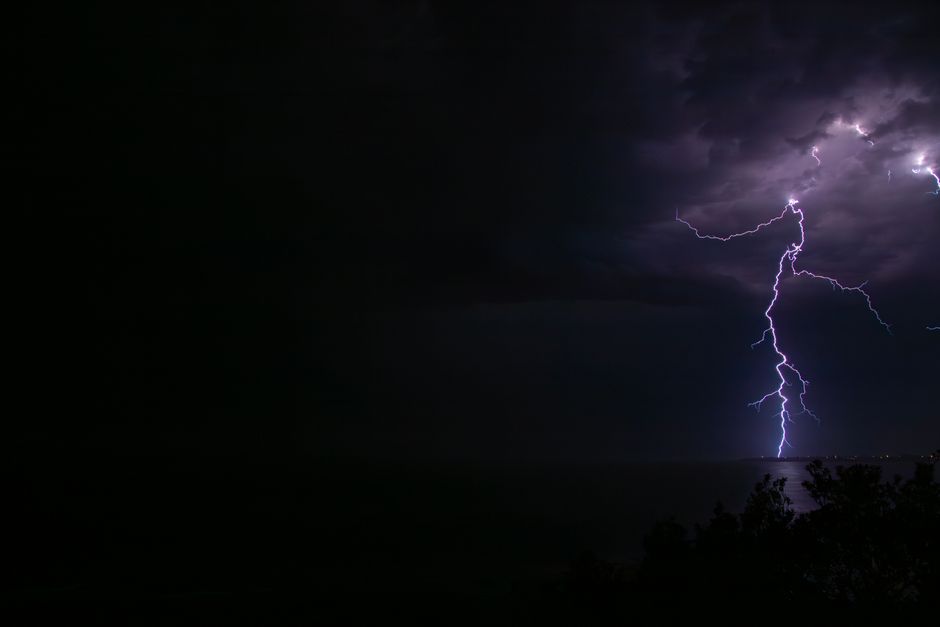
Western Australia's October proved to be one of the most weather-varied months of the year, serving up hailstorms, searing northern heat, frosty southern mornings and spectacular lightning displays that kept residents across the state watching the skies throughout spring.
Lightning, Storms and a Rare Hailstorm in Exmouth
The month began relatively quietly in Perth, with classic spring conditions and daytime temperatures in the low 20s. That calm did not last long. Within the first week, a slow-moving low pressure trough generated isolated thunderstorms across the Goldfields and parts of the Gascoyne and Interior, while heavy rain fell across large areas of the South West.
A combination of surface and upper-level troughs then triggered a storm that sent thousands of lightning strikes across far northern and eastern parts of Perth, with thunder and lightning also reaching the Mid West and the Central Wheatbelt. Despite the dramatic displays, rainfall totals from the system remained modest, with Kalannie recording the highest fall at just 12 millimetres.
Perhaps the most unusual event of the month came from Exmouth on the state's north-west coast, where hail fell during a thunderstorm. Hail is a rare occurrence in the coastal town because conditions are typically too warm for it to form. One local resident, who has lived in Exmouth for 30 years, said it was the first time she had ever witnessed hail there.
"It was a huge surprise to be woken up at 5am, sounded like bullet holes," she said.
Record Heat Scorches the North
Temperature extremes were just as striking across the state. On some days, the difference between maximum temperatures in the Kimberley and parts of the Eucla region in the south-east reached as much as 25 degrees Celsius.
In Halls Creek, where the average October maximum sits at 37.2 degrees Celsius, the mercury peaked at 42 degrees during the month. Broome was not far behind, hitting 41.2 degrees, almost 10 degrees above its October average of 33 degrees. Other towns across the north recorded similarly significant heat throughout the month.
Perth also ran warmer than usual, notching at least 12 days above its October average maximum of 23.4 degrees Celsius.
Cold Fronts Bring Frost to the South
While the north baked, the south experienced a very different story. A burst of unusually cold mornings gripped southern WA during October, described by the bureau as unusual but not uncommon for the time of year.
Towards the end of the month, a weak cold front pushed cool air across a large area of the Great Southern and parts of the Goldfields, with some areas recording frost. Narrogin dropped to 0 degrees Celsius, well below its October average minimum of 7.5 degrees. Collie in the South West recorded a minimum of just 0.1 degrees, compared with its average of 7.4 degrees.
The temperature contrast between the state's north and south illustrated just how varied WA's spring conditions can be within a single calendar month.
Showers Round Out a Rollercoaster Month
In the final week of October, a series of cold fronts and low-pressure troughs brought further rainfall and showers, particularly to the south-west corner and the interior. These systems left parts of the region wetter than average and provided a fitting conclusion to a month that had offered something for almost every corner of the state.
From the dramatic lightning shows captured on camera above the Wheatbelt to fog settling over Towerrinning Lake and storms rolling into Wyndham Port, October gave WA residents and weather-watchers plenty to talk about. With conditions swinging between extremes so sharply, it served as a timely reminder of just how unpredictable Australian spring weather can be.

