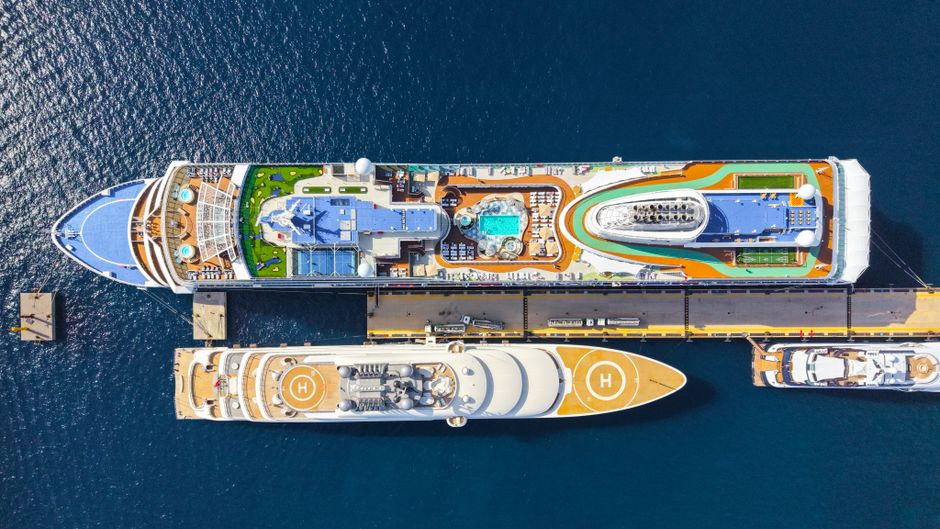
Two Australians who paid hundreds of thousands of dollars to live aboard a round-the-world residential cruise ship have been left stranded in Cambodia after the vessel's operator abruptly suspended operations, giving passengers just seven hours' notice to pack up and disembark.
Brisbane mother Rina Cavazza and Melbourne retiree Frances Paroissien were among five Australians aboard the Villa Vie Odyssey when it was tied up at Sihanoukville on Tuesday. The ship, operated by Florida-based Villa Vie Residences, carried 203 passengers and 156 crew members at the time operations were halted, with most passengers holding American or Canadian citizenship.
A dream voyage cut short
The Villa Vie Odyssey had departed Belfast in October 2024 on a planned three-and-a-half-year circumnavigation of the globe, promising residents visits to more than 425 destinations across 147 countries. For Cavazza, who paid $170,000 for her berth, the suspension came roughly 25 months into the journey, with 18 months still remaining on her plan.
"I'm more numb than anything," Cavazza said. "There's always been issues for the last couple of months, but we always thought there was a light at the end of the tunnel."
She criticised the company's financial management, saying the fuel crisis was a final trigger rather than the root cause of the collapse. "They don't have the cruising history, but they don't have accounting history," she said. Cavazza also revealed that passengers had been asked to contribute additional funds to keep the business afloat, a request she personally declined. "They've been doing cash calls out to the residents and stuff, which I couldn't do and wouldn't do, but many have," she said.
Fuel costs and financial pressure cited
In a statement, Villa Vie Residences pointed to the war in Iran as a key contributing factor, saying extraordinary increases in fuel costs had placed its operating model under unsustainable financial pressure. Monthly fuel expenses per cabin, which had previously averaged around $US1,800, were estimated to have surged to between $US6,000 and $US8,000 in parts of Asia.
Passengers were told to disembark by 2pm on Tuesday, forcing many to urgently arrange accommodation and onward travel with little time to prepare.
For those following developments in how cruise ship operations are evolving and the financial pressures reshaping the industry, the Odyssey's collapse is a stark illustration of the risks involved in long-term residential voyages.
Paroissien's second cruise disaster
For 78-year-old Frances Paroissien, the Odyssey's suspension is the second time a residential cruise venture has collapsed around her. She had previously lost $85,000 on the cancelled Life at Sea venture before purchasing a cabin on the Odyssey for more than $200,000 under a 15-year lease. She too had spent around 25 months aboard before being told to leave.
"I am angry," Paroissien said. "I am cheesed off that action didn't happen earlier so that this could be avoided."
Paroissien said residents had been informed as far back as August that the company owed millions of dollars to a bank and other creditors. She also said passengers collectively contributed more than $US2 million to help the ship depart Singapore, underscoring how deeply invested residents were in keeping the voyage alive.
What happens next
With the ship docked in Cambodia and operations suspended indefinitely, passengers face significant uncertainty over refunds, lost deposits and future travel plans. Villa Vie Residences has not publicly outlined any compensation or resolution pathway for those affected.
The situation raises broader questions about regulatory oversight and consumer protections for passengers who commit large sums to long-term residential cruise arrangements, particularly those operated by companies without established track records in the industry. Those considering similar ventures may find our coverage of the growing cruise market across the region useful context when evaluating the risks and opportunities ahead.

