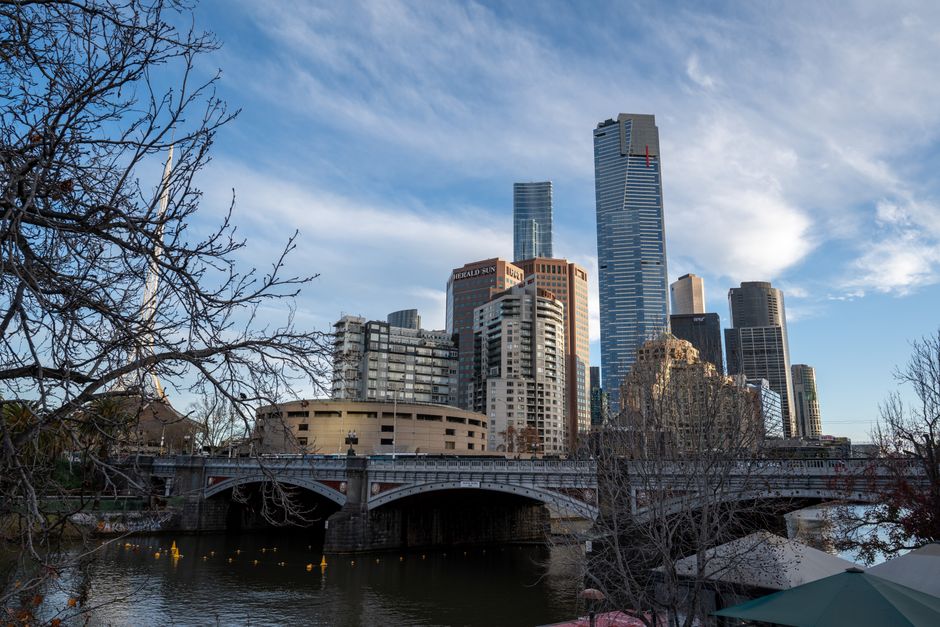
Victoria has just lived through one of its most striking weather contrasts in recent memory, with Melbourne and the alpine peaks enjoying extraordinary warmth while the state's northwest has been locked under a stubborn blanket of cold, grey fog — and a sharp cold front is now set to end the run for everyone.
Melbourne and the Alps Well Above Average
The warmth across much of Victoria has been remarkable for mid-July. Melbourne reached 19.5°C on Saturday — well above the seasonal average of just 13°C — before easing slightly to 18°C on Sunday and settling into a run of 16-degree days through the early part of this week. For Melburnians, it has felt more like a mild autumn than the heart of winter.
The alpine peaks have told an even more extraordinary story. Falls Creek, which typically sits around freezing at this time of year, recorded 9.5°C on Friday, 11.5°C on Saturday and 13°C on Sunday. The previous July record there stood at 9.8°C — meaning the resort surpassed that mark on two consecutive days. Mt Hotham was equally impressive, reaching 11.1°C on Saturday and 12°C on Sunday, comfortably clearing its previous July record of 8.7°C. Mt Buller also soared, hitting 9.3°C on Saturday and 11.5°C on Sunday, though it narrowly fell short of its own all-time July record.
Northwest Victoria Stuck in a Cold, Foggy Grip
While southern and alpine Victoria warmed up, a very different story unfolded across the state's northwest. A widespread band of foggy low cloud settled over the region from late last week and refused to budge, keeping daytime temperatures significantly below average for days at a time. Many towns across the area went three or more consecutive days without reaching double figures.
The numbers from some locations have been striking:
- Stawell peaked at just 6.9°C on Saturday, 9°C on Sunday, and 7.6°C on both Monday and Tuesday — with the actual daytime peak on Tuesday closer to 7.2°C.
- Longerenong, near Horsham, was trapped between 8.1°C and 9.5°C from Saturday onward.
- Kerang finally broke into double figures on Tuesday, reaching 10.5°C, after three consecutive days stuck in the 8s and 9s.
These are not overnight lows — these are the peak temperatures for the day, the warmest each location managed under the thick, lingering cloud.
The Science Behind the Split: The Foehn Effect
The reason for such a dramatic divide across a single state comes down to a persistent high pressure system sitting to Victoria's east. That system has been funnelling light but steady northerly winds across the state for an extended stretch. On the northern side of the ranges, moisture becomes trapped, generating the foggy, low cloud that has kept the northwest cold and grey.
As those same winds descend the southern side of the ranges, however, they compress and warm — a process known as the foehn effect. It is the same atmospheric phenomenon behind the world's most dramatic 24-hour temperature swing, recorded in Loma, Montana, where conditions swung from -48°C to +9°C as wind patterns shifted and air warmed on its way down the mountain. Victoria's version has been considerably gentler — but the science is identical, delivering Melbourne that unseasonably warm 19.5°C Saturday in the sunshine. If you've been enjoying the mild winter days, you can find out more about Melbourne's recent dry and sunny spell here.
What's Next: A Cold Front Ends the Warmth
The pleasant run is now coming to an abrupt end. A cold front is sweeping through Melbourne later on Wednesday, bringing a burst of showers during the late afternoon and into the early evening, with temperatures dropping as the change arrives.
Thursday is forecast to peak at just 12°C — marking the city's first below-average day in a fortnight. Showers will stream across the southeastern suburbs, cold enough to bring wintry hail, while the rest of Melbourne is expected to stay largely dry. One thing will be felt everywhere though: a biting wind that will make conditions feel considerably colder than the thermometer suggests, regardless of where you are in the city.
After two weeks of warmth that shattered alpine records and put a rare winter spring in Melbourne's step, the season is firmly reasserting itself.