Allana Crew was on the phone to her father in 2019 when she felt something shift inside her head. Within moments, the 32-year-old mother of two from Loch, in Victoria's Gippsland region, had lost the ability to speak — and a stroke specialist hours away would prove to be the difference between a timely diagnosis and a far worse outcome.
A healthy young mum with no warning signs
By every conventional measure, Allana was not a stroke risk. She was young, healthy, a non-smoker and non-drinker, with her youngest child just four months old. When she tried to tell her husband something was wrong — he was changing their son's nappy at the time — no words would come out.
"I can't even explain the feeling," she recalled. "I went to go to my husband to say something's wrong … and I couldn't talk. He said, 'Are you joking? Talk to me.' And I couldn't. I could hear what he was saying, but nothing would come out."
When she was eventually able to produce words, they were heavily slurred. At her local hospital, the picture remained unclear. Doctors initially considered Bell's palsy as a possible explanation. Allana was young, and her symptoms were not presenting in a straightforward way.
How a remote stroke specialist made the diagnosis possible
What changed the trajectory of Allana's care was a telehealth system known as Telestroke — a video link connecting her regional hospital, around an hour and a half from Melbourne, to a stroke specialist in the city.
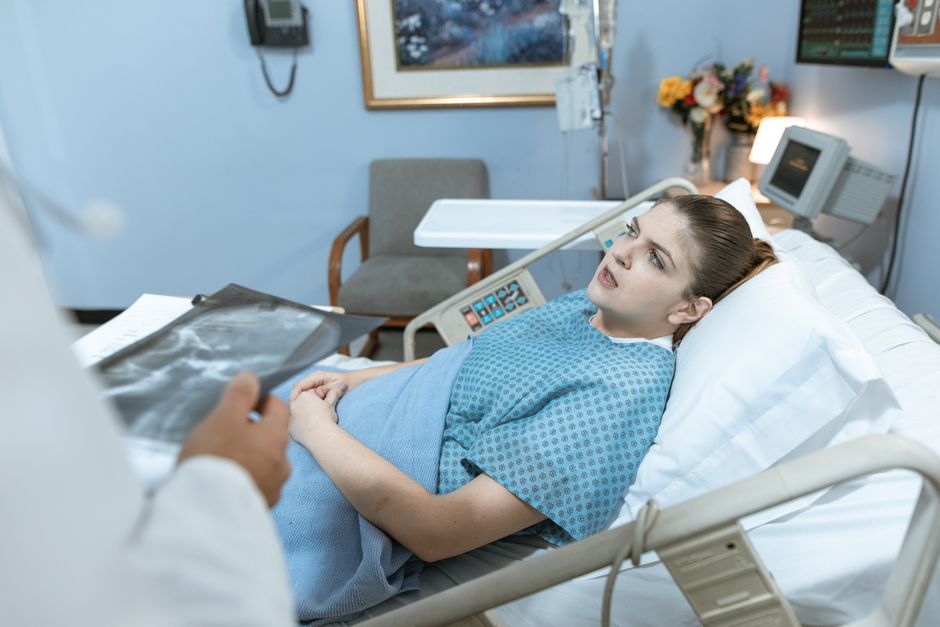
Through the screen, the specialist was able to observe Allana directly, speak with her husband and guide the clinical team at the bedside. Because Allana was still struggling to speak, the specialist asked her husband whether this was normal for her. The answer was clearly no.
The specialist identified the telling combination of signs: slurred speech, facial drooping and unusual changes in her vision. Even though an initial scan did not immediately confirm the diagnosis, the specialist pushed for further imaging. Days later, an MRI delivered the confirmation — Allana had suffered a stroke.
Without that remote connection, the expertise needed to identify her subtle and atypical presentation would have remained in Melbourne, effectively out of reach.
The ongoing benefit of telehealth for regional patients
For Allana, telehealth did not just matter in those critical early hours. It continued to play a practical role throughout her recovery, sparing her from having to make the lengthy journey to Melbourne while seriously unwell and caring for two young children.
"It's so handy … we're an hour-and-a-half from Melbourne," she said. "You don't have to travel, especially when you're really sick and you've got young kids."
Today Allana is recovering well, though she still tires more easily than before and has experienced panic attacks — a known psychological effect for some stroke survivors. Her message to others who have been through a similar experience is straightforward: "You will be OK in the end. Life does get better."
Why Victoria's approach is being watched nationally
The Stroke Foundation's executive director of stroke programs in research and innovation, Kelvin Hill, says Victoria has become a national leader in building out telehealth-based stroke care.
"The last 15 years in particular, we've had great advances in stroke care. The telehealth system has been one of those, and Victoria has been sort of the leader nationally in setting that up," he said.
Hill emphasised that the value of remote specialists lies in their ability to detect patterns that can be easy to miss. Stroke symptoms can be subtle and atypical, particularly in younger patients, and it is the depth of specialist experience that enables faster, more accurate decision-making — and ultimately better outcomes.
The Stroke Foundation encourages all Australians to learn the FAST test — checking for facial drooping, arm weakness, speech difficulty, and acting quickly on those signs by calling emergency services immediately.