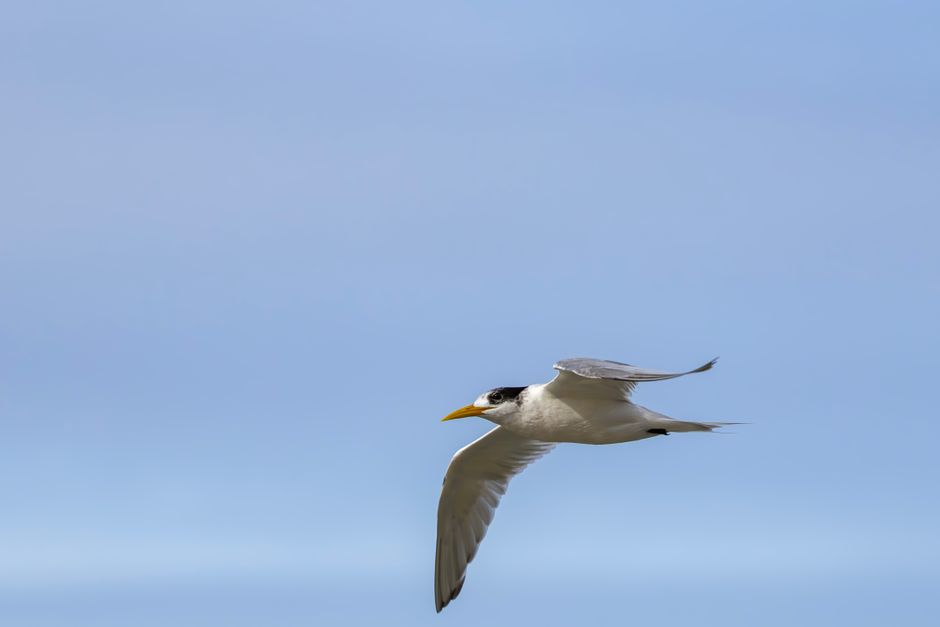
Victoria has recorded its first case of H5 bird flu, after preliminary testing detected the virus in a single greater crested tern discovered in Portland, in the state's south-west, on Thursday.
The detection has prompted authorities to enact Victoria's State Emergency Animal Disease Response Plan, with officials urging the public and farming community to remain vigilant.
What we know about Victoria's first H5 bird flu detection
Preliminary test results confirmed the presence of Influenza A virus subtype H5 in the wild bird, with further confirmatory testing now underway at CSIRO's Australian Centre for Disease Preparedness in Geelong.
Victoria's Chief Veterinary Officer, Dr Graeme Cooke, said the detection was the direct result of active government surveillance efforts.
"This detection is a result of Australia's response to H5 bird flu, with the Victorian Government undertaking surveillance for the disease and working closely with the Commonwealth, interstate jurisdictions and industry partners," Dr Cooke said.
He added that the state's response plans are designed to limit impacts on threatened species while also protecting farmers and reducing risk to domestic and commercial poultry operations.
Implications for farmers, the public and human health
Authorities are stressing that, at this stage, the virus has not spread to any commercial poultry flocks or agricultural environments, and the risk to human health is considered very low.
Victorian Farmers Federation President Ryan Milgate acknowledged the significance of the find but urged calm, noting that the broader agriculture sector had been preparing for this scenario for months.
"While this detection is concerning, it's not unexpected and the wider agriculture industry has been undertaking an enormous amount of preparation over the past few months for this very moment," Mr Milgate said.
Farmers are being urged to review their biosecurity plans immediately, monitor their flocks for any unusual illness, and report unexplained bird deaths without delay.
Members of the public are being asked to avoid contact with sick or dead wildlife, note what they observe and report any findings to the relevant authorities.
The detection marks a significant moment for Victoria as authorities move quickly to contain any potential spread, with the full confirmation of results from the Geelong facility expected to follow in the coming days.