The federal government has abandoned its controversial plan to impose a $5,000 annual cap on allied health payments for veterans, backing down after a sustained and emotional campaign from ex-service organisations, crossbench senators and opposition politicians. Veterans' Affairs Minister Matt Keogh confirmed on Thursday that the proposed threshold had been taken "off the table", bringing relief to thousands of former service personnel who feared the measure would cut them off from essential care.
What the cap would have meant for veterans
Introduced as part of May's federal budget, the $5,000 annual limit would have applied to a wide range of allied health services — including physiotherapy, psychology, occupational therapy, podiatry and dentistry — for veterans covered under the existing scheme. Under that scheme, veterans currently receive 12 appointments before needing a GP referral to access further treatment.
The government argued that only around 10 per cent of veterans exceeded the proposed threshold and that those who could demonstrate clinical need would still be able to access additional funding. The measure was projected to save roughly $750 million to $779 million over three to four years, representing a significant cut to the veterans' affairs portfolio.
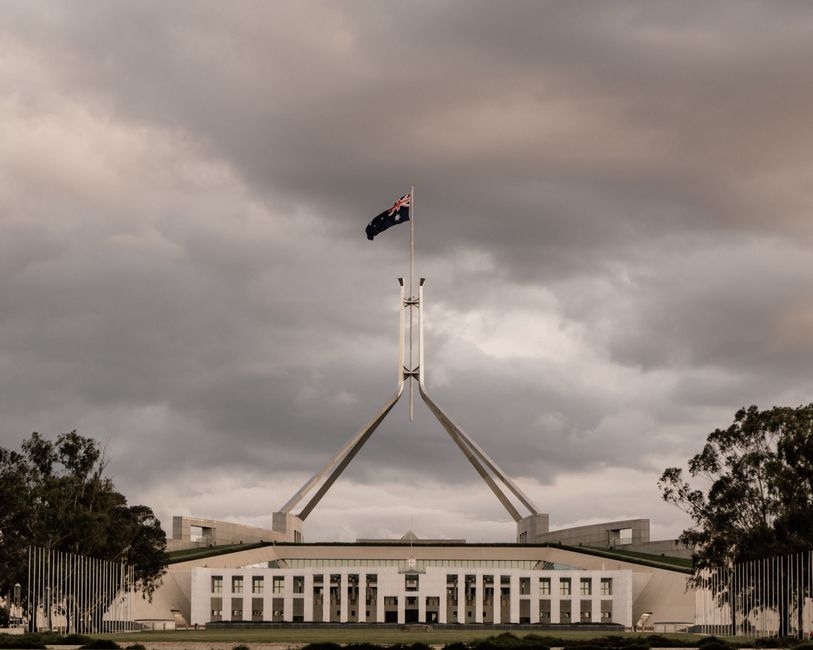
But advocacy groups and health professionals argued the policy would disproportionately harm those most seriously injured. More than 34,000 Australians signed a petition against the cap, and a group of veterans staged a peaceful protest outside federal parliament — laying their service medals on the ground — in the days before the government's reversal.
Bipartisan pressure forces Labor's hand
Opposition, Greens and crossbench politicians were united in demanding the cap be scrapped. In the Senate, Tasmanian senator Jacqui Lambie — herself a veteran — joined forces with Greens senator David Shoebridge to pass a bill in the upper house aimed at preventing any future government from reimposing a similar limit on veterans' health payments.
Lambie was jubilant at the outcome. "The bloody cap has been scrapped," she told reporters in parliament. "You beauty, and we are backing it up so they never ever try it again." She also delivered an emotional address highlighting the particular barriers facing female veterans in accessing healthcare.
While welcoming the decision, Lambie urged veterans not to direct their frustration solely at Keogh or the department, pointing to what she described as genuine progress on implementing recommendations from the Royal Commission into Defence and Veteran Suicide. "I have seen more movement in the last two years since that Royal Commission than what I have in the whole 10 years I've bloody been up here," she said.
Shoebridge echoed that sentiment, suggesting the budget decision had come from the top of government rather than the veterans' affairs minister alone. "This is a treasurer, prime minister decision," he said, adding that veterans' anger — while justified — should be aimed accordingly.
Coalition defence personnel spokesman Phillip Thompson, a veteran of the Afghanistan War, became visibly emotional as he welcomed the reversal. "I know what happens in that dark place because I've lived it," he said. "Sorry, this is personal for me, because it's my family. It's my people." Thompson nonetheless called on Keogh to apologise for not consulting more widely before the measure was announced.
Minister defends government's handling, pledges ongoing consultation
Keogh acknowledged the criticism but framed the reversal as a demonstration of the government's willingness to listen. "We brought forward a package of measures to improve access to allied health, improving the fees paid to allied health practitioners, so that they would provide better service to our veteran community," he told parliament. "And as part of that, we also committed and did engage with the ex-service organisations, with veterans, with families ... and we committed to listen, and we did, and we heard, and we have responded."
The minister had faced calls to resign in recent weeks after initially declining to meet with advocates, and the government drew further criticism when it emerged that the parents of Cameron Baird — killed during a 2013 deployment to Afghanistan — had been informed their travel allowance would be reduced.
Keogh confirmed the government's commitment to increasing fees paid to allied health providers would remain, describing it as part of the government's "solemn obligation" to those who have served.
Advocates vow to stay vigilant
Veterans' groups welcomed the backdown but signalled they would remain watchful. Fair Care for Veterans spokesman John Armfield, a former Navy clearance diver, thanked the minister while making clear the fight was not entirely over. "Veterans, families and doctors came from all over the country to say one thing: this cap would only ever hurt the most badly injured," Armfield said. "We'll also make sure whatever comes next doesn't bring the cap back under another name."
The Australian Association of Psychologists also praised the decision, with its executive director noting that for veterans receiving psychological care, continuity of treatment was critical and should not be determined by an arbitrary financial threshold. For veterans already navigating complex mental health challenges — an issue explored in coverage of new mental health services being established to support vulnerable Australians — uninterrupted access to care can be a matter of life and death.
The episode has prompted broader questions about how budget savings are identified within sensitive portfolios, and whether the veterans' community was adequately consulted before the measure was made public. For now, however, the mood among advocates was one of relief and cautious optimism — with a firm eye on what comes next.