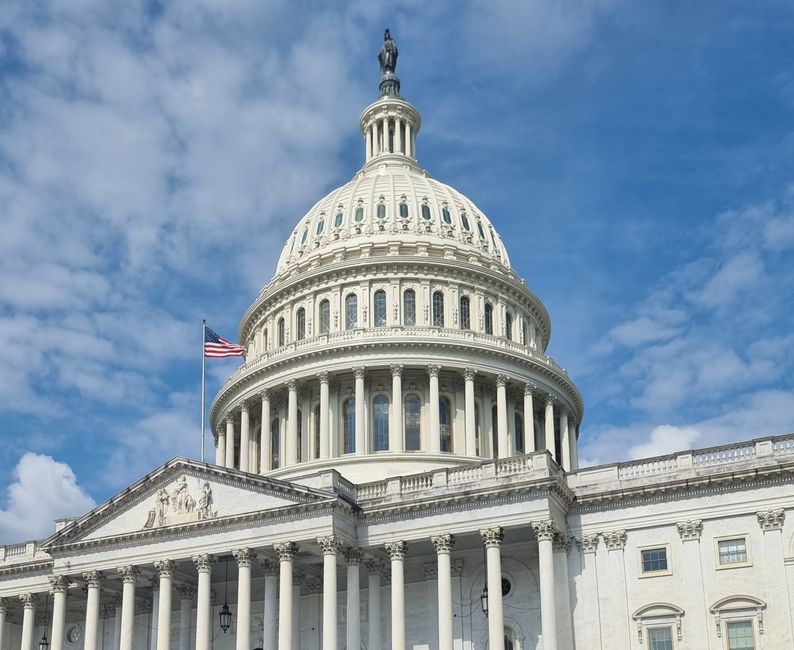
More than a week after a sweeping Democratic "blue wave" reshaped the United States political landscape, the fallout from the midterm elections continues to reverberate through Washington, with a major White House staffing shake-up, a failed impeachment push, and a new balance of congressional power set to take effect in January.
Democrats secure commanding leads in the blue wave aftermath
While a handful of races remain uncalled, Democrats have so far secured 255 seats in the House of Representatives compared to 167 for Republicans. In the Senate, Democrats have established a majority with 54 seats to the Republicans' 44. Republicans retain control of both chambers for now, but Democrats are set to assume the reins of Congress in early January, fundamentally altering the political dynamics facing the Trump administration.
Trump appoints Stephen Miller as White House chief of staff
In a move widely interpreted as a show of defiance rather than reflection, President Donald Trump responded to the Republican drubbing by appointing Stephen Miller as his new White House chief of staff. Miller, the chief architect of the administration's hard-line immigration agenda, replaces Susie Wiles in the role. The chief of staff is responsible for organising the president's schedule and controlling access to the Oval Office.
Trump announced the appointment on his Truth Social platform, describing Miller as one of his "most trusted advisors." The choice of a staunch MAGA loyalist signals that Trump has little intention of moderating his approach in response to the election result.
Political analysts note the appointment runs counter to the typical post-defeat playbook. Associate professor David Smith from the United States Studies Centre observed that presidents who suffer major losses usually part ways with prominent cabinet figures, not double down on hardliners.
"Trump's really showing he is not listening to anybody about why Republicans lost the election," Smith said. He pointed specifically to Miller's role in designing mass deportation policies that shifted public opinion. "Stephen Miller was the architect of the mass deportation policies that, instead of targeting violent criminals, targeted farm employees and 7-Eleven workers, which really changed mass deportation from Trump's most popular issue to one where Democrats now have an advantage," Smith said.
Impeachment bid against Pete Hegseth blocked
Earlier this week, Republican congressman Thomas Massie introduced articles of impeachment against Defence Secretary Pete Hegseth, citing a series of controversies surrounding the former National Guard officer. Several articles focused on the ongoing conflict with Iran, alleging Hegseth had violated the War Powers Resolution, which requires the executive branch to consult Congress before committing US forces to military action. Coverage of the broader US strikes on Iran can be found in our reporting on the fresh wave of US strikes on Iran.
Hegseth responded defiantly, delivering a speech that Trump praised, in which he labelled the impeachment effort a "political spectacle, a personal manifesto driven by ego and resentment."
On Wednesday, House Republicans moved to shut down the attempt, voting 211 to 204 to send the impeachment resolution to the Judiciary Committee, effectively killing any immediate prospect of a formal vote on charges. Trump celebrated the procedural outcome on Truth Social, calling it an "EXONERATION of a Great American Patriot."
More turbulence likely ahead for the administration
Despite the blocked impeachment, analysts warn this may not be the last act of Republican dissent. Smith noted that a number of disaffected Republican members, including Massie, are preparing to leave office and are likely to continue making themselves heard in the meantime.
"I think that this illustrates how much Republicans blame the war in Iran for their defeat in the midterms," Smith said.
Meanwhile, Democratic committee leaders are already reported to be planning their own legislative and investigative agenda ahead of formally taking control of Congress in the new year, suggesting the pressure on the White House is only set to intensify.

