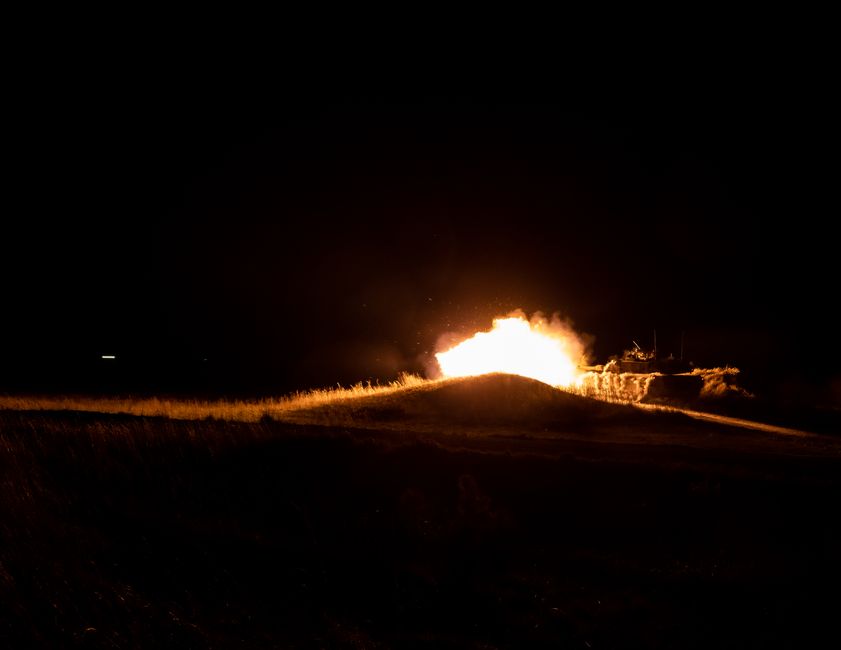
The United States has launched a fresh and intensified wave of airstrikes against Iran, with President Donald Trump declaring the country "will be defeated soon" and warning of even broader attacks to come unless Tehran returns to the negotiating table. The strikes — which hit dozens of targets over seven hours overnight before continuing into daylight hours on Wednesday — have pushed the 2026 Iran war to the brink of all-out regional conflict, effectively shredding the interim peace deal signed less than a month ago.
Strikes Kill Troops, Wound Hundreds Across Iran
Among the targets struck was a barracks housing Iran's 388th Mechanized Infantry Brigade in Sistan and Baluchestan province, with Iranian state television reporting that at least 13 missiles were fired in that attack alone. Seven military personnel were killed, including both conscripts and career soldiers, with a number of others wounded.
Iran's Health Ministry said more than 260 people were wounded in overnight strikes — a figure described as far exceeding any previous round of exchanges in the conflict. Iranian government spokesperson Fatemeh Mohajerani confirmed that at least 30 people have been killed since renewed US attacks began last week. The Iranian army vowed it would make "a decisive response to this aggressive action by the American enemy."
The strikes were described as unusual in their scope and timing, with the US Central Command conducting attacks during daylight hours — a signal, analysts noted, of a significant escalation in the tempo of the campaign.
US Reimposes Naval Blockade as Iran Threatens Energy Shutdown
Alongside the airstrikes, the US has reimposed a naval blockade on Iranian ports — a measure that Tehran's Deputy Foreign Minister Kazem Gharibabadi said had "in a way, dismantled the Islamabad memorandum," referring to the interim agreement reached last month that had briefly paused hostilities.
Demonstrating the blockade's enforcement, the US Central Command announced that its forces disabled an unladen oil tanker that attempted to sail toward an Iranian port after ignoring multiple warnings. "A US aircraft disabled the vessel after firing Hellfire missiles into the ship's smokestack," the command said, adding the vessel was no longer headed to Iran.
In response, Iran's paramilitary Revolutionary Guard issued a stark threat: "The export of oil and gas from the region will be either for everyone or for no one," warning it could halt all energy exports from the Middle East. The threat comes as traffic through the Strait of Hormuz remains severely disrupted, with maritime data showing only 21 transits recorded on Tuesday.
Iran had effectively closed the strait when the war erupted on February 28, sending global oil and commodity prices soaring. The waterway was briefly reopened after last month's interim deal, before Tehran vowed to close it again "until the US ends its aggression." For background on how the blockade and the broader conflict have unfolded, see our earlier coverage of Trump's renewed Iran strikes threat over the peace plan.
Regional Spillover: Bahrain, Kuwait, Jordan and Iraq Drawn In
The conflict continued to draw neighbouring countries into its orbit. Missile alert warnings sounded in both Bahrain and Kuwait in the early hours of Wednesday as Iranian projectiles were fired toward those nations. Iran's Revolutionary Guards also claimed to have targeted the US Fifth Fleet, which is based in Bahrain, and said it had intercepted what it described as attacks on civilian targets.
Jordan, which maintains a close defence partnership with Washington, said it shot down three incoming Iranian missiles. Several explosions were also reported near the US consulate in Erbil, the capital of Iraq's semi-autonomous Kurdistan region, further widening the geographic footprint of the conflict. US Navy Admiral Brad Cooper confirmed Iran had launched dozens of missiles and drones at neighbouring Gulf Arab states.
Peace Talks Stalled But Not Formally Ended
Despite the renewed violence, mediated talks between the two sides have not formally collapsed. However, Iran's chief negotiator Mohammad Bagher Ghalibaf made clear the country's patience was wearing thin, stating on state television that "a memorandum of understanding only has meaning when its clauses are valid and being implemented. If Iran is not to derive any benefit from the memorandum of understanding, we have no reason to adhere."
Trump, for his part, issued blunt warnings of further escalation. He stated that bridges and power plants could be targeted as early as next week if Iran did not return to negotiations, telling Tehran: "You better make a deal, or you're not going to have anything left." He also claimed Iran wanted to reach a settlement, but insisted Washington would determine whether to accept one.
The deteriorating situation follows a pattern of ceasefire declarations and rapid reversals that have defined the conflict since its outbreak. As we reported previously, Trump declared the ceasefire over as strikes escalated across the Gulf region, setting the stage for the current intensification. With both sides exchanging fire daily and economic pressure mounting globally, the window for a diplomatic resolution appears to be narrowing rapidly.