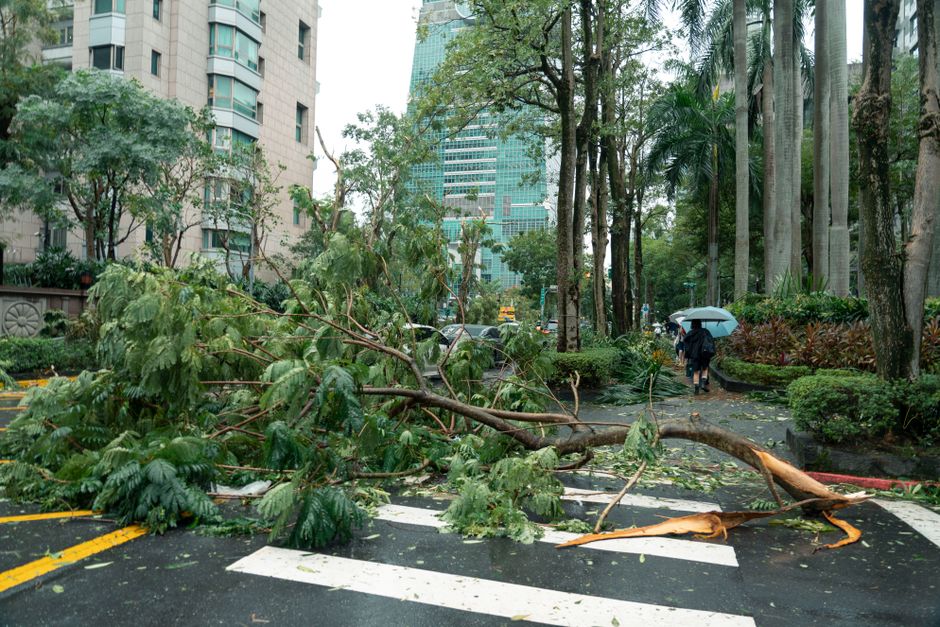
Typhoon Dolphin, the most powerful tropical cyclone to strike China this year, has made landfall along the country's eastern coast, unleashing torrential rain and fierce winds that have forced more than one million people from their homes and caused widespread transport chaos across the region.
The storm came ashore near Yuhuan in eastern Zhejiang province late Sunday AEST, carrying maximum sustained winds of 151km/h near its centre — equivalent to a Category One hurricane on the Saffir-Simpson scale, according to China's meteorological authorities.
Massive Evacuations and Emergency Responses Across Eastern China
The scale of the evacuation effort has been enormous. In Zhejiang province alone, the city of Wenzhou relocated more than 900,000 residents and opened over 1,000 emergency shelters to house those displaced. Shanghai evacuated at least 30,300 people, while Fujian province moved nearly 99,000 people out of high-risk areas after authorities there raised the typhoon emergency response to Level III.
Zhejiang, Shanghai and Jiangsu have all activated Level III emergency responses. Authorities acted swiftly ahead of landfall, moving offshore workers to safety, ordering vessels back to port, and stepping up inspections at reservoirs, mountain streams, landslide-prone zones, construction sites and tourist areas.
In Fujian, maritime authorities suspended 55 coastal passenger ferry routes, halted all 115 offshore construction projects and relocated 290 construction vessels to sheltered waters.
Travel Chaos: Thousands of Flights Cancelled
Transport disruption has been severe. Shanghai alone cancelled approximately 1,500 flights, according to flight-tracking data. Among those caught up in the chaos was a 42-year-old tourist from Guangdong, surnamed Chen, who found himself stranded in Shanghai after his family's Sunday departure was scrapped.
"To us Guangdong people, this typhoon is as ordinary as having a meal and feeling the wind. It's just part of everyday life," Chen said, noting the storm did not seem especially intense by the standards of China's southern coastline. The family was rebooked on a Monday evening flight, though there was no certainty it would depart on schedule.
Before reaching the Chinese mainland, Typhoon Dolphin had already swept through Japan's southern Okinawa prefecture, injuring six people and cutting power to more than 50,000 buildings.
Flooding and Landslide Risk to Persist
Forecasters have warned that the danger is far from over. Torrential rain is expected to continue through Monday across a wide band of eastern and central China, including Zhejiang, Shanghai, northern Fujian, northeastern Jiangxi, central and southern Anhui, and much of Jiangsu. The hardest-hit parts of central and eastern Zhejiang could receive between 250 and 500 millimetres of rainfall.
After making landfall, Dolphin is forecast to track westward before slowing over central and southwestern China, gradually weakening as it moves inland. Chief forecaster Wang Haiping from the National Meteorological Centre warned that this slow-moving trajectory could prolong heavy rainfall and significantly raise the risk of flooding and landslides — particularly in mountainous terrain and along smaller rivers.
The water resources ministry flagged serious flooding concerns on the Qiantang, Yong, Jiao and Shuiyang rivers, with smaller waterways in the worst-affected areas also at risk of exceeding warning levels. Authorities separately warned of a high risk of geological disasters across parts of Zhejiang province.
For more on the developing situation, see our earlier coverage of Typhoon Dolphin slamming eastern China with more than one million evacuated.