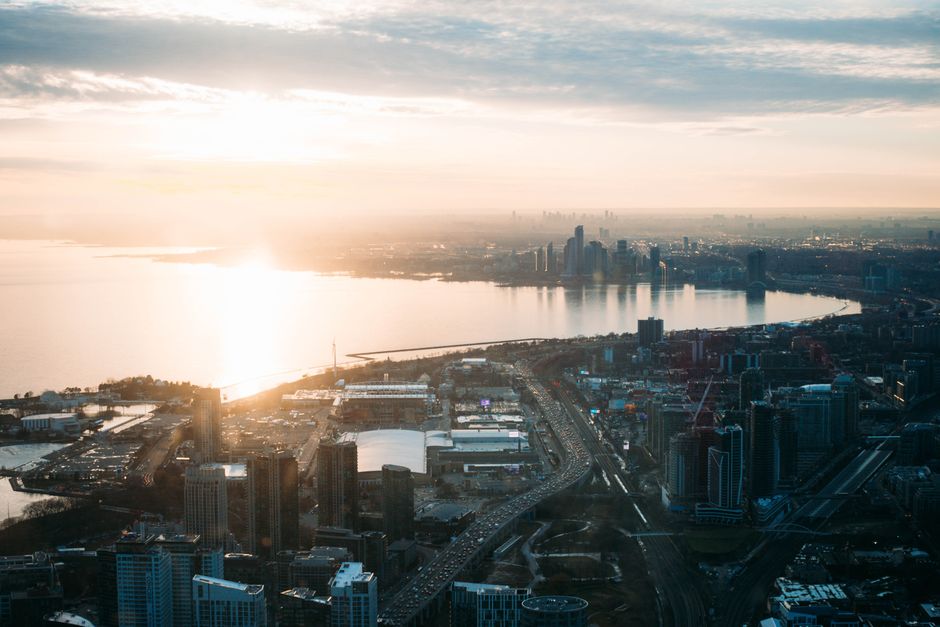
US President Donald Trump has signed an executive order renaming Lake Ontario as "Lake America", the latest provocative move in a rapidly deepening trade war with Canada — and one that Canadian leaders have flatly and defiantly rejected.
Trump put his signature to the order at the Resolute Desk in the Oval Office, directing the Interior Department to update the lake's name in the US geographic naming service within 30 days. Despite declaring the change "effective immediately," the signed document itself makes clear the formal update carries a 30-day implementation window.
Behind the president as he signed were two oversized maps: one displaying the words "Lake America" in large red lettering over the lake, and another bearing the slogan "Making the Great Lakes Even Greater." Trump scrawled his name with a Sharpie pen in front of assembled reporters.
Trump Escalates Tensions Over Trade and Territory
The executive order comes amid a serious breakdown in US-Canada trade relations. Talks between the two countries collapsed last week, triggering American tariffs of 50 per cent on US$20 billion worth of Canadian goods. Canada responded swiftly and in kind, slapping retaliatory tariffs on an equivalent value of American products — including steel, dairy, appliances and farm equipment — with Prime Minister Mark Carney declaring, "You're at war when you get attacked. We got attacked."
Trump, who had been floating the renaming idea publicly in the days prior — including in a TikTok video — framed the move as a response to what he described as Canada's unfair treatment of the United States on both trade and defence spending. "Canada's been ripping us off for a long time," he said. Asked why he was targeting an ally rather than an adversary, Trump replied: "The Canadian officials have treated us very badly. They're nasty people."
He also hinted that the Atlantic and Pacific oceans could be next. "So, if you think about it, we have a gulf and we have a lake. Now all we need is an ocean. So, maybe we'll have to change the name of the Atlantic and/or the Pacific," he said.
The move is a direct echo of Trump's decision on his first day back in the White House in January 2025 to rename the Gulf of Mexico as the "Gulf of America" — a change the US federal government now uses officially, though Mexico has rejected it and it has no international standing. During his second presidency, Trump has repeatedly tested the boundaries of American influence over geography, territorial claims and long-standing alliances, including floating the idea that Canada should become the 51st US state, and laying claim to Greenland.
Canada Pushes Back — Hard
Canadian leaders wasted no time in dismissing Trump's order. Prime Minister Mark Carney rejected the renaming outright, pointing to the lake's deep Indigenous heritage. The name "Lake Ontario" is derived from the Huron word "oniatarí:io" — meaning "lake of shining waters" or, in some translations, "great lake" or "beautiful water" — a name that predates both Canadian Confederation in 1867 and the American Declaration of Independence.
"We know that America is changing. Their trading relationships, their foreign policies, their national monuments, their hydronyms," Carney wrote on social media platform X. "Canadians also know that naming reality means calling it Lake Ontario — then, now and always."
Ontario Premier Doug Ford, who has previously traded barbs with Trump, was equally blunt: "It's Lake Ontario to Canadians and the rest of the world. Now and forever."
Nova Scotia Premier Tim Houston offered the most pointed summary of the moment: "We're into some real foolishness now. It's Lake Ontario, buddy."
Pushback also came from within the United States itself. New York Governor Kathy Hochul, whose state shares a shoreline on the lake, wrote on X: "New York won't be calling it that."
What the Order Actually Does — and Doesn't Do
There is no single international body that governs the naming of shared bodies of water, which means Trump has broad authority to direct how the US government refers to geographic features, but no power to compel Canada or any other country to adopt his preferred terminology. The lake forms part of the border between the two nations, with Canada's largest city, Toronto, sitting on its northwestern shore.
The province of Ontario, founded in 1867, itself takes its name from the lake — a fact that underscores just how deeply embedded the name is in Canadian identity and history.
Trump, for his part, appeared unbothered by the distinction. "This is official, effective immediately," he told reporters — even as the order he signed sets a 30-day timeline for the update to the US geographic naming database. He added: "We love the people of Canada. I don't think their representatives do an appropriate job. Maybe they'll change. I really don't know. It doesn't make much difference."
With executive actions continuing to reshape US policy at a rapid pace, the Lake Ontario renaming stands as the most visible — and most widely mocked — salvo yet in an increasingly acrimonious standoff between Washington and Ottawa.