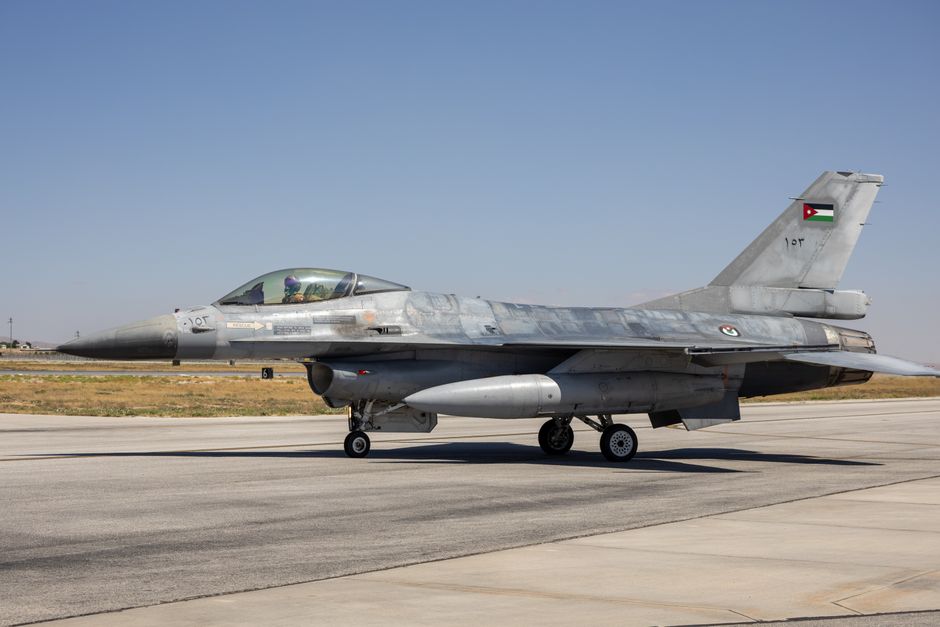
The United States has launched fresh retaliatory strikes against Iran after two American service members were killed and one went missing following an Iranian ballistic missile and drone attack on a base in Jordan, marking another dangerous escalation in an ongoing conflict that has drawn in much of the Middle East. US Central Command confirmed the strikes began at 8am Sunday (AEST), ordered personally by President Donald Trump, with the stated aim of swiftly punishing Iran's Islamic Revolutionary Guard Corps and continuing to degrade Tehran's military capabilities.
Two Troops Killed, One Missing in Jordan Attack
The Iranian strikes on Jordan on Friday killed two US service members as Central Command and partner forces were actively defending against a wave of Iranian ballistic missiles and drones. A third service member remains missing in action, while four others were medically evacuated to Jordanian hospitals and subsequently discharged. The identities of the two dead have not been publicly released.
The losses represent the first American military fatalities from Iranian fire since March. Since the conflict began in late February, 16 US service members have been killed and more than 430 wounded. President Trump described the deaths as "very sad" but said the troops fell in service to their country. Defence Secretary Pete Hegseth paid tribute on social media, writing: "Godspeed, heroes. Their sacrifice only stiffens our resolve."
US Strikes Designed to 'Swiftly Punish' Iran's Revolutionary Guard
Central Command said the new strikes were directed at the Islamic Revolutionary Guard Corps in response to the Jordan attack, and were also intended to further erode Iran's ability to threaten vital shipping lanes. The strikes follow seven consecutive nights of US military operations targeting Iranian surveillance sites, military logistics infrastructure, underground weapons storage and maritime capabilities. A blockade on ships accessing Iranian ports has also been reimposed.
Earlier in the week, US drones struck Bandar Abbas Naval Base. Central Command confirmed that 50,000 American troops are currently deployed across the region and described them as "vigilant, lethal, and ready." The US State Department simultaneously issued a worldwide caution, warning Americans — particularly those in the Middle East — of potential flight cancellations, airspace closures, and the risk of targeted attacks on US interests by Iran and its allies.
The renewed military campaign comes as the ceasefire that had briefly halted the fighting has definitively collapsed, with both sides now openly trading accusations of bad faith.
Iran's Supreme Leader Warns of 'Unforgettable Lessons'
Minutes before the US announced its retaliatory strikes, Iran's supreme leader Mojtaba Khamenei — who has not been seen publicly since the war began — issued a combative statement read on state television and posted to social media. Condemning the United States as "the Great Satan," Khamenei declared that Trump's signature on the interim agreement was "utterly worthless and devoid of credibility," citing what Tehran characterised as repeated American violations of the memorandum of understanding signed about a month ago.
"Now that the American enemy is seeking to escalate the conflict, thereby incurring even heavier costs and further humiliation, it should know that the noble nation of Iran and the Resistance Front have unforgettable lessons in store for it," Khamenei said in the statement.
His words were reinforced by Iran's deputy foreign minister, Kazem Gharibabadi, who told state television that Tehran was suspending its commitments under the interim deal, stating Iran was "no longer implementing them" given what it described as US violations.
Ceasefire Collapse, Regional Alarm and Escalation Fears
A ceasefire had been declared in mid-June when Washington and Tehran signed a memorandum launching a 60-day peace negotiation process. That fragile truce unravelled after the IRGC fired on ships in the Strait of Hormuz nearly a fortnight ago, resuming hostilities and causing the talks to collapse entirely. Iranian missile attacks have since been reported on US air bases across several Gulf states, and an Iranian strike struck a Kuwait Petroleum Company facility in Mangaf, which the company confirmed in a statement.
The United Arab Emirates has called for an immediate end to hostilities, urging "the utmost restraint" and warning of "dangerous repercussions" if the region is pulled into further violence. The UAE also called for uninterrupted navigation through the Strait of Hormuz, describing it as vital to the global economy, and condemned attacks on civilian infrastructure as a "flagrant and grave violation" of international law.
Trump has separately indicated he is weighing further escalation options, including potential strikes on Pickaxe Mountain — described as a key Iranian nuclear site — and a possible US takeover of Kharg Island, a major Iranian oil terminal. Foreign policy analysts have warned there is currently no clear exit strategy for the United States, with one expert describing the situation as "an escalatory cycle" with slim prospects of an off-ramp in the near term.
As the strikes continue and diplomatic channels remain closed, the prospect of a negotiated resolution appears increasingly remote, with both Washington and Tehran locked in a deepening cycle of military action and rhetorical confrontation.