US President Donald Trump has called on Ukrainian President Volodymyr Zelensky to step down and struck a deal to purchase Russian diesel fuel, plunging relations between Washington and Kyiv to their lowest point in months — even as Russian aerial bombs killed at least 12 people, including three children, in the southern Ukrainian city of Zaporizhzhia.
The extraordinary sequence of events unfolded over the course of Friday and Saturday (US time), beginning with Trump's announcement on social media that he had agreed a diesel supply arrangement with Russian President Vladimir Putin during a phone call, before escalating into an open demand for Ukraine's wartime leader to be replaced.
Trump condemns Zelensky over refinery strikes
Speaking to reporters as he departed the White House for a rally in Tennessee on Saturday, Trump directed sharp criticism at Zelensky for Ukraine's ongoing strikes against Russian oil refinery infrastructure — attacks Kyiv has used as a strategy to choke off the Kremlin's war revenues.
"We said you can do whatever you want to Russia, don't hit the refineries because that's a world problem that's caused," Trump told reporters. "He wants to make problems for the world, he wants to make problems for our farmers, our ranchers."
Trump went further, warning the Ukrainian leader in blunt terms: "He better damn well stop."
He then called explicitly for Zelensky's removal from office. "You know what I suggest? I suggest they get a new leader who can make a deal," Trump said. "I think it's time for Ukraine to get a new president."
Trump also repeated a line he has used before — blaming Zelensky, rather than Putin's February 2022 invasion, for the continuation of the war. "That's a war that should have never started," he said, adding that Zelensky "could have settled this war many times."
The comments mark arguably the most serious deterioration in the Trump-Zelensky relationship since an infamous Oval Office confrontation in late February last year, when voices were raised and Zelensky was effectively shown the door early. While relations appeared to stabilise in the period that followed, Trump has consistently blamed the Ukrainian president for either triggering or prolonging the conflict.
The Russian diesel deal — and what it means
Trump announced on Friday that he had reached an agreement with Putin — reportedly during a call initially arranged to discuss a suspected plague outbreak in Russia — to purchase substantial quantities of Russian diesel. According to Trump's own social media post, Russia would immediately supply more than 300,000 tonnes of diesel, followed by an additional 500,000 tonnes in November, then one million tonnes "immediately thereafter," with a further three million tonnes to follow "within a short period of time."
The deal represents a dramatic reversal of US policy. It comes just weeks after Trump signed a sweeping Russia sanctions law explicitly designed to cut off the oil and gas revenues sustaining Moscow's war effort. The contradiction has drawn criticism internationally, with Germany confirming on Saturday it would maintain its own sanctions against Russia regardless of the US move.
Questions remain about whether Russia can actually fulfil the agreement. Moscow has imposed its own diesel export restrictions in recent months as it struggles to meet domestic fuel demands — raising doubts about Putin's ability to deliver on the quantities Trump cited.
Australia's Energy Minister Chris Bowen moved quickly to distance Canberra from the arrangement, stating flatly: "We don't need or want it."
Zelensky, who has largely avoided direct public criticism of Trump since the Oval Office confrontation, broke from that approach on Friday, describing the diesel deal as "weak" and unfair — and characterising it as a birthday gift to Putin.
Bombs fall on Zaporizhzhia as diplomatic row deepens
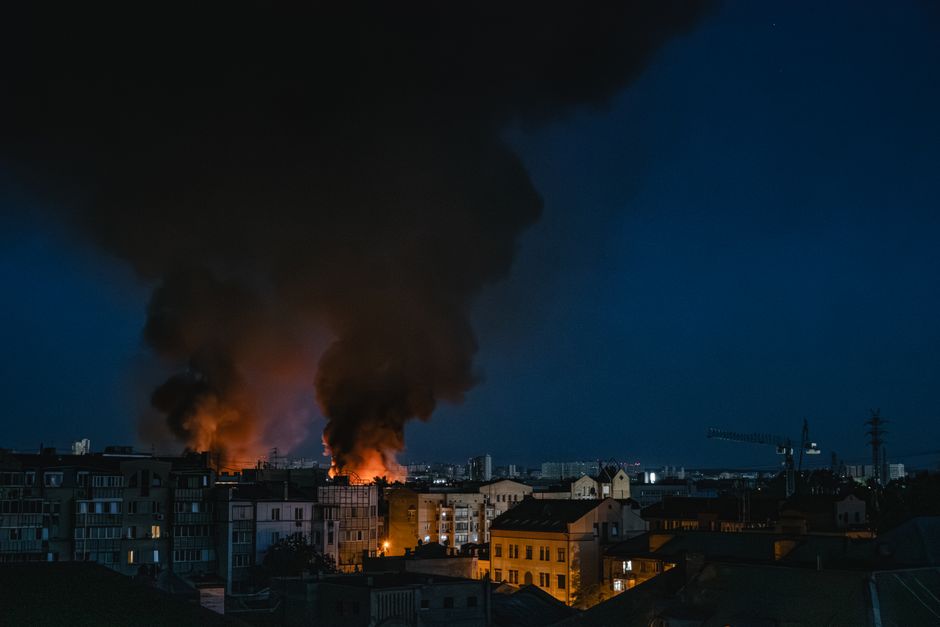
The diplomatic turbulence coincided with a deadly Russian strike on residential buildings in Zaporizhzhia in the early hours of Saturday morning. Zelensky confirmed that at least 12 people were killed and at least 14 wounded when Russian aerial glide bombs struck apartment blocks in the city.
"Today, Russia expressed its thanks for the lifting of sanctions on diesel exports by dropping five glide bombs on residential buildings in Zaporizhzhia," Zelensky wrote online, arguing that Moscow interprets any easing of international pressure as permission to continue its military campaign. "Different signals are needed," he said.
Separately, Russian-installed authorities in the Luhansk region reported four civilian deaths and five injuries from Ukrainian strikes over the same 24-hour period. Kyiv did not immediately comment on those claims.
The Kremlin, for its part, said Trump had conveyed de-escalation proposals to Putin during Friday's call, and that Putin had received them "with understanding" — though spokesman Dmitry Peskov declined to elaborate on specifics or Russia's formal response.
Where things stand
Formal peace negotiations between Russia and Ukraine remain deadlocked. Previous US-brokered proposals have reportedly required Ukraine to surrender significant territory — including land not fully under Russian military control — a position Kyiv has firmly rejected.
Trump has repeatedly framed the conflict as one Zelensky could end through compromise, while Ukraine and its European allies maintain that yielding to Russian demands would reward aggression and set a dangerous precedent. With US midterm elections approaching and energy prices a live political issue for American consumers, farmers and industry, Trump's diesel deal signals that domestic economic pressures are now shaping his Ukraine calculus as much as any geopolitical strategy. Whether that calculation holds — or deepens the rift with Kyiv still further — may depend on events in the days ahead.