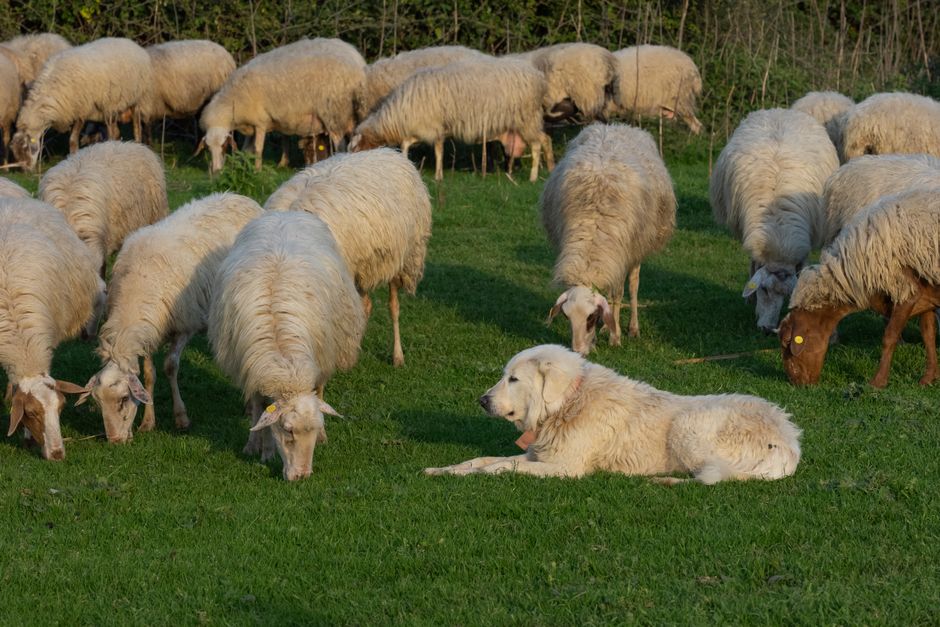
An ancient Italian sheepdog breed is gaining serious attention across rural Australia as farmers search for effective ways to protect their livestock from feral predators. The Maremma — formally known as the Maremmano-Abruzzese sheepdog — is a livestock guardian dog with thousands of years of breeding history, and new research suggests far more Australian farmers could benefit from putting one to work.
Losses that forced a rethink
For Central West NSW farmer Leo Tompkins, the decision to bring Maremmas onto his Wattamondara property came after a devastating run of predator attacks left him with virtually nothing to show for his lambing seasons.
"We were looking at losses for mature ewes up to 75 per cent of the flock," he said, adding that entire lamb crops had been wiped out on multiple occasions by a single neighbourhood wild dog.
The attacks were not always direct kills. Wild dogs would chase and harass sheep to the point of exhaustion, with animals dying from stress. Tompkins considered predator-proof fencing among other options but ultimately found Maremmas to be the most economical solution.
The results were immediate. "We started with one dog, and our numbers for sheep mortality and lamb mortality dropped drastically," he said.
A billion-dollar problem on Australian farms
Tompkins' experience reflects a much wider crisis across the agricultural sector. According to the Australian Bureau of Agricultural and Resource Economics and Sciences (ABARES), pest animals — including wild dogs, feral pigs and foxes — cost farmers almost $1 billion a year in livestock deaths and infrastructure damage.
While alpacas and donkeys are also used as guardian animals on Australian properties, researchers say Maremmas deserve far greater uptake given the evidence behind them.
The breed takes its name from the Italian regions where it originated and has been used to protect flocks for millennia. Just as a kelpie is instinctively driven to herd, the Maremma is hardwired to guard — living alongside its flock around the clock and asserting a protective presence that deters would-be attackers.
What the research shows
University of Tasmania researcher Linda van Bommel has spent two decades studying Maremmas and surveyed 150 producers who use livestock guardian dogs. The findings are striking.
- 66 per cent of farmers reported that predation stopped entirely once their dogs began working.
- A further 30 per cent said predation had significantly decreased.
Van Bommel described one case where a farm was losing every single lamb at birth to predators. After introducing guardian dogs, their lambing rate climbed to around 70 per cent.
"Just that difference of the before and after dogs, it's really striking," she said.
She explained that the physical presence of a Maremma sends a clear signal to any predator in the area — though it ultimately falls to the predator to decide whether to heed it. "Sometimes they get a bit ballsy, and they go in anyway," she acknowledged.
Even a partial reduction in losses can be transformative for a farming operation. "In a lot of cases, even that decrease in predation can make the difference for a farmer, whether they're able to keep running their business with a profit, or it's just not really viable anymore," van Bommel said.
Training is key to success
Researchers emphasise that simply placing a Maremma with a flock is not enough. Training is essential to ensure the dogs voluntarily bond with and commit to protecting their animals, while remaining approachable by their owners for feeding and veterinary care.
Van Bommel and others in the field are calling for greater access to information and structured training resources for farmers considering the breed — a push they hope will see more producers benefit from a solution that has quietly been working for thousands of years.
For Tompkins, the dogs have been an unqualified success. They are now a permanent fixture at Wattamondara, and he describes them as an incredible addition to the property.
Interested in more stories from rural and regional Australia? Readers share their slice of country life — from classroom cows to unexpected outback moments.