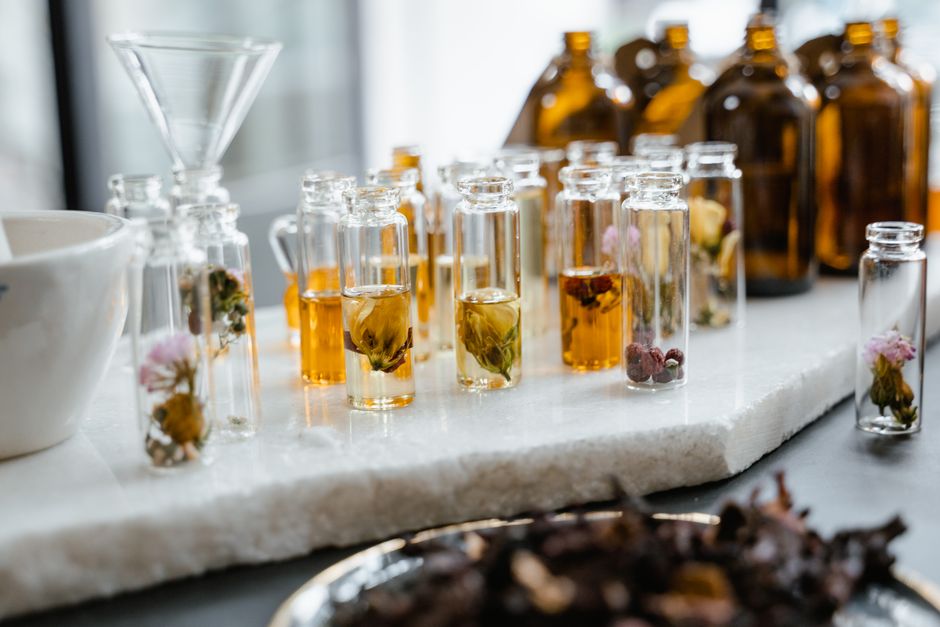
Whether you are blending your first fragrance at the kitchen bench or refining a recipe you have been tweaking for months, understanding the building blocks of amber gourmand perfumery is the best place to start. This guide breaks down the aroma chemicals that do the heavy lifting in this beloved category.
What Makes an Amber Gourmand Fragrance
Amber gourmand is one of the most commercially successful fragrance families of the past two decades, and for good reason. It sits at the intersection of two deeply appealing scent territories: the warm, resinous depth of classic amber accords and the edible, mouth-watering quality of gourmand notes like vanilla, caramel, tonka and praline. The result is a fragrance style that feels simultaneously cosy, indulgent and skin-close.
Unlike traditional orientals, which tend to lean heavily on incense and spice, amber gourmands are built for wearability. They are approachable, long-lasting on skin and perform exceptionally well in cooler weather. That popularity has made them a go-to for DIY perfumers who want results that feel professional without requiring years of formal training.
At their core, amber gourmand fragrances rely on a handful of consistent qualities:
- Warmth: a smooth, enveloping base that reads as comforting rather than sharp
- Sweetness: a controlled, layered sweetness that avoids reading as cloying or one-dimensional
- Depth: resinous or balsamic undertones that give the fragrance staying power and complexity
- Edibility: an almost food-like quality, often described as something you could eat, without crossing into outright dessert territory
Achieving this balance in a home lab comes down to selecting the right aroma chemicals and understanding how they interact. The sections that follow cover exactly which molecules to reach for and how to use them effectively in your own amber gourmand blends.
Essential Aroma Chemicals for the Amber Base
Building a convincing amber gourmand base from scratch requires a small but carefully chosen palette of aroma chemicals. Each one plays a specific structural role, and understanding what they contribute helps you blend with confidence rather than guesswork.
- Ethylene Brassylate: This macrocyclic musk is the backbone of countless amber formulas. It delivers a warm, skin-close sweetness that reads simultaneously musky and subtly vanilla-like, giving the whole composition a soft, enveloping quality.
- Iso E Super (Isocyclemone E): A woody, cedarwood-adjacent molecule with a distinctive velvety texture. At moderate usage rates it adds depth and smoothness to an amber base without pushing the blend into outright woody territory.
- Ambroxide (or Ambrofix): The chemical most responsible for that recognisable "amber" effect. It has an animalic, mineral warmth that anchors sweeter elements and stops a gourmand accord from smelling flat or one-dimensional.
- Vanillin and Ethyl Vanillin: Both are essential for the gourmand character. Ethyl vanillin is roughly three times stronger and slightly creamier, while standard vanillin reads more classically sweet. Using both together creates a richer, more nuanced vanilla presence.
- Labdanum Absolute or Cistus Oil: Although technically a natural extract, labdanum is widely used alongside synthetics in DIY work. It contributes a resinous, honeyed warmth that blends seamlessly with synthetic ambers and adds genuine complexity.
- Benzyl Benzoate: Often overlooked by beginners, this fixative softens harsher notes and improves blending between resinous and musky materials. It also functions as a useful diluent for thick, viscous ingredients.
Starting with these core materials gives your amber gourmand base a solid structural foundation. From here, smaller additions of gourmand modifiers like coumarin or heliotropin can personalise the character significantly.
Sweet and Edible Accords to Layer on Top
Once your amber base is settled, the real fun begins. Layering sweet and edible accords on top is what transforms a simple resinous blend into a full gourmand experience. Think of this stage the way a pastry chef thinks about finishing touches: the base provides structure, but the top layers deliver the craving.
A handful of aroma chemicals stand out as genuine workhorses for this purpose:
- Ethyl maltol: One of the most powerful sweet-enhancing molecules available to home perfumers. Even at low concentrations (0.5–1% in a blend), it adds a warm, candied sugar quality that amplifies vanilla and benzyl benzoate underneath it beautifully.
- Furaneol (strawberry furanone): This delivers a ripe, almost jam-like fruitiness that sits surprisingly well over dark amber bases. Use it sparingly as it can quickly overpower a composition.
- Isobutavan: A caramel-forward molecule with a slightly smoky edge. It bridges the gap between the resinous amber core and sweeter top notes without making the blend feel one-dimensional.
- Heliotropin (piperonal): Soft, powdery and almond-adjacent, heliotropin adds a nostalgic confectionery warmth that plays exceptionally well with musks and labdanum.
- Coumarin: Classic for a reason. Its sweet, hay-like, slightly vanilla character has anchored gourmand compositions for over a century.
When building these layers, it helps to think in ratios rather than fixed drop counts. Start with your sweet materials at roughly 5–10% of the total formula and adjust from there based on how the blend develops over 24–48 hours of maceration.
If you enjoy exploring topics like this alongside broader Australian lifestyle and culture coverage, the Business and Lifestyle section at Breslin Media Network covers a wide range of independent features worth bookmarking. You can also browse all news for the latest across every category.
Fixatives and Musks That Anchor the Amber Gourmand Blend
Even the most beautifully constructed amber gourmand fragrance will fade within an hour if it lacks a solid fixative and musk foundation. These base-layer ingredients are the unsung workhorses of DIY perfumery, slowing down the evaporation of your more volatile top and heart notes and giving your blend lasting skin presence.
For amber gourmand compositions, the following fixatives and musks consistently deliver strong results:
- Ambroxide (Ambroxan): Arguably the most valued fixative in modern perfumery. It has a warm, woody, slightly ozonic character that meshes seamlessly with vanilla and caramel accords, while dramatically extending longevity on skin.
- Iso E Super: A woody-cedar aroma chemical with a subtle velvet texture. At low concentrations it adds depth without competing with sweeter elements, and it acts as a genuine fixative by binding other molecules in the blend.
- Ethylene Brassylate: A musk with a sweet, slightly fruity warmth that complements caramel and tonka facets rather than clashing with them. It is also considered one of the safer skin musks available to home formulators.
- Habanolide (Exaltolide): A macrocyclic musk with a soft, skin-like creaminess. It blends invisibly into gourmand bases and amplifies the perception of warmth without adding any sharp or soapy notes.
- Labdanum Resinoid or Absolute: A natural fixative with a rich, leathery, honeyed character. Even small additions, around 1 to 2 percent of the total formula, dramatically improve tenacity and add complexity.
A practical starting point is to keep your combined musk and fixative load between 15 and 25 percent of the final concentrate. Too little and your blend evaporates quickly. Too much and the musks overpower the delicate foodie nuances that define the gourmand style. Building this foundation carefully is what separates a fleeting impression from a fragrance that genuinely lasts through a full Australian summer day.
How to Combine and Proportion These Aroma Chemicals at Home
Getting your proportions right is the step that separates a muddy, synthetic-smelling blend from something genuinely wearable. The good news is that amber gourmand compositions are forgiving compared to floral or citrus builds, and a few practical rules will keep you on track.
Start with a simple three-tier framework:
- Base (50–60% of your blend): Ethylene brassylate, Iso E Super and a skin-musk such as Habanolide. These carry the warmth and longevity.
- Heart (25–35%): Vanillin or ethyl vanillin, plus your chosen gourmand note such as Sotolon or gamma-decalactone. This is where the edible character lives.
- Top or accent (10–15%): A touch of labdanum absolute or a resinous co-solvent like benzyl benzoate to smooth the transitions and add natural depth.
Work in a carrier of perfumer's alcohol (at least 96% ethanol) and aim for a concentration between 15 and 25% for an eau de parfum or extrait strength, which suits these heavy materials well. Always add your most potent chemicals, particularly Sotolon and ethyl vanillin, one drop at a time. Both can overpower a blend at concentrations above 1–2% of the total formula.
Keep a notebook. Record every measurement in grams rather than drops, because dropper tips vary and reproducibility matters once you land on something you love. Let each test strip rest for at least 20 minutes before you evaluate, and revisit it after two hours for the dry-down. Amber gourmands often smell quite different once the alcohol burns off.
Finally, let your finished blend macerate in a sealed dark bottle for a minimum of two weeks. The materials will marry and the result will be noticeably rounder and more cohesive.
Amber gourmand is one of the most accessible fragrance families for home blenders, and with the right aroma chemicals and a methodical approach, the results can rival commercial releases. Whether you are chasing the richness of a resinous oriental or something lighter and skin-close, the building blocks covered in this article give you a solid, well-proportioned starting point for your own signature creation.

