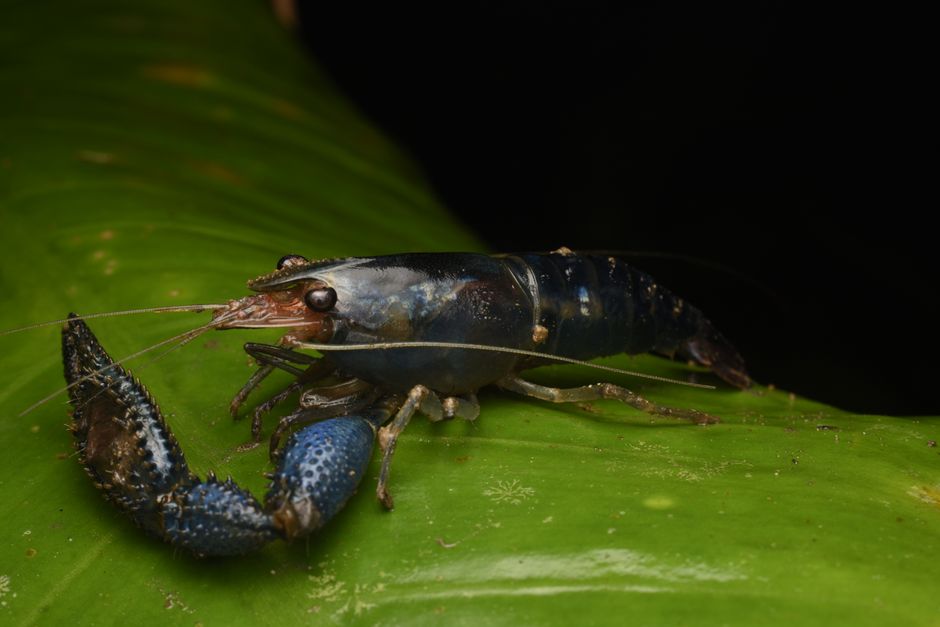
An Australian freshwater crayfish, toughened by millions of years of surviving the continent's most brutal climates, is quietly devastating ecosystems across Africa, Asia, Europe and South America. The redclaw crayfish (Cherax quadricarinatus), native to tropical northern Australia and Papua New Guinea, has become one of the more alarming invasive species stories in recent decades, not least because it is an Australian export causing the kind of ecological damage Australians usually only hear about happening at home.
A Hardy Native Turned Global Pest
The redclaw belongs to the Cherax genus, widely known to Australians as yabbies. Among Australia's more than 100 freshwater crayfish species, the Cherax group stands out for sheer toughness. They evolved in billabongs and ephemeral lakes that can dry up entirely, leaving their inhabitants stranded in mud with almost no dissolved oxygen. Over time, redclaws developed the ability to burrow deep into the earth and enter a dormant state lasting months or even years, waiting for conditions to improve.
Their reproductive capacity is equally formidable. A single female can produce several broods per year, with up to 1,000 eggs in each brood. They are aggressive, opportunistic feeders, consuming detritus, aquatic plants, fish, invertebrates and, when resources are scarce, each other. As climate change pushes weather patterns toward greater extremes, these characteristics give redclaws a significant advantage over native species that evolved in more stable environments.
How Redclaws Spread Around the World
The global spread of the redclaw crayfish began as a commercial venture. Throughout the 1980s and 1990s, aquaculture operators across Africa, Europe, Asia and South America imported redclaws for farming, attracted by their hardiness, fast growth rates and adaptability to varying conditions. Their vivid blue and red colouring also made them highly sought after in the global aquarium trade, opening a second pathway for their spread into wild waterways.
Containment was always going to be difficult. Some escaped from aquaculture ponds during hurricanes or through accidental release. Others were former pets, tipped into rivers and lakes by owners who no longer wanted them. Once in the wild, populations surged.
Devastation on the Zambezi and Beyond
Among the most striking examples of redclaw damage is what is unfolding along the upper Zambezi River in Zambia. The Barotse floodplains, which the river inundates each wet season, are celebrated for their exceptional biodiversity, including rare cichlid fish, rich birdlife and a complex web of aquatic plants and invertebrates. As the seasonal floods recede and shallow muddy pools remain, they now teem with redclaw crayfish.
The consequences have been severe. Native fish and invertebrate populations have declined sharply, river plants are being consumed, and riverbanks are being hollowed out by burrowing activity. It is not entirely clear how redclaws first entered the Zambezi system, but they were being spotted there during the 1990s and their numbers have grown substantially since.
The situation is worsening geographically. Redclaws are now reported to be approaching pristine and highly sensitive ecosystems, putting previously undisturbed habitats at serious risk.
What Makes This So Difficult to Reverse
Invasive species management is notoriously challenging, and the redclaw presents a particularly stubborn problem. The same qualities that made it attractive to farmers and aquarium hobbyists, its resilience, fecundity and dietary flexibility, make it extraordinarily difficult to control once established in a waterway.
For Australians, the redclaw story inverts a familiar narrative. The country has long grappled with introduced animals such as feral cats, rabbits and common mynas causing damage to native ecosystems. The redclaw is a reminder that the flow of ecological disruption is not one directional, and that species shaped by Australia's unforgiving environment may be among the most adaptable, and most damaging, invaders of all when they reach calmer waters abroad.