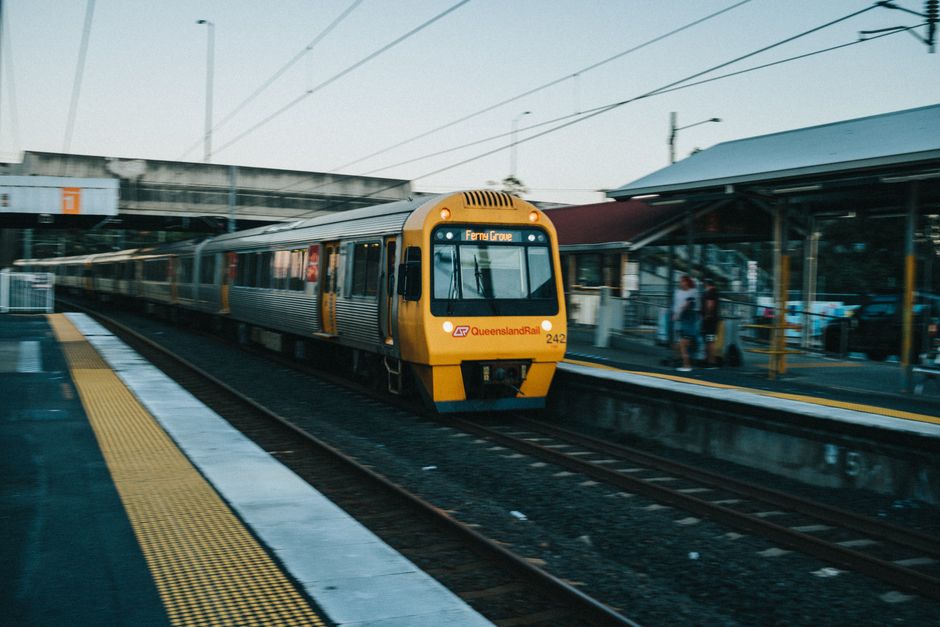
A major Telstra network failure that disrupted mobile services across Australia on Wednesday also brought several regional train services to a standstill — but left Sydney's metropolitan rail network entirely unaffected. The reason comes down to how different parts of the rail system connect to telecommunications infrastructure, and it has raised fresh questions about the resilience of Australia's critical networks.
Why Some Trains Stopped During the Telstra Outage
The key to understanding the disruption lies with the Australian Rail Track Corporation (ARTC), the freight rail operator whose National Train Communications System underpins passenger services on lines including the Hunter Line and the Southern Highlands Line in regional NSW.
Ahead of the closure of the 3G network in late 2024, ARTC upgraded its communications system to operate on 4G capability. When Telstra's 4G network went down during Wednesday's outage, that communications link between trains and their control centres was severed — and with it, the ability to safely operate those services.
RMIT University associate professor Mark Gregory, who specialises in telecommunications networks and systems, explained that cellular networks are used to keep trains in contact with control centres as a fundamental safety measure. When messages stop flowing, the system raises the alarm.
"Those systems in the data centre will start saying, 'hey, I'm expecting a message or didn't get a message or messages are not getting through'," Dr Gregory said.
ARTC confirmed it had invoked emergency protocols as soon as the outage began affecting its systems. "As a safety precaution, ARTC has implemented established emergency protocols and safely brought rail services on the network to a stand while the telecommunications outage is resolved," a spokesperson said, emphasising that safety was the organisation's overriding priority. Passengers on affected services in the Hunter region were diverted to replacement buses.
Sydney's metropolitan rail network, which operates independently of ARTC's 4G infrastructure, was unaffected and ran to normal timetables throughout the incident. As of Thursday morning, ARTC's communications across its 9,600-kilometre network were still experiencing impacts from the outage.
For more on how the outage affected train networks, see our earlier coverage of Telstra's outage shutting down Victoria's entire regional train network.
What Caused the Outage
Telstra's chief financial officer Michael Ackland attributed the disruption to malfunctioning "nodes" responsible for managing time synchronisation within certain network data centres — described as a software defect rather than any external interference. The company said its network issues were fully resolved by 4pm on Wednesday, and there was no evidence of a cyber attack or malicious activity.
However, telecommunications consultant Paul Budde — who has spent decades in the Hunter region — argued the incident exposed deeper structural vulnerabilities in how Australian networks are configured. He said the way networks are currently set up means a single fault or synchronisation problem can cascade into widespread disruption.
"We need to address the resilience of the networks, not just the reliability of the network," Mr Budde said.
Triple Zero Failures and Welfare Checks
Beyond the train disruptions, the outage had serious implications for emergency services access. Telstra later confirmed a secondary issue had emerged that impacted some calls including to triple zero, with some devices receiving error messages when attempting to contact emergency services.
The company carried out 333 welfare checks on customers detected to have experienced a failed triple-zero call, using SMS, phone calls and physical police visits. Around 79 people could not be contacted through those checks, prompting police to attend their homes. In NSW, police were asked to carry out 13 in-person welfare checks, with four still to be completed at the time of reporting, though no adverse outcomes had been found.
A South Australian senator claimed her office had received a report of a death linked to a failed triple-zero call during the outage, though South Australian Police disputed the claim, saying they were unaware of any such death in the state.
Ackland acknowledged the gravity of the situation. "We let customers down today in their hour of need. There's nothing that makes that untrue for many of those customers who are in traumatic situations, and we apologise for that deeply," he said.
For the latest on the triple-zero issues that emerged from the outage, see our report on the triple-zero crisis and welfare checks triggered by the network failure.
Calls to Rebuild Trust — and Fix Network Resilience
Federal Communications Minister Anika Wells did not hold back in her assessment of the fallout. She said the telecommunications industry was already the least trusted sector in the country, and that Wednesday's events illustrated exactly why Australians felt that way.
"I'd say that telcos are the least trusted industry in our country as we stand today, and days like [this] demonstrate exactly why Australians feel that way," she said, adding that Telstra had significant work ahead to rebuild community confidence.
Telstra has apologised for the disruption and said it would continue to investigate all possible causes of the outage. The incident has reignited debate about whether Australia's critical infrastructure — from rail communications to emergency services — is adequately protected against single points of failure in commercial telecommunications networks.