Sydney is in the middle of a quiet mental health reckoning. With psychologist waitlists stretching months long, bulk-billing under pressure, and anxiety rates at near-record highs, adults across the city are looking beyond the clinic for relief — and a surprising number of them are finding it on the dance floor.
The Mental Health Crisis No One Is Talking About Loudly Enough
Australia's mental health burden has been well-documented — but the conversation often centres on clinical interventions. What receives less attention is the growing body of evidence suggesting that movement-based therapies, particularly dance, can meaningfully reduce symptoms of depression, anxiety and chronic stress. For many adults, that's a compelling reason to swap the couch for the dance floor.
Beyond the clinical data, there's a social dimension. Since 2020, Australians have reported higher levels of loneliness and disconnection. Dance classes offer something a meditation app simply cannot: human presence, synchronised movement, and the kind of low-stakes social bonding that builds confidence over time. You can find broader coverage of health and lifestyle trends shaping Australian communities over at Business & Lifestyle.
Why Dance Works: The Science Behind the Steps
The neurological case for dance is genuinely strong. Rhythmic movement triggers the release of dopamine and serotonin — the same neurotransmitters targeted by common antidepressants. Research published in peer-reviewed journals consistently links regular dance participation with improved mood, reduced cortisol levels and enhanced cognitive function, including better memory and sharper focus.
Unlike solitary gym sessions, dance demands both physical coordination and social attunement. Participants must listen, respond, and adapt — a form of embodied mindfulness that engages the brain's executive function regions. For adults managing workplace stress or social anxiety, that dual engagement creates a kind of mental reset that's difficult to replicate through conventional exercise alone.
Sydney's Dance Scene Is Quietly Booming
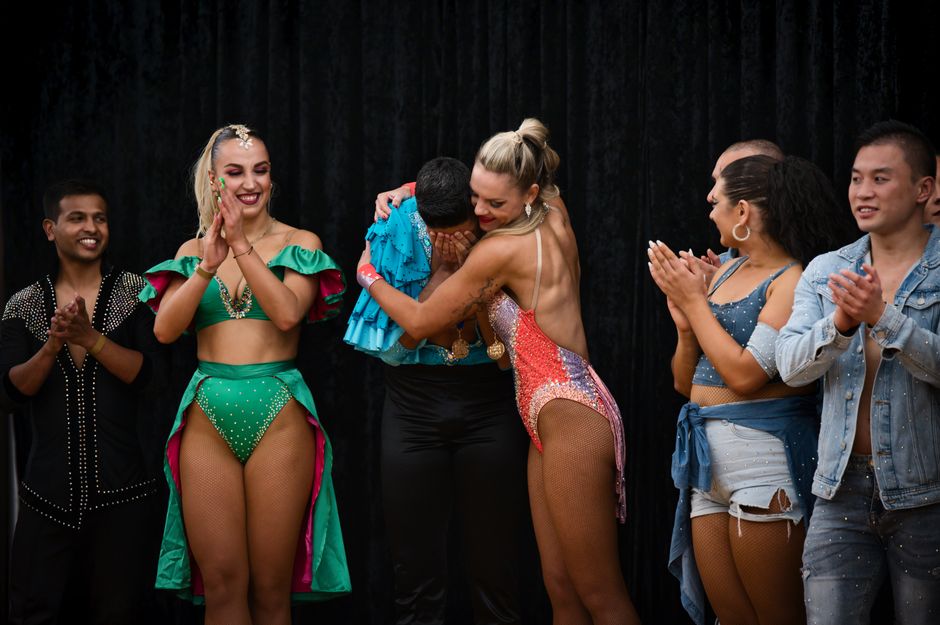
From Newtown to Parramatta, adult dance studios are reporting increased enrolments, particularly among the 30–55 age bracket — a demographic that would rarely have walked into a dance class a decade ago. Studios offering salsa, contemporary, jazz and hip-hop have adapted their language accordingly, marketing themselves less as performance spaces and more as wellness environments.
The shift is cultural as much as commercial. High-profile Australians discussing therapy and emotional wellbeing openly on television — a trend documented across Australian entertainment media — has normalised the pursuit of unconventional mental health strategies for everyday people. When wellbeing is discussed on mainstream platforms, it gives permission to those who might otherwise dismiss dance as "not for them."
For adults in Sydney who feel intimidated by the idea of learning to dance later in life, purpose-designed beginner-friendly programs have made entry far less daunting. Studios offering an introductory adult dance class for those new to movement have been particularly successful in breaking down the barriers of self-consciousness and perceived physical limitation.
What Adults Say Changes When They Start Dancing
Anecdotally, the testimonials are remarkably consistent. Adults who take up dance regularly report:
- Reduced anxiety — particularly social anxiety, as the structured class environment provides a safe social setting
- Improved sleep quality — linked to physical exertion and reduced evening cortisol
- Greater body confidence — independent of weight or fitness changes
- A renewed sense of playfulness — something many adults identify as having lost entirely
- Stronger social connections — class communities often extend well beyond the studio
The Role of Identity: Why Adults Resist — and Then Commit
One of the less-examined barriers to adult dance participation isn't logistical — it's psychological. Many adults carry a fixed narrative about themselves: that they are not dancers, that they missed their window, or that moving their body expressively in front of others is simply not something people like them do. This identity resistance is arguably stronger than any scheduling conflict or cost concern.
What studios across Sydney are discovering is that the moment an adult crosses that threshold once, the identity shift tends to follow quickly. Instructors report that within three or four sessions, newcomers stop describing themselves as "just trying it out" and start calling themselves dancers. That reframing is significant — because it signals a change not just in behaviour but in self-perception. For adults whose mental health challenges are entangled with low self-worth or a diminished sense of agency, reclaiming an active, expressive identity can be quietly transformative in ways that extend well beyond the studio walls.
The Practical Reality: Cost, Commitment and Getting Started
One of dance's distinct advantages over traditional therapy is accessibility. A weekly class typically costs between $20 and $35 — comparable to a single co-payment gap fee for a GP mental health plan referral. There is no diagnosis required, no referral letter, and no stigma to navigate.
Most Sydney studios offer casual sessions for newcomers, meaning the financial and time commitment is minimal at the start. The barrier to entry has never been lower, and the potential benefit — both psychological and social — has rarely been more relevant.
Frequently Asked Questions
Do I need any prior experience to join an adult dance class in Sydney?
No. Most studios specifically design beginner programs for adults with zero prior dance experience. The emphasis is on enjoyment and gradual progression, not performance or technique from day one.
How quickly can dance improve mental health symptoms?
Research suggests mood improvements can be felt after a single session, while sustained benefits — reduced anxiety, better sleep, improved self-esteem — typically emerge after four to six weeks of regular participation.
Is dance a substitute for professional mental health treatment?
Dance is a powerful complementary tool, not a clinical replacement. For those experiencing serious mental health conditions, it works best alongside professional support. Always consult a qualified health practitioner for diagnosed conditions.
What dance styles are most popular among Sydney adults new to dance?
Salsa, social ballroom, contemporary and jazz are consistently popular entry points for adult beginners. Many choose based on music preference — finding a style that resonates personally tends to support long-term commitment.
A Movement Worth Watching
Sydney's wellness revolution isn't loud or headline-grabbing — it's happening in studio mirrors and community halls across the city, one reluctant first step at a time. As the conversation around mental health continues to broaden, dance deserves a more prominent place in that discussion. For independent coverage of the social and cultural stories shaping Australia right now, subscribe to Breslin Media Network and stay informed without fear or favour.