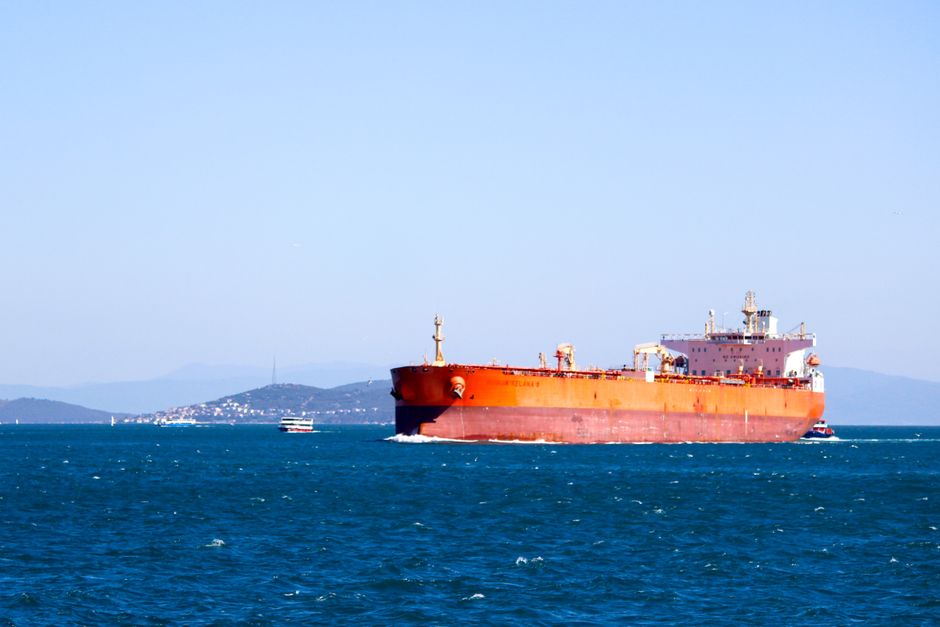
The Strait of Hormuz — the narrow waterway through which roughly one fifth of the world's oil passes — has become the defining battleground of the Middle East conflict, with Iran's Revolutionary Guard declaring it closed to unauthorised vessels and the United States reinstating a full naval blockade. Experts warn that how this standoff is resolved, or whether it is resolved at all, could set a dangerous international precedent for how global chokepoints are treated in future conflicts.
The crisis has escalated sharply over the past week. A tentative memorandum of understanding between Washington and Tehran broke down, prompting the US to resume strikes on Iranian targets and reimpose the naval blockade it had lifted in June. Iran's Islamic Revolutionary Guard Corps (IRGC) has since struck seven commercial ships it says attempted to transit the waterway along unauthorised routes, leaving nearly a dozen sailors killed, injured, or missing.
The Strait of Hormuz replaces Iran's nuclear program as the war's central flashpoint
When the conflict began, the stated objectives were sweeping: a permanent end to Iran's nuclear ambitions, the destruction of its military capability, and the severing of its support for regional proxy forces including Hezbollah in Lebanon. Iran has consistently maintained its nuclear program is for civilian energy purposes only. But those original objectives now feel distant to analysts watching events unfold.
David Smith, an associate professor of American politics and foreign policy at the University of Sydney's United States Studies Centre, said the past week had dramatically illustrated how far the war's parameters had shifted. "The original issue about Iran's nuclear program now just seems completely remote," he said. "The next stage of conflict is going to be all about the Strait of Hormuz."
While US President Donald Trump has continued to insist Iran can never possess a nuclear weapon — and on Tuesday threatened strikes on a suspected nuclear site in north-central Iran known as Pickaxe Mountain — the June memorandum of understanding he signed actually deferred the nuclear question entirely, focusing instead on immediately reopening the strait and buying time for further negotiations over sixty days. That agreement has now collapsed. For background on the sequence of events in 2026 in the United States, the timeline reflects how rapidly the situation has deteriorated since the initial deal was struck.
Trump floats — then abandons — a 20 per cent transit fee
In the midst of the standoff, President Trump put forward a striking proposal: that the United States, having declared itself the effective guardian of the strait, should charge vessels a 20 per cent fee on all cargo passing through the waterway. He announced the idea on social media, writing that the US would be "reimbursed, at the rate of 20 per cent on all cargo shipped, for any and all costs necessary to do the job of providing safety and security."
In a phone interview, Trump elaborated further: "We're going to keep the strait, and we'll probably run it. We'll become the guardian of the strait. Maybe we'll call it the guardian angel of the strait. And we should be reimbursed for that." He justified the levy by arguing that other nations — which he described as "very wealthy" and "on our side" — should not expect American protection at no cost.
However, the proposal was quickly abandoned following fierce pushback from the United Nations' shipping agency and other international bodies. The episode nonetheless signalled the breadth of Washington's ambitions in the waterway and the extent to which the strait has become a tool of geopolitical leverage. Our earlier coverage of Trump's move to guard the strait and charge ships outlined the initial announcement in detail.
Economic consequences are already rippling worldwide
The Strait of Hormuz is not simply an oil route. Its effective closure has restricted the movement of fertiliser, helium, and a range of other industrial and medical essentials. The knock-on effects — higher food prices, elevated fuel costs, and growing inflationary pressure — are being felt well beyond the immediate conflict zone.
In the United States, the surge in fuel costs is politically sensitive, with midterm elections scheduled for November. Professor Smith noted that while some adaptation has occurred through reduced fuel consumption, a prolonged stranglehold on the strait would ultimately make "everything" more expensive for ordinary Americans.
Iran's IRGC has been direct in its messaging to Washington, warning on Monday that "continued interference could lead to greater incidents in the global oil and gas sector." The Guard Corps also rejected any suggestion that reimposing the June blockade would force Tehran back to the negotiating table, calling it a US "mistake."
What happens next — and why the precedent matters
US and Iranian forces exchanged missile and drone strikes across the weekend and into the start of the week, with Iran claiming hits on American military facilities throughout the Gulf region. The pace and geographic spread of those exchanges has alarmed observers and effectively buried what remained of the June interim agreement.
Iran has said passage through the strait will remain suspended until the US ends what it calls "acts of aggression" in the waterway. Washington insists the strait is open and will remain so "with or without Iran." The two positions appear irreconcilable in the short term.
Experts say the stakes extend far beyond this particular conflict. How major powers respond to the weaponisation of a critical international shipping lane — and whether the international community accepts or resists those moves — will influence how future actors calculate the risks and rewards of closing similar chokepoints. For a closer look at the diplomatic dimensions of the ceasefire collapse, see our earlier analysis on Trump, Iran, and the Strait of Hormuz ceasefire.
With the waterway's status unresolved, global markets on edge, and both sides showing no immediate appetite for compromise, the Strait of Hormuz has become more than a military flashpoint — it is now the lens through which the entire Middle East conflict, and its broader international consequences, will be judged.