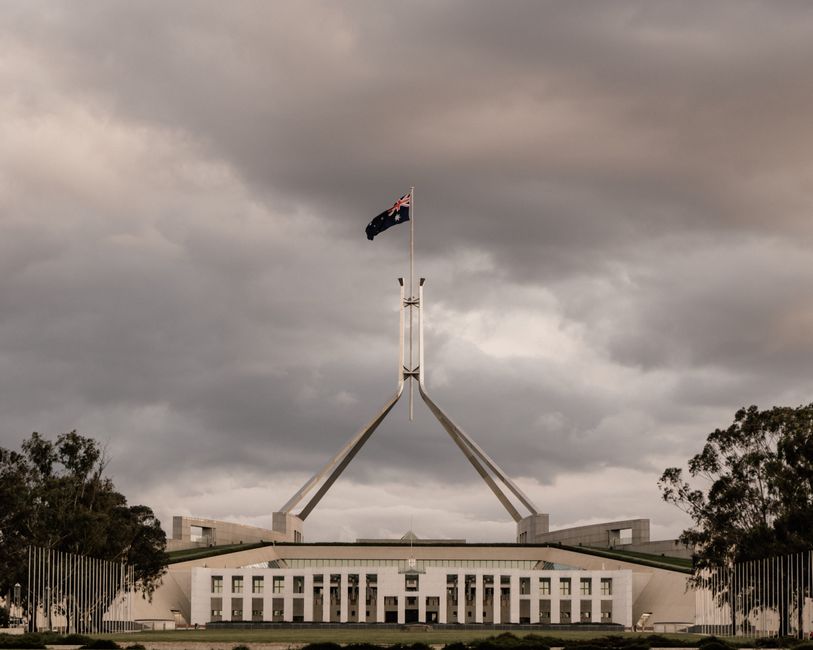
House of Representatives Speaker Milton Dick has launched an ambitious national civics education campaign, pledging to visit every one of Australia's 150 federal electorates this term to bolster young Australians' understanding of democracy at a time when trust in institutions is under growing pressure worldwide.
The 54-year-old Labor MP for Oxley — a Queensland seat with a notable history, previously held by former governor-general Bill Hayden and One Nation founder Pauline Hanson — has already visited more than 200 schools since becoming Speaker, travelling to remote Indigenous communities, tiny two-student schools and island communities off the Tasmanian coast.
Why Milton Dick says democracy can't be taken for granted
Dick frames the push as more than an educational exercise — he sees it as a core responsibility of his office. "As the Speaker, I need to protect democracy — whatever happens in the chamber, but also outside the chamber as well," he said. "We have a duty of care to fight for it."
His concern is grounded in global trends. While Australia ranks among the world's strongest democracies on the Economist Intelligence Unit's Democracy Index, Dick notes the broader picture is sobering: only 31 countries are currently classified as liberal democracies, and roughly three-quarters of the world's population now live under authoritarian rule.
At home, the data is equally troubling. The Australian Curriculum, Assessment and Reporting Authority found civics and citizenship results had fallen to their lowest levels in two decades, with just 28 per cent of Year 10 students meeting the national proficiency standard in 2024 — down sharply from 38 per cent in 2019.
"More than ever, with the rise of social media and the impacts we're seeing around the world, we've got to protect what we've got here and fight for it," Dick said.
Pineapple on pizza and parliamentary procedure
Dick's classroom visits are deliberately accessible. One recurring highlight is a mock vote on whether pineapple belongs on pizza — a lighthearted but effective way to introduce students to voting processes and parliamentary procedure. The debate reliably sparks enthusiastic participation.
Last month, Governor-General Sam Mostyn joined Dick for his 200th school visit, held at Curtin Primary School in Canberra — her former school. When the pineapple pizza vote came around, Mostyn chose to abstain, citing the political neutrality her office requires.
Dick says the visits consistently reveal a more engaged younger generation than public discourse tends to suggest. Once students begin discussing who makes laws, why people vote and how governments are formed, they quickly become active participants. "They get it," he said.
He also makes a point of sharing his own story: asked in his school days whether he could imagine becoming a member of parliament, he didn't raise his hand either.
A call for nationally consistent civics in schools
Beyond the school tours, Dick is pushing for nationally consistent civics education at Years 6 and 10, arguing every student should leave school with a foundational grasp of how governments are formed, how courts function, how elections are conducted and why independent institutions matter.
"I'm not talking about politics," he said. "I'm talking about teaching democracy ... it's the meat and potatoes."
The program is designed to be bipartisan, with Dick regularly bringing government, opposition and crossbench MPs into classrooms together, so students can see democratic institutions in action rather than simply hearing about them. His goal is straightforward: an informed citizenry that values and understands the system that underpins Australian life — before the next generation inherits it.