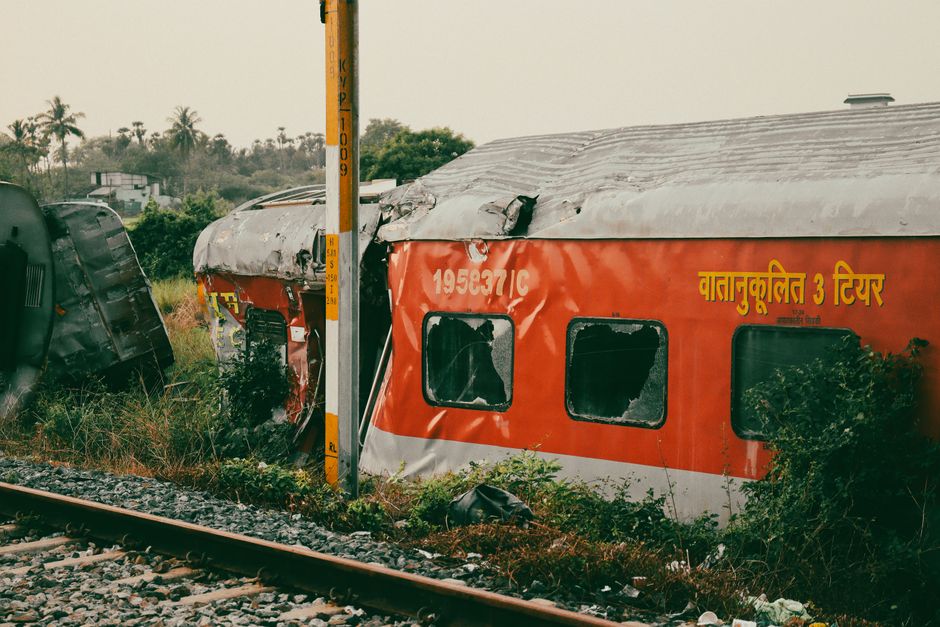
A high-speed train collision in central Spain has killed at least 68 people and injured more than 100 others, making it one of the deadliest rail disasters in Europe this century. The crash occurred just before 9am local time on Wednesday in the province of Toledo, in the Castilla-La Mancha region, roughly 130 kilometres south of Madrid, when a state-operated Renfe service slammed into the rear of a stationary train run by private operator Iryo. Both trains were travelling south from Madrid toward Seville when the collision unfolded.
Prime Minister Pedro Sánchez visited the crash site and declared three days of national mourning, saying the "whole country is grieving." He described it as "unacceptable" that Spain had suffered two high-speed rail accidents in the same year, and called for strengthened safety measures to restore public confidence in a rail network once regarded as a point of national pride.
What happened: a system failure and an 'inexplicable' order
Spain's transport minister, Óscar Puente, outlined a sequence of events that he described as deeply troubling. At around 8:30am, a computer malfunction disabled the automatic train control system across a stretch of approximately 63 to 69 kilometres of track, bringing all services on that section to a halt. The central command centre then issued an order for the Renfe train to resume running, despite the fact that the automatic safety system had not been restored and a stop signal remained active on the line.
The Renfe train travelled approximately 25 kilometres before striking the stationary Iryo train at 8:53am. Puente said the impact speed could have reached up to 200 kilometres per hour. He was unequivocal that the order to resume traffic was made "in circumstances that, from our point of view, are inexplicable," and that the control centre "had more than enough time to verify the error, and they did not fix it." He stressed the train engineers themselves were not to blame.
The force of the impact was severe. Two carriages at the rear of the Iryo train and the front of the Renfe train were derailed. Witnesses described scenes of chaos: seats ripped from their mountings, luggage strewn through carriages, and passengers thrown on top of one another.
Survivors describe chaos and horror
Pablo Mejia, a 42-year-old passenger who said he had changed his seat shortly before the collision, emerged from the wreckage with blood on his clothing. He described "a very strong hit" that "lasted a long time until it stopped, lots of people on the floor, on top of each other, seats ripped out, suitcases, a lot of chaos."
A British tourist identified as Samy Paul, rescued from the Renfe train, recalled the moment of impact: "Suddenly, everything started falling apart. Bang! We fell down. We realised carriage two, carriage one, all gone, all smashed. There was blood all over."
Manuel Ortiz, a 49-year-old resident of the nearby village of Urda, spent the morning ferrying survivors from the scene in his own car. He described a "horrific, horrible" sight that "smelled of an accident, of metal." A construction worker who was labouring close to the tracks when the crash occurred said he and his colleagues cut through fencing to reach trapped passengers, using first-aid kits to treat injuries while awaiting emergency services.
Dozens of emergency vehicles attended the scene throughout the day. Reporters present observed one train embedded in the other, with some carriages lying on their sides amid tangled metal debris at the base of an embankment. Several funeral vehicles also arrived as recovery operations continued.
Toll rises as Spain confronts a second catastrophe
The regional leader of Castilla-La Mancha, Emiliano Garcia-Page, confirmed the revised death toll of 68 at the scene, having earlier cautioned that the number would climb. More than 100 people were injured in total, with 58 taken to hospital and 15 in a critical condition, according to regional government figures. Rail services between Madrid, Ciudad Real and Andalusia were suspended.
This collision comes just months after a previous deadly high-speed train crash in Spain in 2026, involving the same two operators, Renfe and Iryo. That the same companies are now linked to a second fatal accident within a single year has intensified scrutiny of the country's rail safety framework. The disaster ranks among the most deadly rail incidents recorded in Europe in recent decades, in the broader context of catastrophic accidents of the 21st century.
Political fallout ahead of November election
The crash carries significant political weight. Sánchez is facing a federal election on 29 November, just one month away, and had already drawn criticism over the first rail disaster earlier in 2026. His Socialist Party suspended campaign activities in the immediate aftermath of the crash. Sánchez, speaking at the site, acknowledged that two such accidents in a single year were "not acceptable" for a country of Spain's standing.
The transport minister stopped short of formally assigning legal responsibility, saying he was "just stating the facts," though his remarks made clear the central rail control centre bore serious questions to answer. An investigation into the precise cause of the failure and the decision to resume services is expected to follow.

