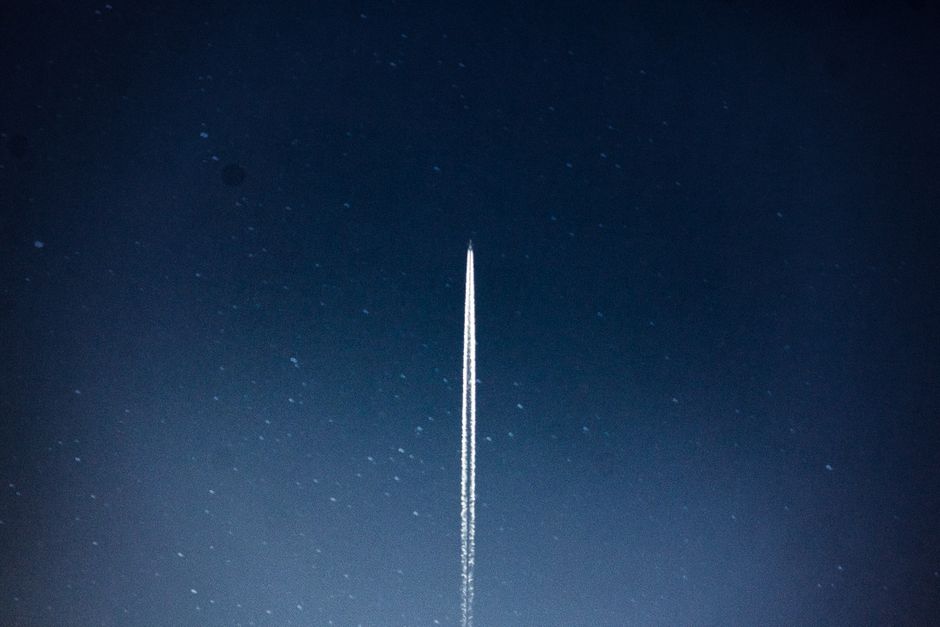
SpaceX's massive Starship rocket achieved orbit for the very first time on Monday, blasting off from Starbase in southern Texas and successfully deploying a batch of next-generation Starlink satellites — but the historic flight was cut short, with the spacecraft splashing down in the Pacific Ocean north of Hawaii just hours after launch rather than completing the planned 10-hour mission.
The milestone marks a significant leap forward for the world's largest and most powerful rocket ever built, and comes as SpaceX pushes to certify Starship for regular orbital operations in support of NASA's Artemis moon program.
Engine failure almost derailed Starship's first orbital flight
The journey to orbit was far from smooth. Shortly after liftoff, one of Starship's engines shut down prematurely, throwing the mission into uncertainty and leaving flight controllers facing a critical decision. After several tense minutes, with all remaining systems performing as expected and the failed engine no longer required, the team pressed ahead.
"Starship is orbital," Mission Control announced, triggering cheers from the crowd watching on at the Starbase launch site.
It was the Starship flight 14 — the 14th full-scale test launch from the southern tip of Texas over the past three years. Previous flights had reached no further than the Indian Ocean, with many ending in fiery breakups or barely grazing the edge of space. Monday's flight represented a clear step change, with the vehicle achieving a stable orbit at an altitude of approximately 275 kilometres, travelling at around 28,000 kilometres per hour.
NASA Administrator Jared Isaacman offered his congratulations to SpaceX for reaching orbit and for handling "every step in a safe, responsible and especially inspirational way".
Starlink satellites deployed as flight ends early
Among the highlights of the mission was the successful deployment of 26 of SpaceX's most advanced Starlink satellites — the latest additions to a constellation of more than 11,000 spacecraft already beaming internet service around the globe. The satellites were released one by one from the spacecraft, each departure drawing fresh cheers from the crowd at Starbase.
The original flight plan called for six full laps of the Earth over roughly 10 hours, concluding with a splashdown off the coast of Chile in the Pacific. Instead, SpaceX chose to bring Starship home after just a couple of orbits, with no official explanation provided for the early termination of the flight.
The first-stage booster was also not recovered during this mission, dropping into the Gulf of Mexico within minutes of the morning liftoff rather than returning to the launch pad.
Caution drives SpaceX's approach to reusability
The decision to end the flight ahead of schedule reflects the careful approach SpaceX is taking as it works toward full reusability of the 124-metre rocket — a cornerstone of founder Elon Musk's ambition to dramatically cut the cost of reaching orbit.
Musk has been candid about the risks of pushing too far, too fast. Speaking at a business summit earlier this month, he warned that if the spacecraft were to break apart over land and shower debris on populated areas, "our popularity would diminish very rapidly" — adding, "That's why we're being extremely cautious here."
Engineers have already been refining the design based on lessons from a previous Starship that was recovered from the Indian Ocean in July. Hands-on inspections of that recovered vehicle informed modifications to the heat shield on the newly launched spacecraft, which is now being towed back to Starbase.
What comes next for Starship — and NASA's moon plans
Depending on what engineers learn from Monday's flight data, the next Starship test could see the spacecraft caught mid-air by the giant mechanical arms installed at the Starbase launch tower — the same method previously used to catch the booster. Musk rates the odds of a successful spacecraft catch as even or slightly better than even. If that milestone is reached, SpaceX aims to refly the spacecraft before the end of this year or in early 2026.
The stakes extend well beyond satellite launches. SpaceX is racing to have Starship certified for crewed lunar missions as part of NASA's Artemis program. Artemis III, currently targeted for as early as next northern summer, involves a complex triple-launch sequence in Earth orbit — linking an Orion capsule carrying astronauts with Jeff Bezos' Blue Moon lander before Starship docks with Orion.
Looking further ahead, Artemis IV — currently scheduled no earlier than 2028 — would send astronauts to the lunar surface aboard whichever vehicle, Blue Moon or Starship, is deemed ready first. Subsequent moon landing missions are planned to alternate between the two spacecraft.
Musk originally conceived Starship as a vehicle for colonising Mars, envisioning fleets of them carrying the red planet's first human settlers. For now, however, the focus is firmly on the moon, with Starship also set to take over from the company's workhorse Falcon 9 rocket as the primary vehicle for hauling large satellite batches to orbit within the coming years.