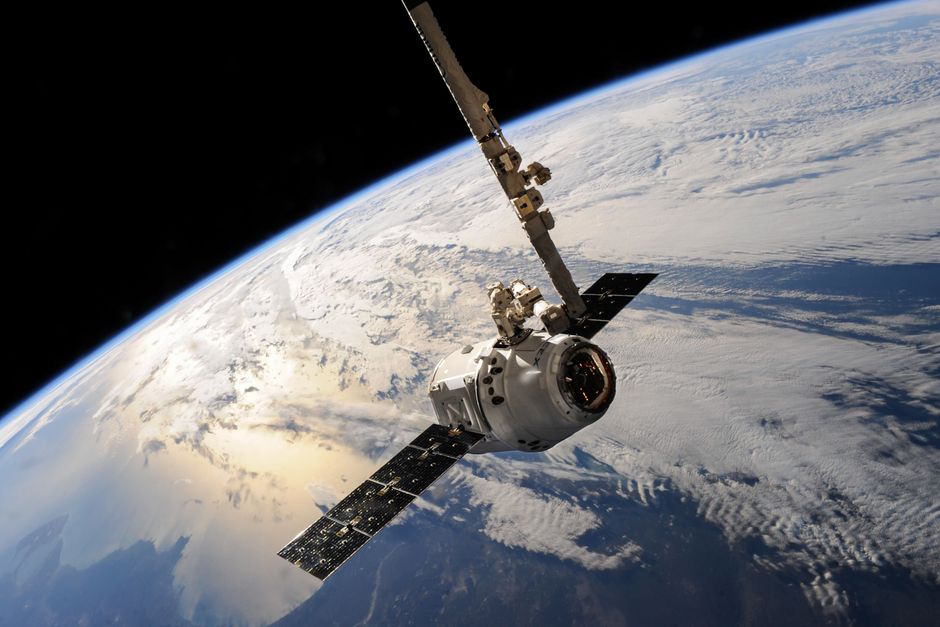
A bus-sized chunk of SpaceX rocket debris has crashed into the moon, reigniting urgent debate about the extraordinary volume of human-made material accumulating in space — and whether the world's governments are doing nearly enough to manage it.
The debris, weighing roughly 4,000 kilograms, originated from a Falcon 9 rocket that launched both a US and Japanese lunar lander toward the moon in January last year. Although no direct image of the impact has been captured, astronomers detected a plume of debris consistent with the object striking the lunar surface.
What Humans Have Left Behind in Space
The collision has drawn fresh attention to just how much material humanity has deposited beyond Earth's atmosphere. Since the Soviet Union's Luna 2 became the first spacecraft to reach the moon in 1959, it is estimated the lunar surface has accumulated nearly 200 tonnes of human-made material across roughly 3,000 objects.
According to a NASA catalogue, the inventory of items on the moon is extraordinarily eclectic. Among the objects left behind are a gold olive branch placed there by Neil Armstrong in 1969, earplugs, urine collection devices, a hammer, moon boots, cameras, a javelin, and two golf balls.
"There are fairly small things all over the moon," said Associate Professor Ben Montet, an astronomy researcher at the University of New South Wales. "Remnants of the Apollo missions are still there. The lunar lander is there, and the rovers that came with the later missions, but also the silly things like the golf ball that the astronaut on the last mission hit. That's still out there somewhere."
Materials from robotic probes landed by the former Soviet Union and other nations are also scattered across the surface.
The Growing Problem of Space Debris in Orbit
While the moon's situation raises questions, experts say the picture in Earth's orbit is arguably more pressing. Seventy years ago, not a single satellite orbited Earth. Today, there are more than 16,000. Satellites support telecommunications, internet connectivity, climate monitoring and a wide range of research activities — but the sheer volume of objects now crowding certain orbits is raising serious alarm.
Experts warn that as the number of objects in orbit continues to grow, so too does the risk of collisions. Without intervention, some orbital paths could become too dangerous to use at all — a scenario that would have significant consequences for the satellite-dependent systems that underpin modern life, including climate monitoring networks.
Is Space Heading for a 'Garbage Patch' Moment?
Scientists were not particularly alarmed by the SpaceX rocket's lunar impact itself — a NASA spokesperson confirmed it posed no danger to Earth, and some researchers saw it as a rare opportunity to study lunar material thrown up by the collision. But the out-of-control nature of the crash has prompted deeper questions about whether humanity is sleepwalking into a much larger problem.
Professor Montet drew a pointed comparison to ocean pollution. "I think about the first person who dropped a piece of trash into the ocean, thinking, 'Oh, the ocean is very big. This won't be an issue,'" he said. "If only one person does that, that's true. But then we ended up with a garbage patch in the ocean."
He cautioned that while the risk to the moon remains small at this stage, it will almost certainly grow as debris continues to accumulate — and that failing to act proactively will only make the problem worse.
What Comes Next
The timing of this debate is significant. Just months ago, four NASA astronauts completed a journey around the moon and back — the first crewed lunar mission in more than 50 years. With the United States aiming to establish a permanent base on the lunar surface, and a new era of international space competition well underway, experts argue that governments must move now to establish meaningful frameworks for managing space debris before the situation reaches a genuine tipping point.
The question, it seems, is whether the lessons of Earth's oceans, its atmosphere, and its overflowing landfills will finally be heeded somewhere new — or whether space is simply the next frontier for humanity's oldest bad habit.