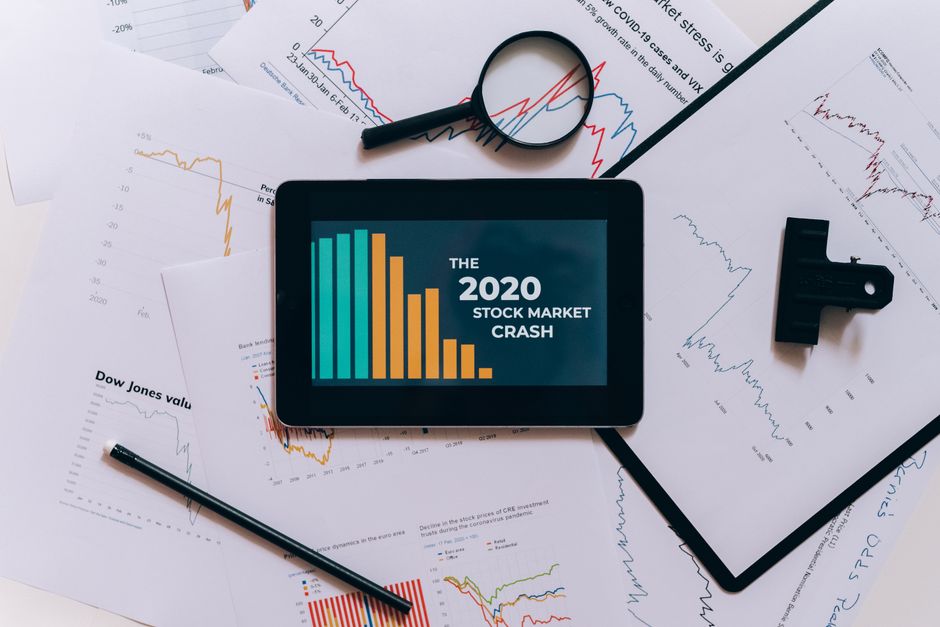
One of Wall Street's most closely watched fear gauges has climbed to its highest level since August 2000 — the height of the dotcom collapse — sparking fresh warnings that US stocks are dangerously overvalued and a significant market correction could be imminent. The Shiller price-to-earnings (PE) ratio has exceeded 40 points in each of the past four months, a threshold it had never breached in the 119-year history of the S&P 500 before the dotcom era, and has not crossed again until now.
What is the Shiller PE ratio and why does it matter?
The Shiller PE ratio was developed by Robert Shiller, the Nobel Prize-winning American economist, as a tool to assess whether stock prices are genuinely supported by the underlying earnings of listed companies. When the ratio climbs sharply, it signals that share prices have become disconnected from corporate earnings reality — driven instead by euphoria, narrative, and momentum.
In simple terms, it functions as a canary in the coal mine for global financial crises. Had the metric existed in the 1920s, analysts believe it could have provided an early warning of the catastrophic Wall Street crash that triggered the Great Depression. In 1929, the ratio would have surpassed 30 twice — a figure not reached again until 1997.
Today, the S&P 500 has only been more expensive to buy into during 1.2 per cent of the time since 1881, according to the Shiller measure. US stocks have spent less than one year out of the past 145 years trading at valuations above current levels.
AI mania is driving stocks to extreme valuations
Markets analyst Jonas Goltermann, chief markets economist at Capital Economics, says the numbers are deeply concerning. "That's obviously a bit worrying," he said of the ratio's trajectory. "It tells you that it probably is a bubble, but you don't know when it's going to end."
The ratio surpassed 40 points in May, June, July and August of this year, with artificial intelligence euphoria widely credited as the driving force behind the surge — echoing the technology mania that inflated and ultimately destroyed trillions in market value during the dotcom bubble. For those watching AI stocks drive Wall Street higher, the scale of the current rally will be familiar.
"The moment we're in right now, it feels like it is more driven by narrative and momentum," Goltermann said. "The price goes up because the price is going up."
He drew explicit comparisons to the two most destructive market episodes in modern history. "Now, it's as high as in the late 1990s and late 1920s," he said. "Those were both proper crashes … absolutely disastrous."
A 20 per cent fall tipped within 18 months
Goltermann stopped short of predicting a depression-era catastrophe, but his outlook for US equities is stark. He believes the sharemarket will fall by 20 per cent or more within the next 12 to 18 months, and notes it is difficult to find a fund manager prepared to argue against the signal being sent by the Shiller PE ratio.
"We're probably closer to the end than the beginning — the final innings," he said, suggesting the AI-driven rally is running out of fundamental support. "At some point this AI narrative or AI bubble will go into reverse and you'll see a substantial fall in the US stock market."
Not every investor is bracing for disaster. Some market participants believe a moderate correction is more likely than an outright crash, though the source material indicates that view is increasingly in the minority among professionals closely tracking valuation metrics.
The Shiller PE ratio's record during past bubbles — including the dotcom collapse and the lead-up to the Great Depression — has cemented its reputation as one of the most important numbers in global finance. Whether markets heed its warning this time remains the trillion-dollar question.