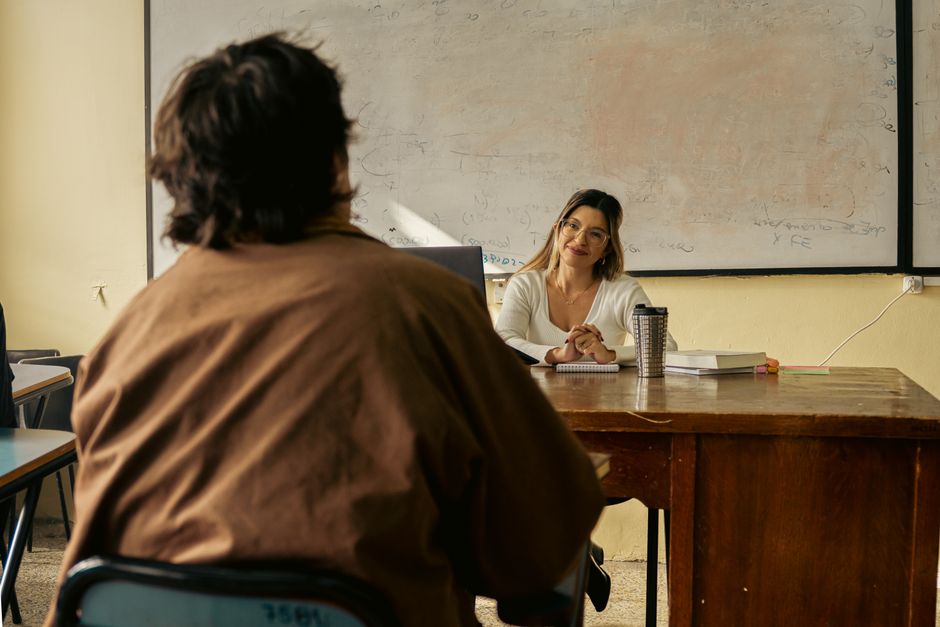
At 84 years old, Aunty Ruth Simms still walks through the school gate every morning. The Yuin woman has devoted five decades to students across the Illawarra region of New South Wales, making her the longest-serving Aboriginal education officer in the history of the NSW Department of Education — a milestone that has touched the lives of thousands of children across generations.
Roots in La Perouse: A childhood shaped by Country and community
Aunty Ruth was born and raised on La Perouse Reserve in Sydney's south, on Gamay and Dharawal Country. Her memories of the reserve are vivid and warm — tin shacks dotted along the coastline, the cold saltwater, and the communal rhythms of life shared with family and neighbours.
One of her most cherished recollections is of the bonfires that families would light along the shoreline at dusk. Children and adults alike would venture into the bush, sometimes weeks ahead of time, gathering branches and cutting down trees to drag back to the reserve.
"We'd drag them down to the reserve, and then we would light up bonfires. It was always a competition between the families, who could make the biggest bonfire," she recalls.
After the fires burned low, her mother would cook potatoes in the hot ash, and the family would feast together under the stars. She also remembers watching the men of the reserve read the movement of mullet schools through the ripples and shadows on the water before running fishing nets across the cove.
Aunty Ruth describes her parents as her very first teachers. Her mother, whom she calls a "very cultural woman," would collect foliage from tea tree bushes and teach her children how to weave the leaves into the head of a broom, while her brother carved a wooden handle. "We didn't have money to buy much. We didn't have $20 for a broom, so she taught us how to make one," Aunty Ruth says.
From La Perouse classrooms to a lifelong calling on Yuin Country
Aunty Ruth enrolled at La Perouse Public School in the 1940s, where she quickly developed a deep love of learning. That passion stayed with her through to graduation. "When I graduated at 19, I still remember the chancellor of Sydney University saying that you can have a comma, you can have a semicolon, but you'll never have a full stop in learning. I still believe that," she says.
With limited work available along the south Sydney coast — most employment at the time was in city factories — a teaching opportunity emerged at Nowra Public School on Yuin Country. She applied, was successful, and has never looked back. "I went for it, I was fortunate to get the position, and I've been in that position ever since," she says.
A pioneer in Aboriginal education — and still going strong
Aunty Ruth was among the very first cohort of Aboriginal teacher aides in New South Wales — a role now formally known as Aboriginal Education Officer. She still holds the original document listing all 62 names from that inaugural group. "I still have the piece of paper with all 62 of our names printed out. I was so proud," she says.
The role was created to build stronger relationships between schools and Aboriginal families, support student learning, provide cultural role models, and ensure communities had a meaningful voice in their children's education. It remains a cornerstone of inclusive schooling in NSW today — a cause explored further in our coverage of what First Nations wisdom teaches us about Australia's shared identity.
Over her career, Aunty Ruth has held positions at Nowra Public School, Culburra Public School, and Nowra East Public School, running homework centres and working one-on-one with children who needed extra support. Her homework centre at Nowra Public School was, by her account, recognised as the best in the district.
Eight decades into a life defined by curiosity and service, Aunty Ruth Simms shows no sign of placing that full stop on learning — for herself or for the thousands of students whose lives she has quietly, profoundly shaped.