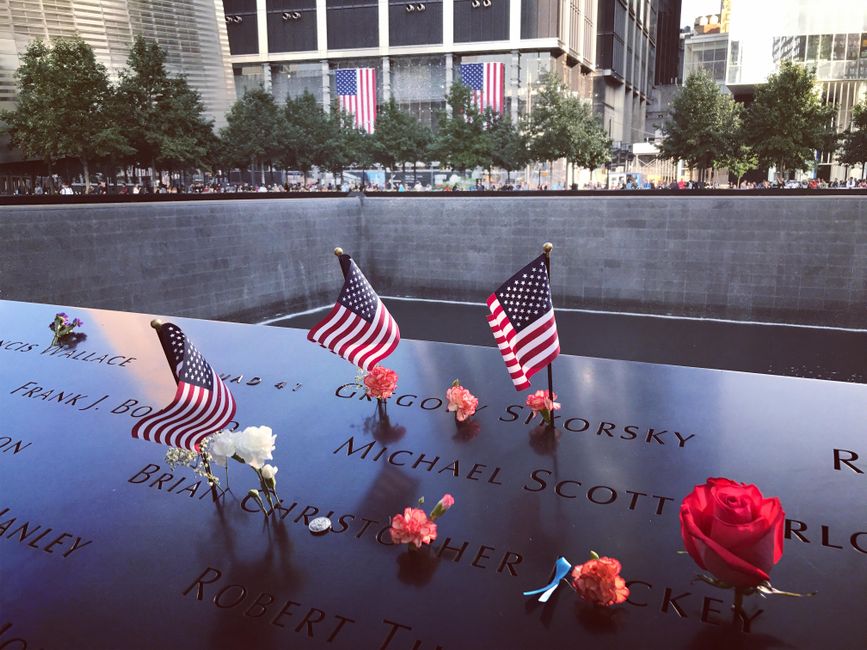
Twenty-five years after the September 11 terror attacks killed nearly 3,000 people across New York City, Washington DC and Pennsylvania, the wounds carried by Australian survivors and bereaved families remain raw — and, for many, unhealed. As the world prepares to mark the quarter-century anniversary this week, two Australians with deeply personal connections to that day have spoken about lives forever changed by the worst terror attack in history.
A Mother Lost at 62, a Son Still Searching for Peace
Sydney resident Simon Kennedy is travelling to the United States this week to attend the official memorial service at the Pentagon — the place where his mother, Yvonne Kennedy, died on September 11, 2001. Yvonne was 62 years old and had just retired after a quarter-century of service with the Red Cross. She was on the holiday of a lifetime when she boarded American Airlines Flight 77, which was deliberately crashed into the Pentagon that morning.
"You can't help but notice that great Yvonne-shaped hole that's missing in our family," Simon said.
In the years since, he has quietly marked each anniversary at a discreet September 11 memorial plaque in Sydney, which honours Yvonne and the nine other Australian victims of the attacks. This year, for the 25th anniversary, he will pay his respects on American soil instead.
Simon described the immediate aftermath of the attacks in painfully human terms — the frantic phone calls, the desperate search for information, and the agonising cycle of hope rising and falling before logic forced him to accept the worst and begin calling family members.
In the years that followed, he made the extraordinary decision to visit Guantanamo Bay, the detention facility where those responsible for the attacks were held. He admits he was unsure what he was looking for, but says the experience ultimately became part of his healing.
The question of forgiveness, he says, continues to weigh on him. "Holding on to hate is like drinking poison and expecting the other person to die," he said — a philosophy that has guided him even as he acknowledges the grief never fully leaves.
The Restaurant Manager Who Survived by Hours — and Fled to Australia
Tony Milne had one of the closest near-misses imaginable on September 11. As manager of Windows on the World — the famous restaurant situated at the top of the Twin Towers — he had finished his shift just hours before the attacks. In the chaotic days that followed, his name appeared on television screens as missing and potentially dead.
What he witnessed in the aftermath was devastating. He attended funerals, and then, as the grim recovery operation continued, found himself confronting scenes too harrowing to describe. "We started burying thumbs and limbs," he said. "And then that just became really too difficult."
Overwhelmed and diagnosed with post-traumatic stress disorder, Milne made a decision that would define the rest of his life: he moved as far from New York as he could, eventually settling in Australia. He has not returned to the United States in 25 years.
His unlikely path to recovery came through Australian rules football. Milne became a devoted Sydney Swans supporter, describing the club and its community as a lifeline. In 21 years, he has missed only five home games. "It's 100 per cent helped me because it gives me a focus," he said. "It's all one massive family."
Still Dealing With It — and Probably Forever Will Be
Both men approach their grief differently — one travelling back toward the site of loss, the other finding solace in a new country and a new passion — but they share the same honest admission: 25 years on, they are still dealing with it, and likely always will be.
Their stories reflect a broader truth about mass trauma: that while buildings can be repaired and skylines restored, the human cost of an event like September 11 is incalculable and enduring. For Australian families among those affected, the anniversary is not simply a moment of international remembrance — it is a deeply personal reckoning, observed year after year, much as families across this country gather to honour loved ones lost in other defining moments of history.
Almost 3,000 people were killed on September 11, 2001. For those who loved them — and those who survived — the passage of time has brought coping, but not closure.