Australia's housing market has rarely felt more volatile — values are falling, auction clearance rates are weakening, and for ordinary vendors trying to sell their homes, the experience has become something closer to a gamble than a transaction. One seller's bitter split with their real estate agent has thrown into sharp relief just how fraught the relationship between vendor and agent can become when the market turns unpredictable.
A broken relationship and a market nobody understands
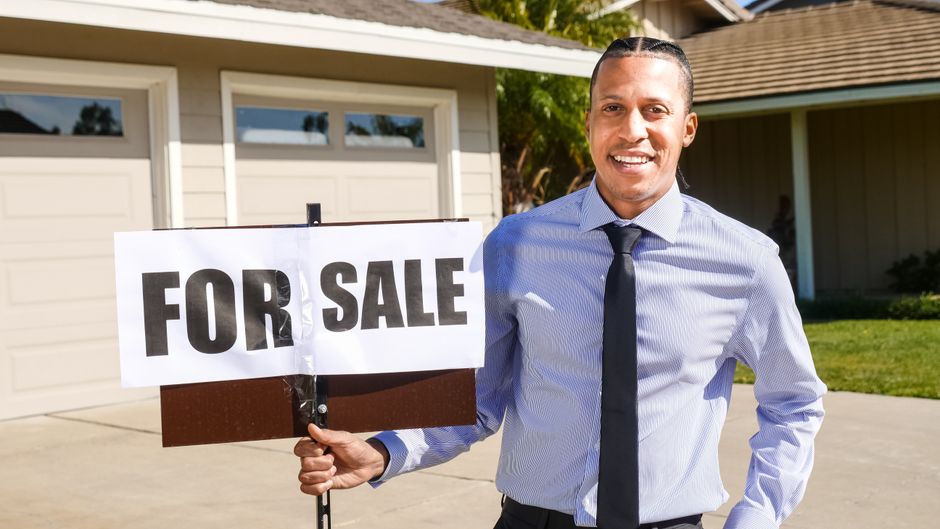
The vendor describes a situation that will be familiar to many Australians navigating property sales right now: an agent projecting absolute certainty about where the market is headed, while simultaneously running what amounted to a bare-bones campaign — a sign on the front lawn and a group text message to a database of past house-hunters. No formal advertising. No open campaign. Just a single prospective buyer, brought through the property repeatedly, held up as proof of the market's best offer.
The pressure to accept that lone offer was, by the vendor's account, relentless. "We'll give you a token of our commission if you take it," the agent reportedly said. "You will be stuck in your house for another 10 years if you don't take it." The agent also insisted, repeatedly, that a better offer would simply never come — a prediction the vendor ultimately refused to accept.
The core tension, as the vendor sees it, is a structural one: the financial difference to an agent between a low offer and a reasonable one is marginal, while the difference to the seller can be enormous — financially and emotionally. That misalignment of incentives sits at the heart of why trust erodes so quickly when things go wrong.
The problem with certainty in an uncertain market
Real estate agents have long positioned themselves as market oracles — people who know not only what a property is worth today but what the market will do tomorrow. In a stable or rising market, that confidence can feel reassuring. In a falling market, it starts to look like something else entirely.
As the vendor bluntly puts it, no one — including the agent — actually knows what is about to happen. A market, by its very nature, is a collective phenomenon: the price a property will fetch is shaped by the competing desires and financial capacities of multiple buyers. One person cycled through a home several times does not constitute a market test. It constitutes a single data point, dressed up as certainty.
There is no shortage of competing interests in the current debate over where Australian property prices are heading. Younger buyers hoping to enter the market may quietly welcome further price falls. Older property investors face a different kind of anxiety. And agents, under pressure in a slow market where any sale can feel like a golden goose, have their own reasons to push for a quick close.
What a decent agent looks like right now
Not every agent–vendor relationship descends into mutual suspicion and borrowed disguises. The vendor is quick to acknowledge that good agents do exist — and defines them in a specific way: they are the ones willing to admit they don't have all the answers. The decent agent, in this account, is one who can acknowledge the uncertainty of the current moment, concede that property sales involve as much art as science, and recognise that the emotional and financial stakes for a vendor are far greater than their own.
That kind of honesty may be less comfortable to sell than false confidence, but in a market this unsettled, it may be the only thing worth trusting. For vendors currently weighing whether to accept an offer, push back, or simply sit tight, the lesson from this particular falling-out is a simple one: scrutinise the process, not just the price, and remember that a prediction delivered with total confidence in a market nobody fully understands is not expertise — it is performance.